
Texas Torchwood

Amyris texana

Other common name(s):

Chapotillo

Family:

Rutaceae (Rue Family)

Plant Ecoregion Distribution Map

This map uses data from the US EPA. EPA  servers have been offline frequently so maps may not display. We are working on a solution.

Gulf Coast Prairies and Marshes
Coastal Sand Plain, Lower Rio Grande Alluvial Floodplain, Lower Rio Grande Valley, Mid-Coast Barrier Islands and Coastal Marshes, Southern Subhumid Gulf Coastal Prairies

Plant Characteristics

Growth Form

Shrub

Height

5
to
6
ft.

Spread

3
to
4
ft.

Leaf Retention

Evergreen

Lifespan

Perennial

Habitat and Care Requirements

Soil Type(s)

Clay, Dry, Loam, Sand

Light Requirement

Sun, Part Shade, Shade

Water Requirement

Low

Native Habitat

Grassland, Shrubland

Bloom and Attraction

Bloom Color

Blue, Green

Bloom Season

Spring, Summer, Fall

Seasonal Interest

Forage, Fruit, Larval Host, Nectar, Pollen

Wildlife Benefit

Bees, Birds, Browsers, Butterflies, Hummingbirds, Moths, Small Mammals

Maintenance

It is able to tolerate drought and short-term exposure to freezing temperatures.. Grows in a variety of soils. Because of its attractive foliage, long blooming period, and value to wildlife, it is a popular landscaping choice in its native region. Slow growth rate. Native habitat: chaparral and brush country.

Description

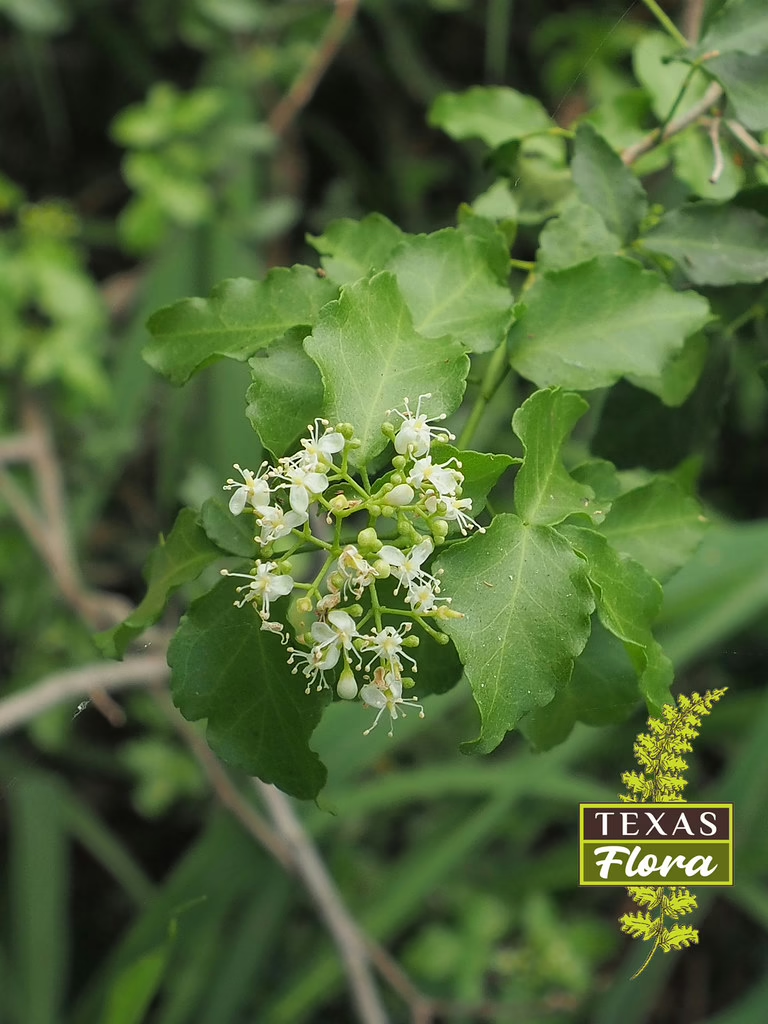
Blooms March-November. A densely branched shrub with mottled bark. Dark green, shiny, compound leaves have three pairs of leaflets and smell like citrus when crushed. Produces dense clusters of petite, creamy-white flowers. Fruit is a small, dark blue, one-seeded drupe (berry). A good native replacement for Boxwood. Larval host: Giant Swallowtail Butterfly (Papilio rumiko),
Material Treatment Method Collection References
Semi-harwood Cutting Make small holes in a well-draining potting mix, such as a mixture of peat and perlite or sand. Dip the cut end of the stem into a rooting hormone powder or liquid and plant the treated cuttings about 2 inches deep, ensuring at least one node is beneath the soil surface. Gently firm the soil around the cuttings. Cover the container with a clear plastic bag or place it in a miniature greenhouse to maintain high humidity around the cuttings. Keep the soil consistently moist but not waterlogged. and keep the cuttings in a warm, brightly lit area away from direct sunlight. Roots typically develop within 4-6 weeks. Select healthy, non-flowering stems from a mature plant in autumn or early winter. Cut a 4-6 inch segment from the tip of the stem. Ensure each cutting has at least 2-3 nodes (points where leaves attach). https://www.picturethisai.com/care/propagate/Amyris_texana.html

About the Region

2026 Fall Symposium Logo

This low-elevations region of Texas extends inland from the barrier islands, about 60 or so miles, and stretches from Brownsville to Louisiana. In total, it covers about 9.5 million acres, with a high point of 150 feet in elevation. More than 1000 species of plants can be found in this region. On the southern end, species more common in Mexico (such as Sabal mexicana) and Central America occur.

The barrier islands provide us with dune systems, and clay flats to the inland side, which have species found in these areas alone. Many plants here, such as Ipomoea pes-caprae (beach morning glory), can be found throughout tropical regions of the globe. I’ve encountered the same species on the beaches of Guam.

Once inland, vast marshes and wet prairies occur. Occasionally, oak (Quercus fusiformis) groves can be found. Common grasses include species of Bothriochloa, Paspalum, and Sporobolus; eastern gamagrass (Tripsacum dactyloides); and switchgrass (Panicum species). Many rivers and creeks cut through the Gulf Prairies, and along these riparian areas various species of trees, Sabal minor, and other plants adapted to clay soils can be found. Due to overgrazing, farming, and fire suppression, woody species such as mesquite (Prosopis glandulosa) and huisache (Acacia farnesiana), and invasive species such as chinaberry (Melia azedarach), Brazilian pepper (Schinus terebinthifolius), and Chinese tallow (Sapium sebiferum) have increased and displaced our native flora.

Source: Wildflowers of Texas by Michael Eason