
White Sage

Artemisia ludoviciana

Other common name(s):

Louisiana Artemisia, Louisiana Sage, Prairie Sage, Silver Sage, White Sagebrush, Louisiana Wormwood, Silver Wormwood, Louisiana Sagewort, Gray Sagewort, Cudweed Sagewort, Mugwort Wormwood

Family:

Asteraceae (Aster Family)

Plant Ecoregion Distribution Map

This map uses data from the US EPA. EPA  servers have been offline frequently so maps may not display. We are working on a solution.

Central Great Plains, Chihuahuan Deserts, Cross Timbers, East Central Texas Plains, Edwards Plateau, Gulf Coast Prairies and Marshes, High Plains, Southern Texas Plains, Southwestern Tablelands, Texas Blackland Prairies, Western Gulf Coastal Plain
Broken Red Plains, Limestone Plains, Red Prairie
Chihuahuan Basins and Playas, Chihuahuan Desert Grasslands, Chihuahuan Montane Woodlands, Low Mountains and Bajadas, Stockton Plateau
Carbonate Cross Timbers, Eastern Cross Timbers, Grand Prairie, Limestone Cut Plain, Western Cross Timbers
Bastrop Lost Pines, Floodplains and Low Terraces2, Northern Post Oak Savanna, Northern Prairie Outliers, San Antonio Prairie, Southern Post Oak Savanna
Balcones Canyonlands, Edwards Plateau Woodland, Llano Uplift, Semiarid Edwards Plateau
Lower Rio Grande Alluvial Floodplain, Northern Humid Gulf Coastal Prairies
Arid Llano Estacado, Llano Estacado, Rolling Sand Plains, Shinnery Sands
Northern Nueces Alluvial Plains, Rio Grande Floodplain and Terraces, Semiarid Edwards Bajada, Texas-Tamaulipan Thornscrub
Canadian/Cimarron Breaks, Caprock Canyons Badlands Breaks, Flat Tablelands and Valleys, Semiarid Canadian Breaks
Floodplains and Low Terraces1, Northern Blackland Prairie, Southern Blackland Prairie
Flatwoods

Plant Characteristics

Growth Form

Subshrub

Height

1.5
to
3
ft.

Spread

0.5
to
1
ft.

Leaf Retention

Semi Evergreen

Lifespan

Perennial

Habitat and Care Requirements

Soil Type(s)

Calcareous, Dry, Sand

Light Requirement

Sun

Water Requirement

Very Low, Low

Native Habitat

Desert, Disturbed Areas, Grassland, Woodland Edge

Bloom and Attraction

Bloom Color

Red, Yellow

Bloom Season

Summer, Fall

Seasonal Interest

Forage, Nesting Material, Seeds

Wildlife Benefit

Bees, Birds, Browsers, Small Mammals

Maintenance

Very adaptable. Requires little maintenance. Drought and heat tolerant. Good for tough growing conditions. In moist areas, it tends to get leggy. Can be pruned in winter to encourage thick growth. Colonizes by rhizomes. Native habitat: dry slopes; canyons, open pine woods, dry prairies, sandy floodplains, disturbed areas. Eastern populations more in uplands, western populations more in lowlands.

Description

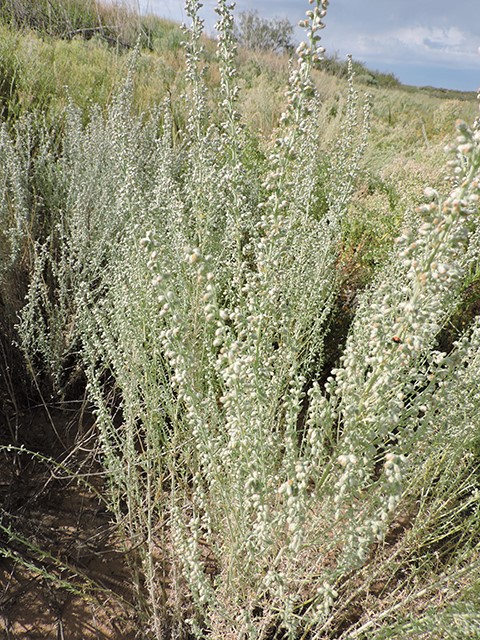
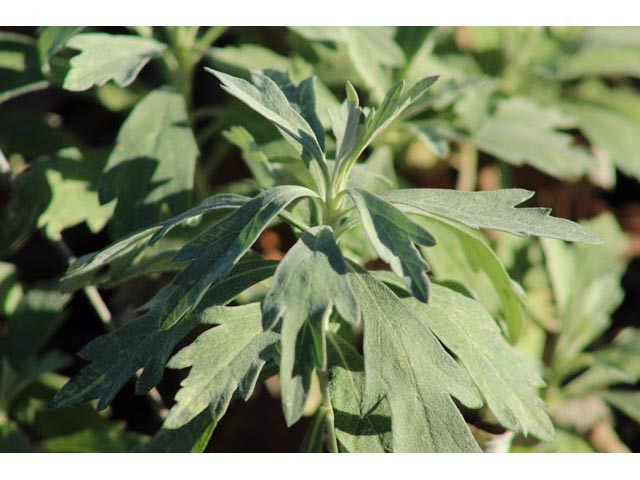
Blooms June-November. Grows in a stiff, upright form with aromatic, silvery green leaves, matted with hairs. Produces small, yellowish flowers. The fruit is a cypsela: a dry, one-seeded fruit, usually topped by pappus. Provides nesting material for native bees. Its foliage and flowers provide food for sage grouse. Twigs and flowers are eaten by antelope.
Material Treatment Method Collection References
Seed Seeds of white sage can be dormant. If spring seeding or seeding indoors, cold moist stratification (prechill) for 15-60 days can improve establishment. To prechill, put seed in a plastic bag or container with sand, peat, blotter paper, paper towel, cloth, or other medium that can be kept damp, and place in a cold location such as a refrigerator. Planting seed outdoors in the fall will provide natural stratification. Seed should be surface sown or at a very shallow depth (1/8 to 1/4 inch). If starting plants indoors, seed 8-10 weeks prior to transplanting outdoors. Transplant after the danger of frost has passed. Seedlings should be acclimated to weather conditions for 1-2 weeks prior to transplanting outdoors. When determining location and plant spacing for the seedlings, consider that white sage develops rhizomes (underground runners) that allow plants to spread and form colonies. The seed is tiny, with over 4 million seeds per pound. Seed is formed in cylindrical heads and is generally ripe from late September to November in the Northern Great Plains. Ripe seeds are grayish brown, smooth, and firm to the touch. Seeds shatter soon after they mature so it is important to monitor ripeness and harvest soon after the seedheads begin to open. Seed can be collected by stripping or crushing the seedheads. Seedheads can also be clipped and stored in a closed environment, such as a paper or cloth bag, to allow the seed to shatter from the heads. To prevent mold growth, seed should be spread out or allowed to surface-dry before storing. https://www.nrcs.usda.gov/plantmaterials/ndpmcbr14230.pdf
Clump Division Remove a section of rhizome and cut into pieces. There must be at least one bud on the cut rhizome piece to produce a new plant. The pieces can then be planted outdoors or in pots. It is important to water the rhizome pieces until plant growth is detected. Whole plants can be divided by splitting the plants apart so that each division has a root or rhizome and one or more buds. Each division can then be planted outdoors or potted. Replant the divisions as soon as possible to prevent drying out. Old top growth can be cut off. White sage rhizomes can be divided to propagate new plants. To make rhizome cuttings, dig below the soil surface of a plant to find the rhizomes and roots. https://www.nrcs.usda.gov/plantmaterials/ndpmcbr14230.pdf
Rhizome Cutting Place the stem in well drained, moist soil to root. Stem cuttings can be more difficult to root than plant or rhizome divisions. Stem cuttings can be made by cutting a 4-6 inch stem in spring or early summer. Select a stem that is healthy and free of disease. Cut below the leaf node . 1) https://www.nrcs.usda.gov/plantmaterials/ndpmcbr14230.pdf 2) https://www.prairiemoon.com/artemisia-ludoviciana-prairie-sage#:~:text=The%20plants%20reach%20heights%20of,for%20many%20Native%20American%20tribes.

About the Region

2026 Fall Symposium Logo

This low-elevations region of Texas extends inland from the barrier islands, about 60 or so miles, and stretches from Brownsville to Louisiana. In total, it covers about 9.5 million acres, with a high point of 150 feet in elevation. More than 1000 species of plants can be found in this region. On the southern end, species more common in Mexico (such as Sabal mexicana) and Central America occur.

The barrier islands provide us with dune systems, and clay flats to the inland side, which have species found in these areas alone. Many plants here, such as Ipomoea pes-caprae (beach morning glory), can be found throughout tropical regions of the globe. I’ve encountered the same species on the beaches of Guam.

Once inland, vast marshes and wet prairies occur. Occasionally, oak (Quercus fusiformis) groves can be found. Common grasses include species of Bothriochloa, Paspalum, and Sporobolus; eastern gamagrass (Tripsacum dactyloides); and switchgrass (Panicum species). Many rivers and creeks cut through the Gulf Prairies, and along these riparian areas various species of trees, Sabal minor, and other plants adapted to clay soils can be found. Due to overgrazing, farming, and fire suppression, woody species such as mesquite (Prosopis glandulosa) and huisache (Acacia farnesiana), and invasive species such as chinaberry (Melia azedarach), Brazilian pepper (Schinus terebinthifolius), and Chinese tallow (Sapium sebiferum) have increased and displaced our native flora.

Source: Wildflowers of Texas by Michael Eason