
Texas Milkweed

Asclepias texana

Other common name(s):

White Milkweed

Family:

Apocynaceae (Dogbane Family)

Plant Ecoregion Distribution Map

This map uses data from the US EPA. EPA  servers have been offline frequently so maps may not display. We are working on a solution.

Chihuahuan Deserts, Edwards Plateau
Chihuahuan Desert Grasslands, Low Mountains and Bajadas
Balcones Canyonlands, Edwards Plateau Woodland, Llano Uplift

Plant Characteristics

Growth Form

Herbaceous

Height

1
to
3
ft.

Spread

1
to
3
ft.

Leaf Retention

Deciduous

Lifespan

Perennial

Habitat and Care Requirements

Soil Type(s)

Dry, Gravelly, Loam, Sand

Light Requirement

Sun

Water Requirement

Low

Native Habitat

Riparian, Woodland Edge

Bloom and Attraction

Bloom Color

White

Bloom Season

Spring, Summer, Fall

Seasonal Interest

Nectar

Wildlife Benefit

Bees, Butterflies

Maintenance

Endemic to Texas. One of the more attractive native milkweeds. Drought tolerant. Requires very little maintenance. Do not over water to avoid root rot. Treat for aphids with soapy water if plant looks sick with soapy water. WARNING: all parts are toxic to humans and pets. Native habitat: woodlands’ edge and openings, ditches, ravines, depressions, stream and river banks.

Description

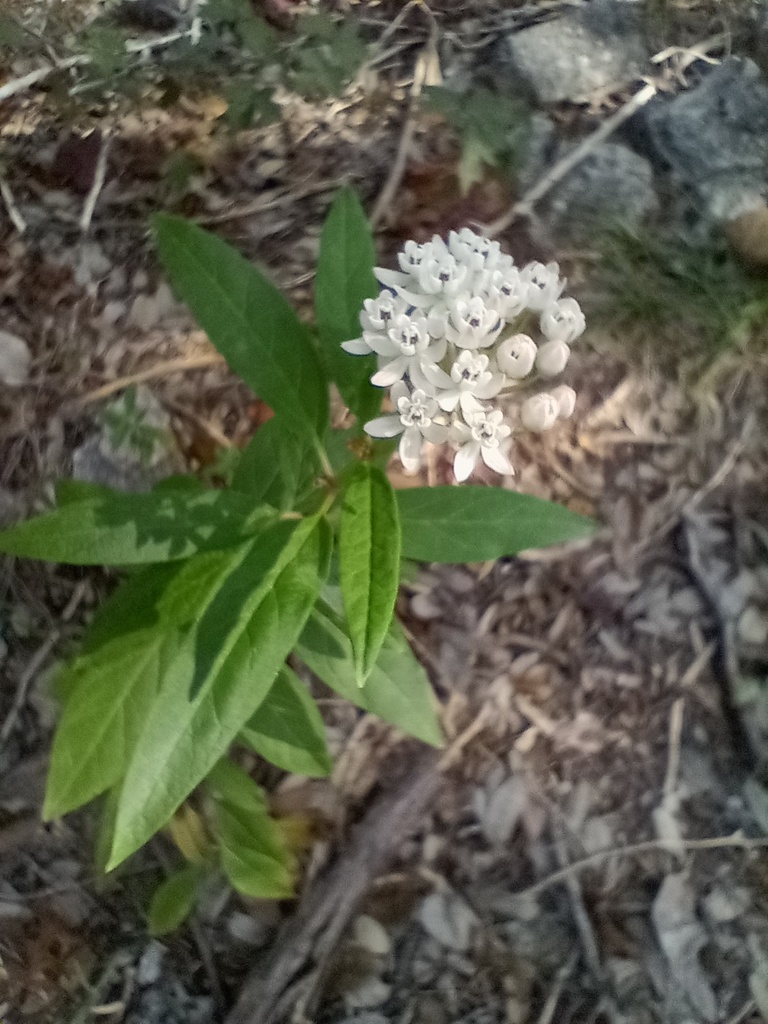
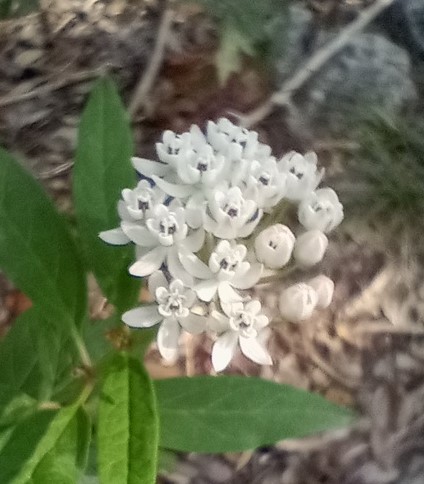
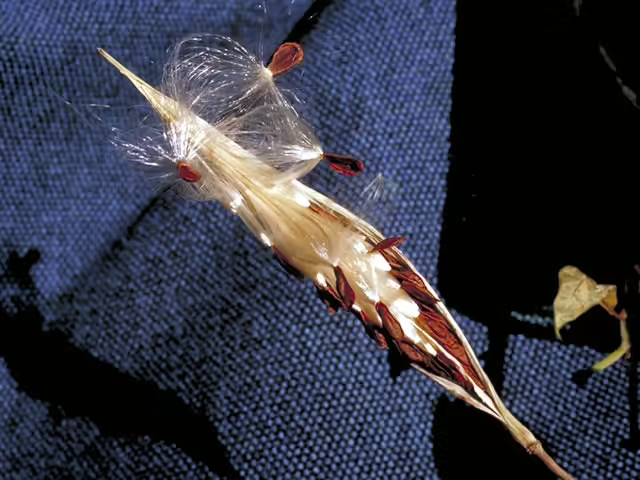
Blooms May-September. Stems are erect, with inconspicuous pubescence lines. The leaves are lance-shape to broadly oval. Small, white flowers are clustered at the end of stems. The fruit is a pod containing an abundance of seeds that are attached to feathery filaments. Although still listed by some in the Asclepiadaceae Family, the majority of botanical organizations now list it in the Apocynaceae Family.
Material Treatment Method Collection References
Seed Stratification Placing seeds in a moist medium and refrigerating them for 30 days before planting. Once stratified, plant the seeds in a well-draining seed starting mix, barely covering them with soil. Use a light hand when covering the seeds as they need light for germination. You can expect germination to occur within 10-14 days under optimal conditions. Ensure the environment is warm and well-lit to encourage healthy growth. Once seedlings are sturdy enough and risk of frost has passed, transplant them outdoors. Ensure each plant has sufficient space for root growth and access to full sun. Collect seeds from mature texas milkweed pods when they begin to split open. Gather the seeds, which should have fluffy, white appendages known as coma. Remove the coma from the seeds if still attached. This can be done manually or by gently blowing them off. Store the seeds in a cool, dry place until ready for sowing. 1) https://www.picturethisai.com/care/propagate/Asclepias_texana.html

About the Region

2026 Fall Symposium Logo

This low-elevations region of Texas extends inland from the barrier islands, about 60 or so miles, and stretches from Brownsville to Louisiana. In total, it covers about 9.5 million acres, with a high point of 150 feet in elevation. More than 1000 species of plants can be found in this region. On the southern end, species more common in Mexico (such as Sabal mexicana) and Central America occur.

The barrier islands provide us with dune systems, and clay flats to the inland side, which have species found in these areas alone. Many plants here, such as Ipomoea pes-caprae (beach morning glory), can be found throughout tropical regions of the globe. I’ve encountered the same species on the beaches of Guam.

Once inland, vast marshes and wet prairies occur. Occasionally, oak (Quercus fusiformis) groves can be found. Common grasses include species of Bothriochloa, Paspalum, and Sporobolus; eastern gamagrass (Tripsacum dactyloides); and switchgrass (Panicum species). Many rivers and creeks cut through the Gulf Prairies, and along these riparian areas various species of trees, Sabal minor, and other plants adapted to clay soils can be found. Due to overgrazing, farming, and fire suppression, woody species such as mesquite (Prosopis glandulosa) and huisache (Acacia farnesiana), and invasive species such as chinaberry (Melia azedarach), Brazilian pepper (Schinus terebinthifolius), and Chinese tallow (Sapium sebiferum) have increased and displaced our native flora.

Source: Wildflowers of Texas by Michael Eason