

Crossvine

Bignonia capreolata

Other common name(s):

Family:

Bignoniaceae (Trumpet Creeper Family)

Plant Ecoregion Distribution Map

This map uses data from the US EPA. EPA  servers have been offline frequently so maps may not display. We are working on a solution.

East Central Texas Plains, Edwards Plateau, Western Gulf Coastal Plain
Northern Post Oak Savanna
Balcones Canyonlands
Flatwoods, Southern Tertiary Uplands

Plant Characteristics

Growth Form

Vine

Height

60
to
70
ft.

Spread

2
to
3
ft.

Leaf Retention

Semi Evergreen

Lifespan

Perennial

Habitat and Care Requirements

Soil Type(s)

Clay, Dry, Limestone, Loam, Moist, Sand, Well Drained

Light Requirement

Sun, Part Shade

Water Requirement

Low, Medium

Native Habitat

Riparian, Woodland

Bloom and Attraction

Bloom Color

Red, Yellow

Bloom Season

Spring

Seasonal Interest

Forage, Nectar, Pollen

Wildlife Benefit

Browsers, Butterflies, Deer, Hummingbirds

Maintenance

Can be pruned to direct and control growth if needed. Tolerates shade, but produces more flowers in the sun. Can withstand brief flooding, but in general needs well-drained soil. Good replacement for non-native Catclaw Vine (Dolichandra unguis-cati). Native habitat: forested floodplains and uplands, hammocks, fencerows, limestone escarpments, moist woods, wooded slopes and alluvial bottoms along streams

Description

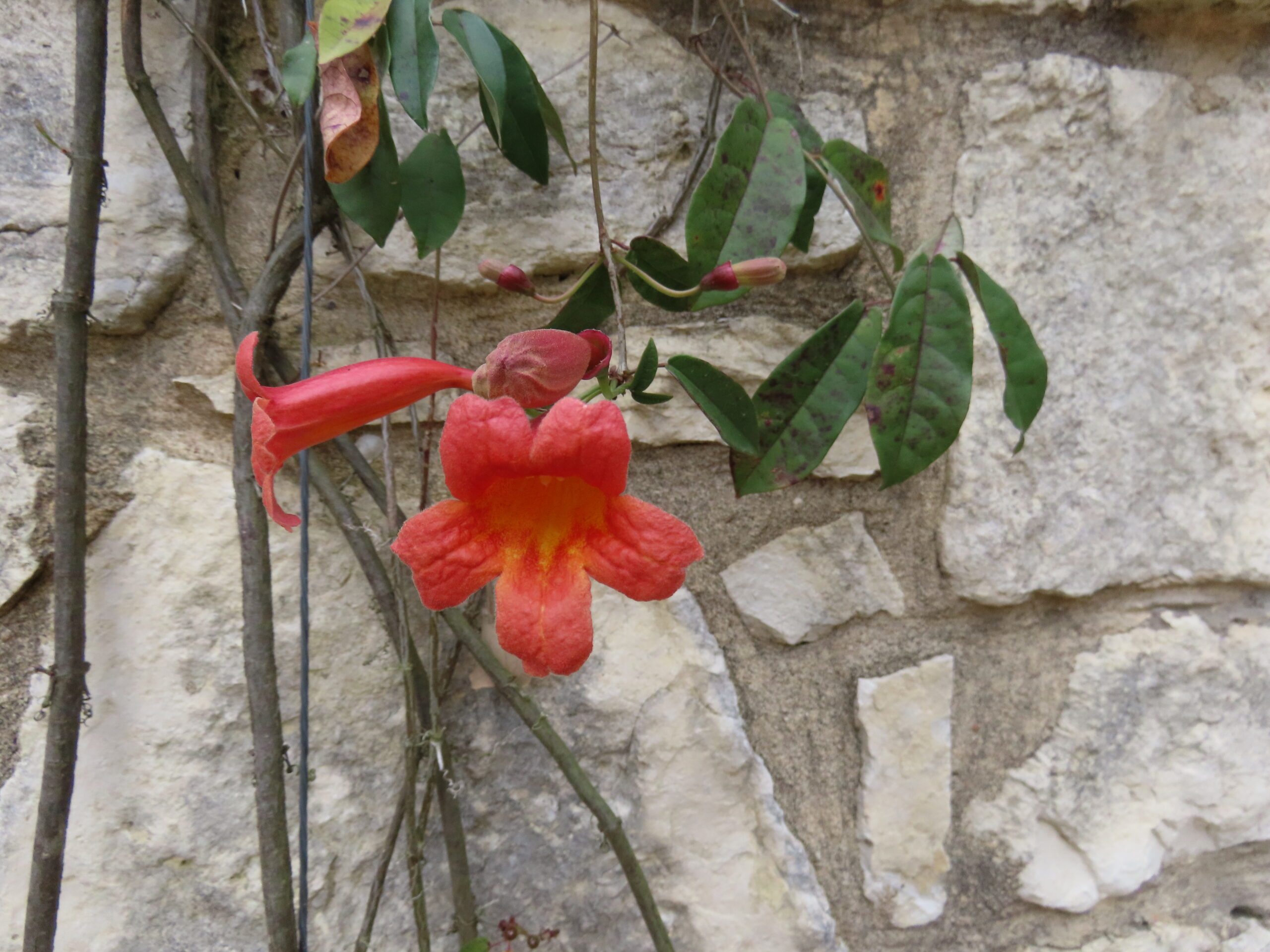
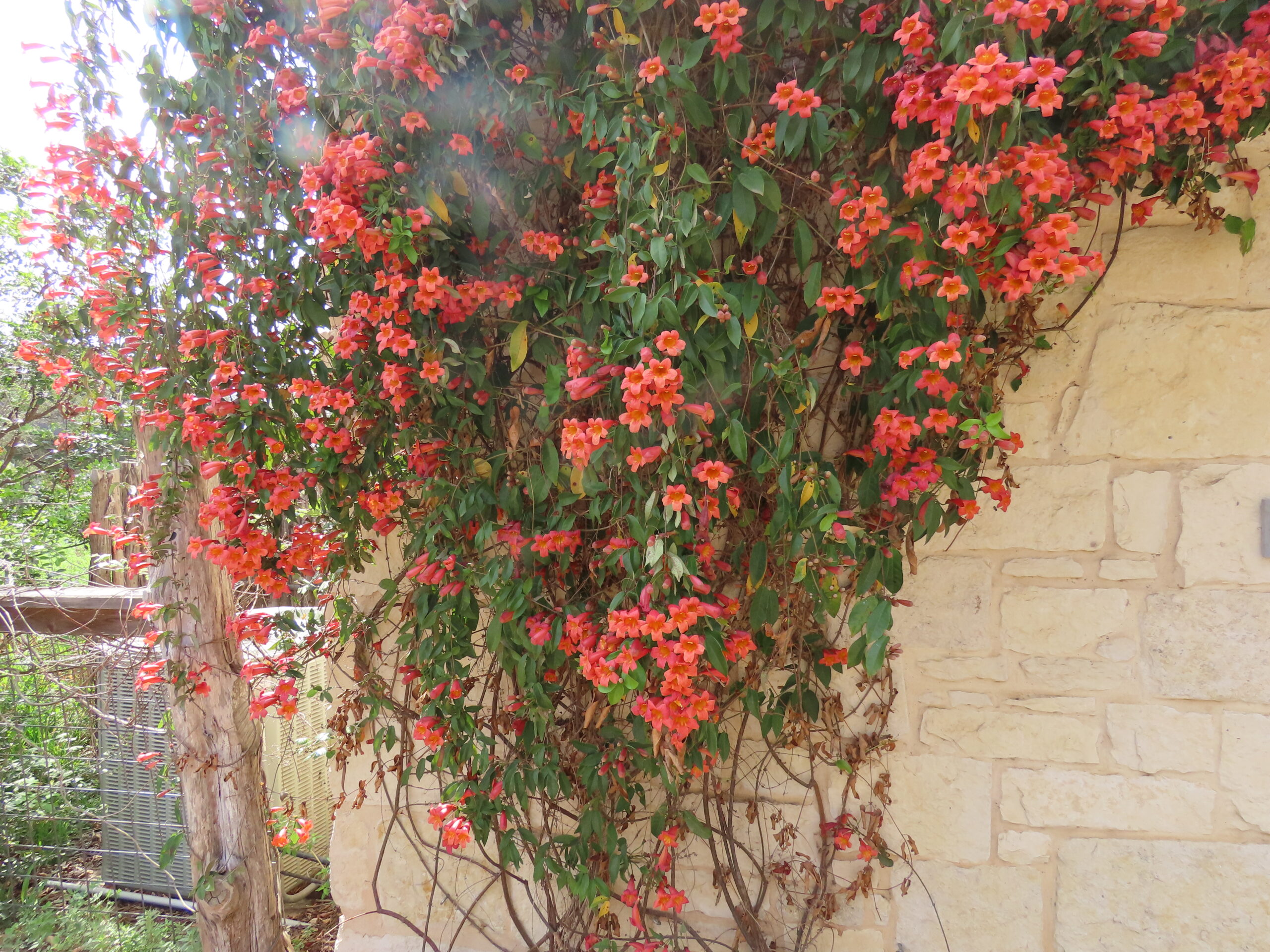
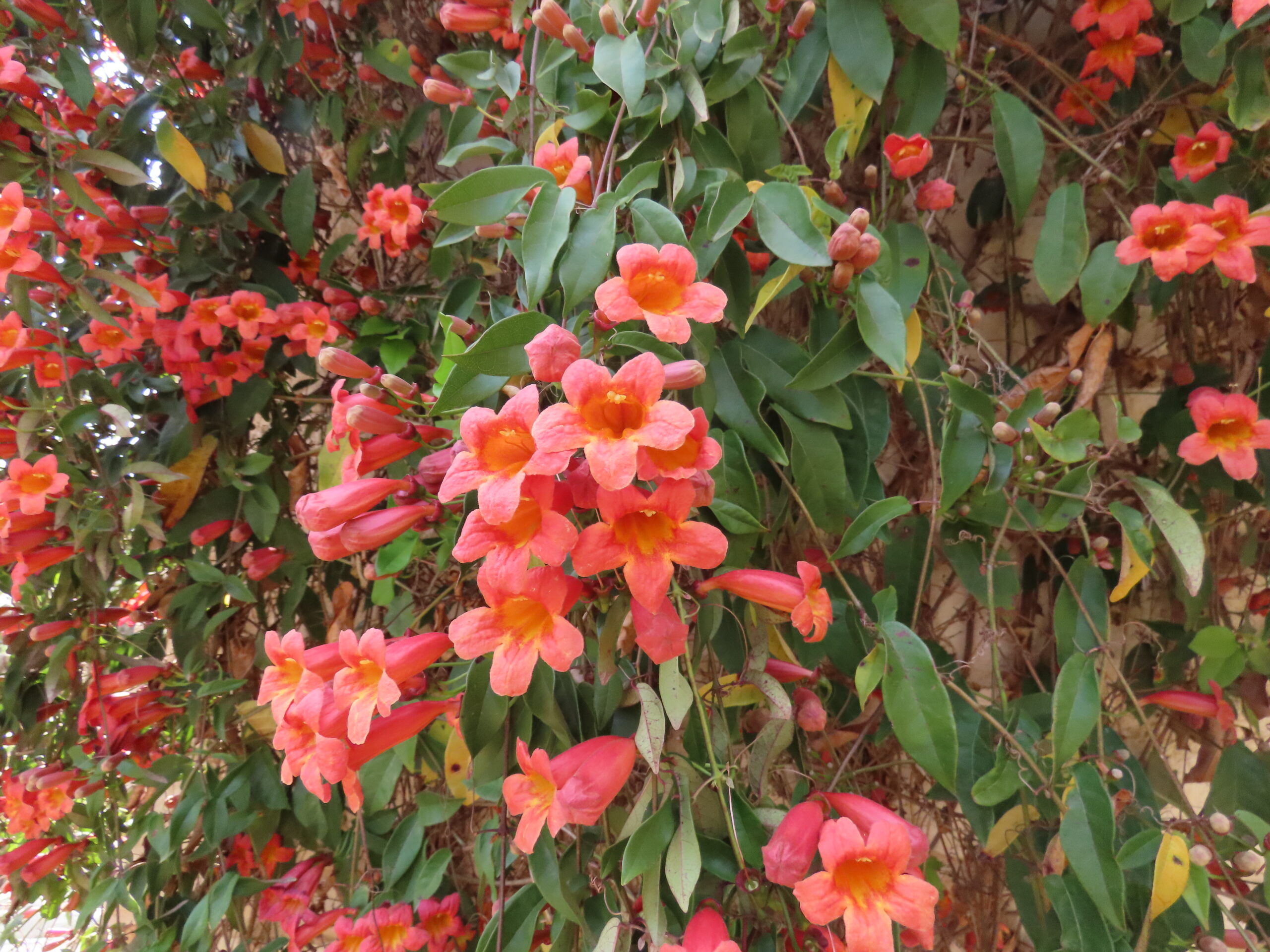
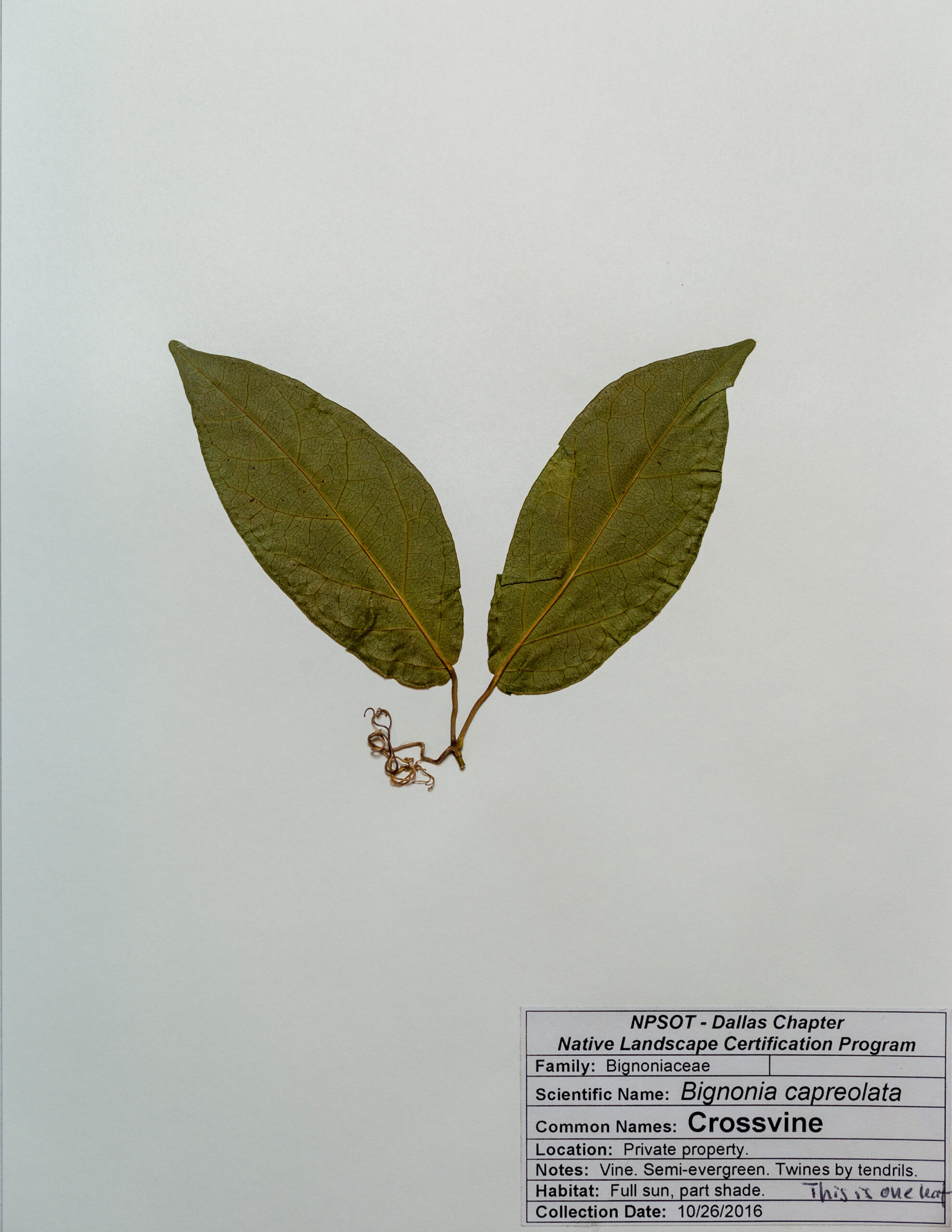
Blooms March-May. A woody vine, climbs using tendrils with adhesive pads that will stick to surfaces. Narrow, compound leaves change from dark green in summer to reddish-purple in winter. Trumpet shaped flowers show a variety of combinations of red and yellow. The fruit is a brown, flat, pod-like capsule.
Previous Scientific Name(s): Anisostichus capreolata, Anisostichus crucigera

References

1) https://www.wildflower.org/plants/result.php?id_plant=BICA. 2) https://portal.torcherbaria.org/portal/taxa/index.php?taxon=Bignonia+capreolata&formsubmit=Search+Terms. 3) http://bonap.net/TDC/Image/Map?taxonType=Species&taxonId=4965&locationType=County&mapType=Normal. 4) Miller, George O., Landscaping with Native Plants of Texas 2nd Ed., 2013, pg 48. 5) Wasowski and Wasowski, Native Texas Plants Landscaping Region by Region, 1991, pg. 357. 6) https://www.itis.gov/servlet/SingleRpt/SingleRpt?search_topic=TSN&search_value=34307#null, 7) Native and Adapted Landscape Plants, City of Austin and Texas A&M, 2014.
Material Treatment Method Collection References
Seed No Treatment Sow the seeds in containers or directly into the ground in the fall (before the ground freezes) or in the spring after the danger of frost has passed. The seeds do not require extra stratification or special handling (but you should refrigerate them if you don’t plan to plant them right away). Press your seeds 1 to 2 inches into the soil and keep the soil evenly moist as the seeds germinate (typically about 3 to 4 weeks). Collect the large, woody capsules from late summer through fall when they are light brown and beginning to dry. Seeds remain viable one year in sealed, refrigerated containers. 1) https://www.wildflower.org/plants/result.php?id_plant=BICA 2) https://piedmontmastergardeners.org/article/crossvine-a-showstopping-native-vine/#:~:text=Crossvine%20may%20be%20grown%20from,within%20six%20to%20eight%20weeks. 3) https://www.bhg.com/gardening/plant-dictionary/vine/cross-vine/#:~:text=How%20to%20Propagate%20Crossvine%20Via,as%20it%20develops%20new%20roots.
Softwood Cutting Leave several leaves on the tip of the stem but remove the leaves from the bottom two inches of the stem. Treat the cut end of the stem with rooting hormone to encourage root development. Insert the cut end about 2 inches deep into a moist growing medium. Mist the cutting frequently or slip a plastic bag over the potted cutting to keep it from drying out before it can develop roots. The cutting should take root within six to eight weeks. Cut off a healthy, 6- to 8-inch long growing stem (current season’s growth) in spring or early summer. 1) https://piedmontmastergardeners.org/article/crossvine-a-showstopping-native-vine/#:~:text=Crossvine%20may%20be%20grown%20from,within%20six%20to%20eight%20weeks. 2) https://www.bhg.com/gardening/plant-dictionary/vine/cross-vine/#:~:text=How%20to%20Propagate%20Crossvine%20Via,as%20it%20develops%20new%20roots.

About the Region

2026 Fall Symposium Logo

This low-elevations region of Texas extends inland from the barrier islands, about 60 or so miles, and stretches from Brownsville to Louisiana. In total, it covers about 9.5 million acres, with a high point of 150 feet in elevation. More than 1000 species of plants can be found in this region. On the southern end, species more common in Mexico (such as Sabal mexicana) and Central America occur.

The barrier islands provide us with dune systems, and clay flats to the inland side, which have species found in these areas alone. Many plants here, such as Ipomoea pes-caprae (beach morning glory), can be found throughout tropical regions of the globe. I’ve encountered the same species on the beaches of Guam.

Once inland, vast marshes and wet prairies occur. Occasionally, oak (Quercus fusiformis) groves can be found. Common grasses include species of Bothriochloa, Paspalum, and Sporobolus; eastern gamagrass (Tripsacum dactyloides); and switchgrass (Panicum species). Many rivers and creeks cut through the Gulf Prairies, and along these riparian areas various species of trees, Sabal minor, and other plants adapted to clay soils can be found. Due to overgrazing, farming, and fire suppression, woody species such as mesquite (Prosopis glandulosa) and huisache (Acacia farnesiana), and invasive species such as chinaberry (Melia azedarach), Brazilian pepper (Schinus terebinthifolius), and Chinese tallow (Sapium sebiferum) have increased and displaced our native flora.

Source: Wildflowers of Texas by Michael Eason