
Tall Poppymallow

Callirhoe leiocarpa

Other common name(s):

Annual Winecup, Tall Poppymallow, Tall Poppy Mallow

Family:

Malvaceae (Mallow Family)

Plant Ecoregion Distribution Map

This map uses data from the US EPA. EPA  servers have been offline frequently so maps may not display. We are working on a solution.

Central Great Plains, East Central Texas Plains, Edwards Plateau, Gulf Coast Prairies and Marshes, Southern Texas Plains, Southwestern Tablelands, Texas Blackland Prairies
Limestone Plains, Red Prairie
Bastrop Lost Pines, Floodplains and Low Terraces2, Southern Post Oak Savanna
Balcones Canyonlands, Edwards Plateau Woodland, Llano Uplift, Semiarid Edwards Plateau
Northern Humid Gulf Coastal Prairies, Southern Subhumid Gulf Coastal Prairies
Northern Nueces Alluvial Plains, Rio Grande Floodplain and Terraces, Semiarid Edwards Bajada, Texas-Tamaulipan Thornscrub
Caprock Canyons Badlands Breaks, Flat Tablelands and Valleys
Floodplains and Low Terraces1, Northern Blackland Prairie, Southern Blackland Prairie

Plant Characteristics

Growth Form

Herbaceous

Height

1
to
4
ft.

Spread

1
to
2
ft.

Leaf Retention

Deciduous

Lifespan

Annual

Habitat and Care Requirements

Soil Type(s)

Clay, Loam, Moist, Sand

Light Requirement

Sun, Part Shade

Water Requirement

Low

Native Habitat

Grassland, Woodland

Bloom and Attraction

Bloom Color

Pink, Purple, Red

Bloom Season

Spring, Summer

Seasonal Interest

Nectar, Pollen

Wildlife Benefit

Bees, Nectar Insects

Maintenance

Drought tolerant. Easy to grow and will self-seed. Prune dead material when dormant or if gets leggy. Watering may extend growing season longer into summer. Most impressive when planted in mass. Native habitat: prairies, woodlands, roadsides.

Description

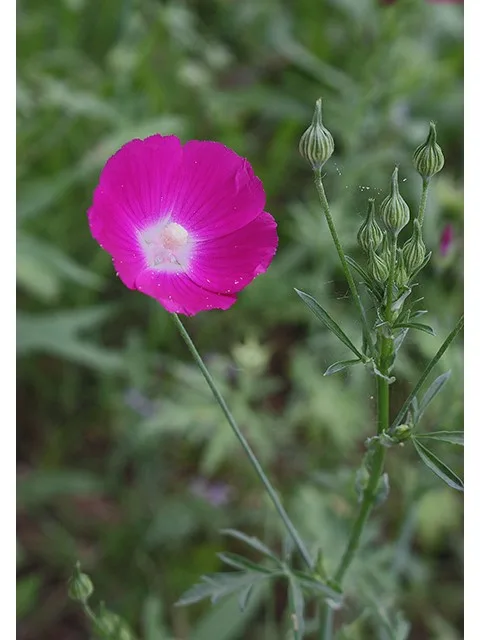
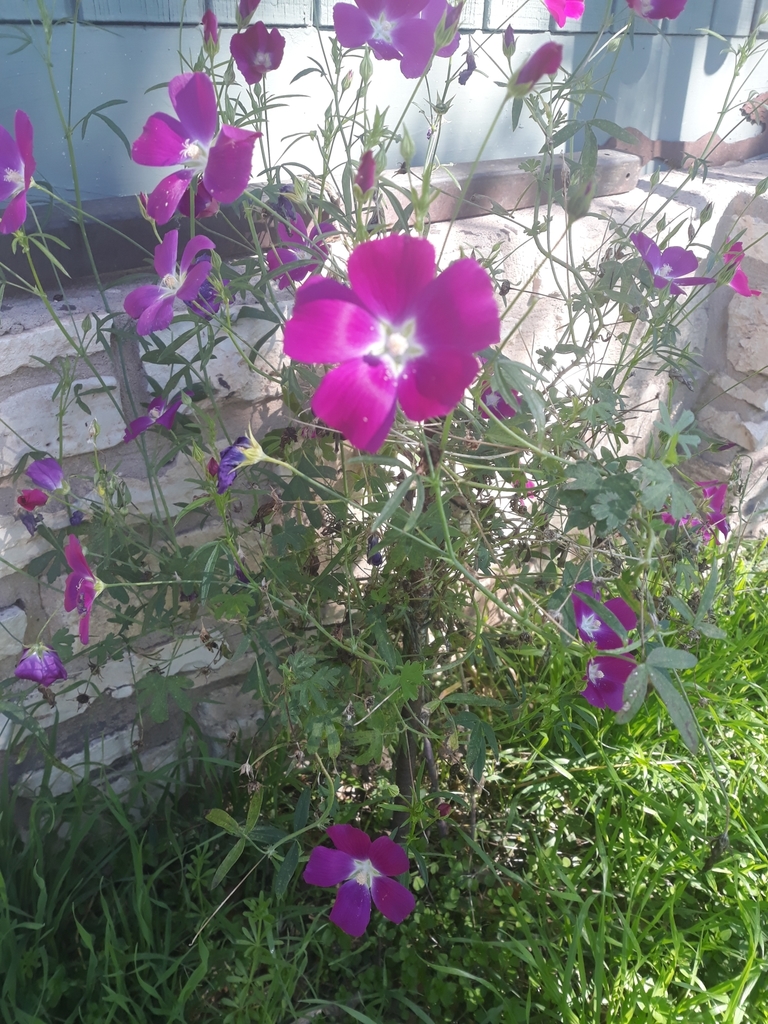
Blooms February-August. Stems are weakly erect and can tend to flop over. Palmate shaped leaves. Flowers are cup-shaped and brightly colored red, pink, and purple. The fruit is a schizocarp: a dry fruit that splits into separate segments at maturity, each containing a single seed.
Previous Scientific Name(s): Callirhoe pedata
Material Treatment Method Collection References
Seed No Treatment Sow seeds in the fall, a few weeks before the first expected frost. This allows the seeds to naturally stratify over the winter. Scatter the seeds evenly over the soil surface. Lightly press them into the soil or cover them with a thin layer of soil (about 1/ inch deep). Water the seeds gently but thoroughly. Keep the soil consistently moist until the seeds germinate. Or sow seeds in the spring, after the last expected frost following the same procedure. https://nativefloraseeds.org/products/wine-cup
Seed Scarification Rub the seeds between coarse sandpaper to remove the outer husk before planting. Sow outdoors in late summer or early fall about 1/8 inch deep. Or simply soak the Callirhoe Leiocarpa seed in water overnight and direct sow 1/4" below the surface of the soil in Fall or Spring 1) https://hort.extension.wisc.edu/articles/winecups-callirhoe-involucrata 2) https://www.everwilde.com/store/Wine-Cup-Wildflower-Seeds.html#:~:text=HOW%20TO%20GROW,Poppymallow%2C%20Palmleaf%20poppymallow%2C%20Cowboy%20Rose
Seed Stratification Soak the Wine Cup seed in water overnight, then mix the seed with moist sand and store it in the refrigerator for 30 days before planting. After the last frost of spring, sow the treated seed 1/4" below the surface of the soil. 1) https://hort.extension.wisc.edu/articles/winecups-callirhoe-involucrata 2) https://www.everwilde.com/store/Wine-Cup-Wildflower-Seeds.html#:~:text=HOW%20TO%20GROW,Poppymallow%2C%20Palmleaf%20poppymallow%2C%20Cowboy%20Rose

About the Region

2026 Fall Symposium Logo

This low-elevations region of Texas extends inland from the barrier islands, about 60 or so miles, and stretches from Brownsville to Louisiana. In total, it covers about 9.5 million acres, with a high point of 150 feet in elevation. More than 1000 species of plants can be found in this region. On the southern end, species more common in Mexico (such as Sabal mexicana) and Central America occur.

The barrier islands provide us with dune systems, and clay flats to the inland side, which have species found in these areas alone. Many plants here, such as Ipomoea pes-caprae (beach morning glory), can be found throughout tropical regions of the globe. I’ve encountered the same species on the beaches of Guam.

Once inland, vast marshes and wet prairies occur. Occasionally, oak (Quercus fusiformis) groves can be found. Common grasses include species of Bothriochloa, Paspalum, and Sporobolus; eastern gamagrass (Tripsacum dactyloides); and switchgrass (Panicum species). Many rivers and creeks cut through the Gulf Prairies, and along these riparian areas various species of trees, Sabal minor, and other plants adapted to clay soils can be found. Due to overgrazing, farming, and fire suppression, woody species such as mesquite (Prosopis glandulosa) and huisache (Acacia farnesiana), and invasive species such as chinaberry (Melia azedarach), Brazilian pepper (Schinus terebinthifolius), and Chinese tallow (Sapium sebiferum) have increased and displaced our native flora.

Source: Wildflowers of Texas by Michael Eason