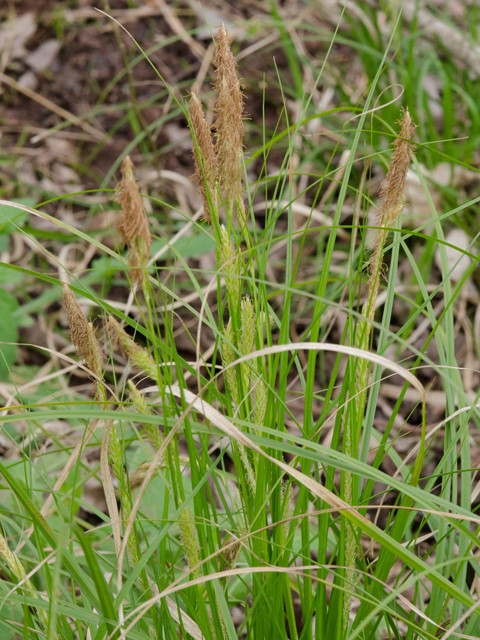
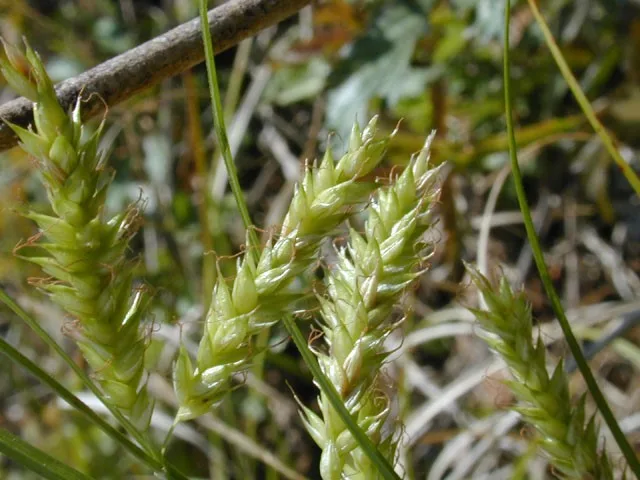

Cherokee Sedge

Carex cherokeensis

Other common name(s):

Family:

Cyperaceae (Sedge Family)

Plant Ecoregion Distribution Map

This map uses data from the US EPA. EPA  servers have been offline frequently so maps may not display. We are working on a solution.

East Central Texas Plains, Gulf Coast Prairies and Marshes, Texas Blackland Prairies, Western Gulf Coastal Plain
Bastrop Lost Pines, Floodplains and Low Terraces2, Northern Post Oak Savanna, Northern Prairie Outliers, San Antonio Prairie, Southern Post Oak Savanna
Northern Humid Gulf Coastal Prairies
Floodplains and Low Terraces1, Northern Blackland Prairie, Southern Blackland Prairie
Flatwoods, Floodplains and Low Terraces3, Pleistocene Fluvial Terraces, Red River Bottomlands, Southern Tertiary Uplands, Tertiary Uplands

Plant Characteristics

Growth Form

Grass & Sedge

Height

2
to
2.5
ft.

Spread

0.5
to
1
ft.

Leaf Retention

Evergreen

Lifespan

Perennial

Habitat and Care Requirements

Soil Type(s)

Loam, Moist, Sand, Well Drained

Light Requirement

Part Shade

Water Requirement

Medium

Native Habitat

Riparian, Wetland, Woodland

Bloom and Attraction

Bloom Color

Brown, Green, White

Bloom Season

Spring

Seasonal Interest

Larval Host, Seeds

Wildlife Benefit

Birds, Butterflies, Moths

Maintenance

Low maintenance ground cover. Nice addition to a shade garden. Also works well in containers. Somewhat drought tolerant, but will fare better with extra water in drier months. Thrives in very moist situations. May be thinned if space is an issue. Helps control erosion by stabilizing soil with its extensive root system. Plant in spring or fall so it can become established before extremes of summer and winter. Native habitat: woodlands, floodplain forests, moist deciduous forests, wet clearings, swamp forests, stream banks, acid seeps, margins of sinkholes, dolomite glades.

Description

Blooms April-June. A cool-season, clumping sedge with slender, arching leaves. Coarser texture than most sedges and one of the tallest. Birds and small mammals eat seeds. Larval host: Appalachian Eyed Brown, Georgia Satyr, Dion Skipper and Dun’s Skipper butterflies. Replaces non-native: Liriope muscari and Ophiopogon japonicus.
Material Treatment Method Collection References
Seed Stratification Seed is planted into round cell greenhouse flat liners with 38 cells per flat that have been filled with coarse processed bark and composted pine bark growing medium. Seed is surface sown at a rate of 3-5 seeds per cell and lightly covered with starter sized, 1/16" - 1/8" diameter, granite poultry grit to combat damping off diseases. Prepared flats are lightly hand watered to slightly moisten the growing medium and cold stratified at 35 degrees Fahrenheit for a minimum of 30 days. Stratified seed is placed in a greenhouse maintained under natural lighting and at a minimum temperature of 70 degrees Fahrenheit. Soil moisture is maintained during germination by bottom watering. Flats are placed in shallow trays that permit water levels around the flats to be maintained at approximately a one inch depth. Germination typically occurs 10- 14 days after placement in the greenhouse. After germination,flats are removed from the trays of water and placed on greenhouse benches. Seedlings are maintained in a greenhouse environment 4-6 months to promote development of a plug with at least 6 inches of top growth and a dense, fibrous root system suitable for mechanical transplanting.Watering is reduced to overhead hand watering once daily. Seedlings receive a water soluble complete fertilizer bi-weekly until hardening. Acclimation is typically accomplished through placement of seedlings outdoors in a protected location for a 2-4 week period prior to transplanting. https://www.nrcs.usda.gov/plantmaterials/wvpmcmt9842.pdf

About the Region

2026 Fall Symposium Logo

This low-elevations region of Texas extends inland from the barrier islands, about 60 or so miles, and stretches from Brownsville to Louisiana. In total, it covers about 9.5 million acres, with a high point of 150 feet in elevation. More than 1000 species of plants can be found in this region. On the southern end, species more common in Mexico (such as Sabal mexicana) and Central America occur.

The barrier islands provide us with dune systems, and clay flats to the inland side, which have species found in these areas alone. Many plants here, such as Ipomoea pes-caprae (beach morning glory), can be found throughout tropical regions of the globe. I’ve encountered the same species on the beaches of Guam.

Once inland, vast marshes and wet prairies occur. Occasionally, oak (Quercus fusiformis) groves can be found. Common grasses include species of Bothriochloa, Paspalum, and Sporobolus; eastern gamagrass (Tripsacum dactyloides); and switchgrass (Panicum species). Many rivers and creeks cut through the Gulf Prairies, and along these riparian areas various species of trees, Sabal minor, and other plants adapted to clay soils can be found. Due to overgrazing, farming, and fire suppression, woody species such as mesquite (Prosopis glandulosa) and huisache (Acacia farnesiana), and invasive species such as chinaberry (Melia azedarach), Brazilian pepper (Schinus terebinthifolius), and Chinese tallow (Sapium sebiferum) have increased and displaced our native flora.

Source: Wildflowers of Texas by Michael Eason