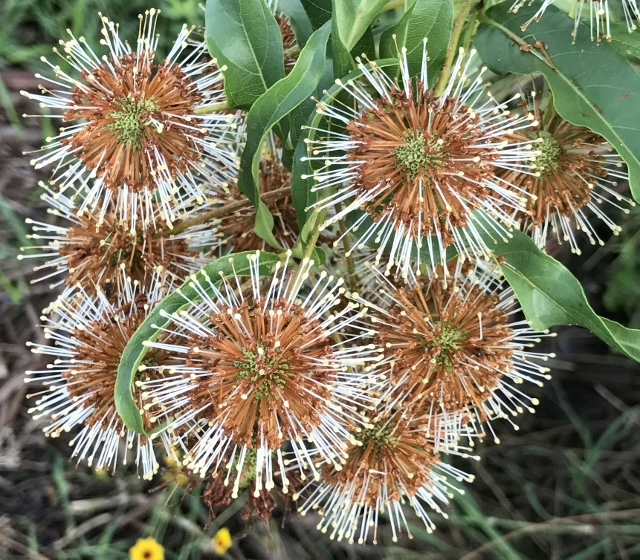


Mexican Buttonbush

Cephalanthus salicifolius

Other common name(s):

Willow Leaf Buttonbush

Family:

Rubiaceae (Madder Family)

Plant Ecoregion Distribution Map

This map uses data from the US EPA. EPA  servers have been offline frequently so maps may not display. We are working on a solution.

Gulf Coast Prairies and Marshes
Lower Rio Grande Alluvial Floodplain, Lower Rio Grande Valley

Plant Characteristics

Growth Form

Shrub, Tree

Height

8
to
18
ft.

Spread

4
to
10
ft.

Leaf Retention

Deciduous

Lifespan

Perennial

Habitat and Care Requirements

Soil Type(s)

Clay, Loam, Moist, Poor Drainage

Light Requirement

Sun, Part Shade

Water Requirement

Medium, High

Native Habitat

Riparian, Wetland

Bloom and Attraction

Bloom Color

Pink, White

Bloom Season

Spring, Summer

Seasonal Interest

Flowers, Fruit, Nectar, Pollen

Wildlife Benefit

Bees, Birds, Butterflies, Nectar Insects

Maintenance

Low maintenance and heat tolerant. Rare in the wild, but can be found in plant nurseries. Prune in early spring; can be cut down to ground level. Native habitat: riparian zones, swamps, and pond margins.

Description

Blooms March-July. Multi-stemmed shrub or small tree. Unlike the leaves of the Common Buttonbush, Mexican Buttonbush leaves are shorter, narrow and lance-shaped. Flowers are clustered in a dense round head, 1 inch or less in diameter. Calyxes are densely hairy on the outer surfaces. The fruit is a rounded ball of nutlets.
Material Treatment Method Collection References
Semi-harwood Cutting Use a sharp, sterilized knife or scissors to make a clean cut below a node. Remove the leaves from the bottom half to two-thirds of the cutting to reduce moisture loss. Dip the cut end of the mexican buttonbush cutting in rooting hormone powder or gel to encourage root development. This step is crucial to ensure successful propagation. Fill a pot with a well-draining propagation mix, such as a combination of sand and perlite. Insert the cut end of the mexican buttonbush cutting into the soil about 2-3 inches deep. Gently firm the soil around the cutting. Place the pot in a warm, humid location with indirect light. Keep the soil consistently moist but not waterlogged by misting it regularly. Covering the pot with a plastic bag or placing it in a propagation dome can help maintain humidity. Once the mexican buttonbush cuttings have developed roots and new growth is visible, gradually acclimate them to outdoor conditions by reducing humidity and increasing light exposure. Transplant the rooted cuttings into individual pots with rich, well-draining soil. Regular watering and fertilization with a balanced, slow-release fertilizer will help promote healthy growth. Monitor for pests and diseases, providing appropriate treatment as needed. Over time, as the plants establish, transition them to their permanent outdoor location in partial to full sun and provide ongoing care suited to mexican buttonbush's specific needs. Select healthy, semi-hardwood cuttings from mexican buttonbush, approximately 6-8 inches in length. Ensure the cuttings have at least two to three nodes. The optimal propagation period is late spring to early summer. Propagation by cuttings during this time ensures ideal temperatures and light conditions. Warmer soils aid in root development, while increased daylight promotes robust growth. These conditions maximize success rates and plant vitality according to horticultural guidelines. https://www.picturethisai.com/care/propagate/Cephalanthus_salicifolius.html

About the Region

2026 Fall Symposium Logo

This low-elevations region of Texas extends inland from the barrier islands, about 60 or so miles, and stretches from Brownsville to Louisiana. In total, it covers about 9.5 million acres, with a high point of 150 feet in elevation. More than 1000 species of plants can be found in this region. On the southern end, species more common in Mexico (such as Sabal mexicana) and Central America occur.

The barrier islands provide us with dune systems, and clay flats to the inland side, which have species found in these areas alone. Many plants here, such as Ipomoea pes-caprae (beach morning glory), can be found throughout tropical regions of the globe. I’ve encountered the same species on the beaches of Guam.

Once inland, vast marshes and wet prairies occur. Occasionally, oak (Quercus fusiformis) groves can be found. Common grasses include species of Bothriochloa, Paspalum, and Sporobolus; eastern gamagrass (Tripsacum dactyloides); and switchgrass (Panicum species). Many rivers and creeks cut through the Gulf Prairies, and along these riparian areas various species of trees, Sabal minor, and other plants adapted to clay soils can be found. Due to overgrazing, farming, and fire suppression, woody species such as mesquite (Prosopis glandulosa) and huisache (Acacia farnesiana), and invasive species such as chinaberry (Melia azedarach), Brazilian pepper (Schinus terebinthifolius), and Chinese tallow (Sapium sebiferum) have increased and displaced our native flora.

Source: Wildflowers of Texas by Michael Eason