

Scarlet Leatherflower

Clematis texensis

Other common name(s):

Scarlet Clematis, Texas Clematis

Family:

Ranunculaceae (Buttercup Family)

Plant Ecoregion Distribution Map

This map uses data from the US EPA. EPA  servers have been offline frequently so maps may not display. We are working on a solution.

Edwards Plateau
Balcones Canyonlands, Edwards Plateau Woodland, Llano Uplift, Semiarid Edwards Plateau

Plant Characteristics

Growth Form

Vine

Height

8
to
10
ft.

Spread

1
to
2
ft.

Leaf Retention

Deciduous

Lifespan

Perennial

Habitat and Care Requirements

Soil Type(s)

Limestone, Loam, Moist, Rocky, Sand, Well Drained

Light Requirement

Part Shade

Water Requirement

Medium

Native Habitat

Woodland

Bloom and Attraction

Bloom Color

Red

Bloom Season

Spring, Summer

Seasonal Interest

Nectar, Seeds

Wildlife Benefit

Birds, Butterflies, Hummingbirds

Maintenance

Fast growing. A very hardy and drought tolerant clematis. Twines on fences and other plants or will sprawl as a ground cover. A great choice for small spaces. Cannot tolerate poor drainage. Provides a subtle, beautiful accent to a shady areas. Blooms best with half a day of sun. Keep roots cool. Dies to the ground in fall. Although native only to the southeastern part of the Edwards Plateau Ecoregion it has become popular across the state. Extra care may be needed for it to grow in other regions. WARNING: toxic to humans and pets. Native habitat: limestone cliffs, rocky slopes, streamsides.

Description

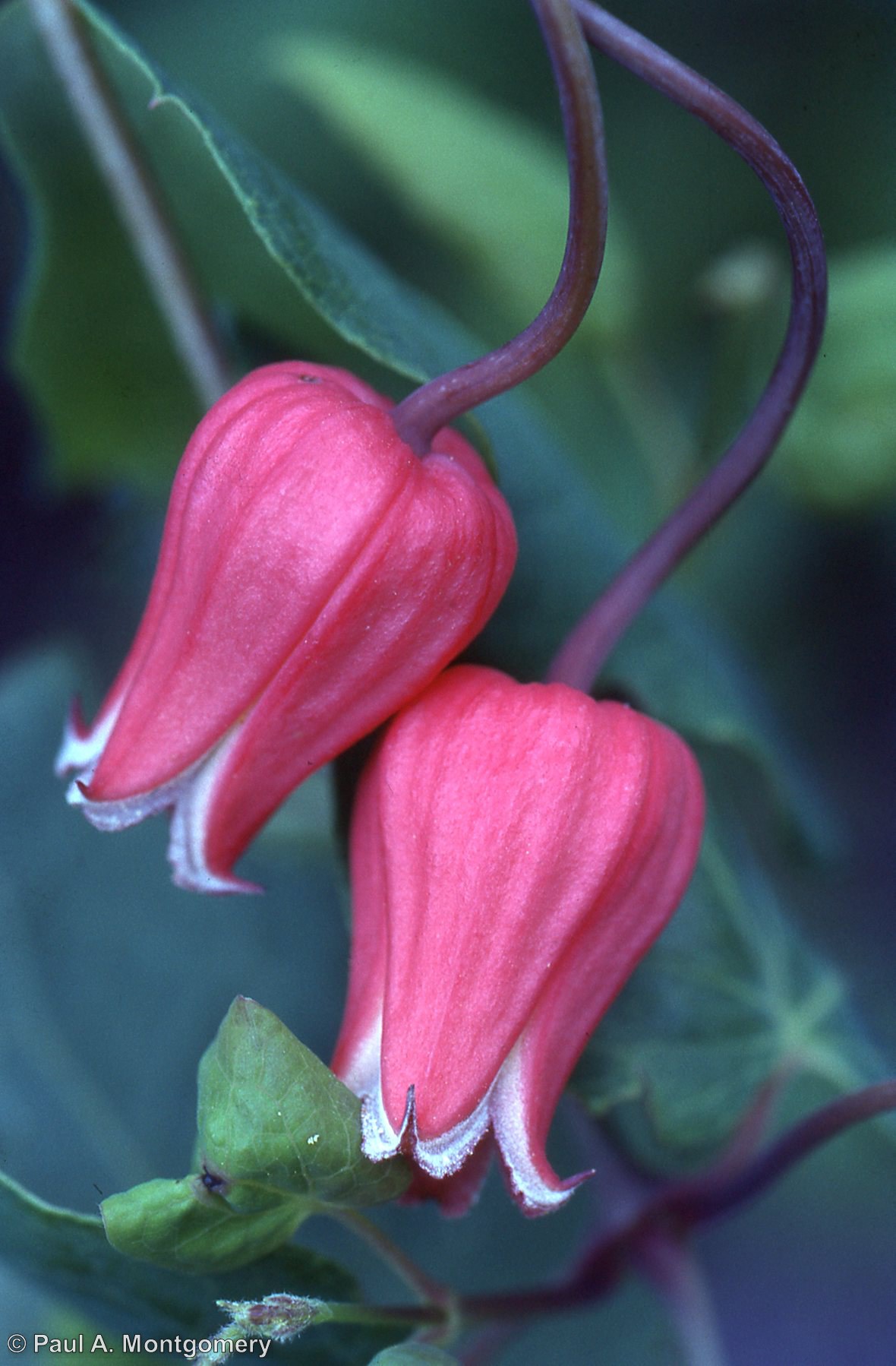
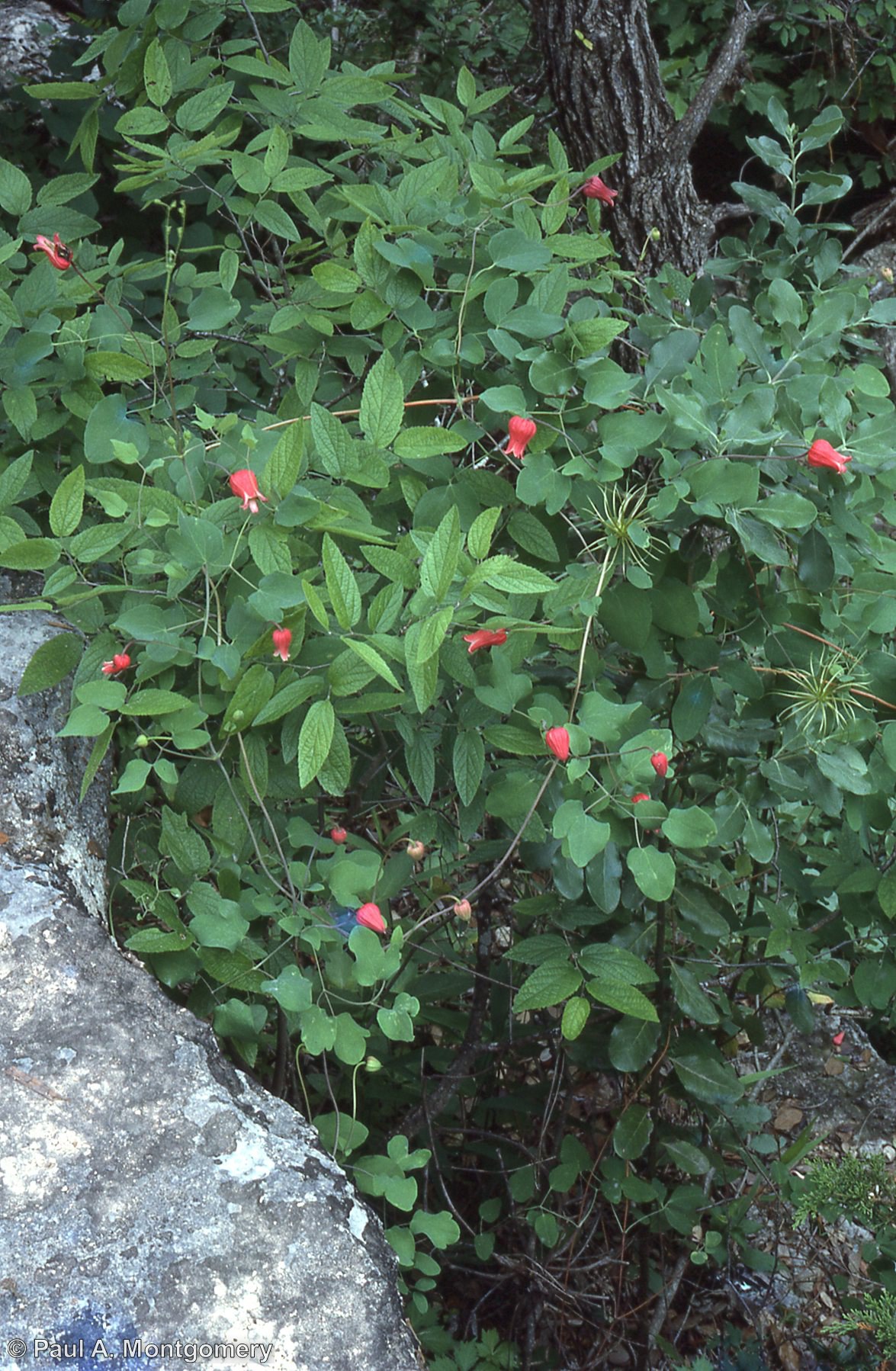
Blooms March-July. A low twining vine. Stems are bare for the first two feet. Leaves have 6-10 oval to nearly round leaflets, with one tendril-like terminal leaf. Leathery, bell-shaped, reddish orange to scarlet flowers, have flared tips. Petals are absent, sepals are showy, appearing on new growth only. After the flower blooms, a feathery ball of plumed seeds will appear.
Previous Scientific Name(s): Clematis coccinea, Coriflora texensis
Material Treatment Method Collection References
Seed Scarification Soak the seeds of scarlet leather flower in lukewarm water for 24 hours prior to sowing. This hydration helps break the seed's dormancy and encourages germination. Sow seeds immediately in well-drained soil, providing a structure for scarlet leather flower to climb, or in pots with a well-draining soil mix such as a mixture of potting soil, perlite, and peat moss. Ensure the containers have adequate drainage holes. Sow the seeds on the surface of the soil and press them gently into the soil but do not cover them completely, as they require light to germinate. Mist lightly to keep the soil moist. For best results, collect seeds once pods have ripened, ensuring careful handling as they're delicate https://www.picturethisai.com/care/propagate/Clematis_texensis.html
Seed Stratification Moist stratify at 41 degrees for 60-90 days before planting in spring. Gather seeds when they are no longer green but before the cluster of achenes completely dries and drops the seeds to the ground. They remain viable up to two years without refrigeration. https://gonzalesmastergardeners.org/uploads/7/2/5/4/72540621/clematis_texensis.pdf
Stem Cutting Remove the leaves from the bottom half of the stem and dip the cut end in rooting hormone. Place the cutting in a pot filled with well-draining soil or a mix of perlite and peat. Keep the soil moist but not waterlogged and place the pot in a shaded area with indirect sunlight. Mist the cutting daily with water to prevent it from drying out and cover the pot with plastic wrap to create a humid environment. After 3-4 weeks, check for roots by gently tugging the stem. Once roots have formed, transplant the cutting into a larger pot or directly into the ground. Take a cutting of a mature stem in the early summer, making sure it has at least two nodes and the stem is about 6 inches in length. https://plantiary.com/plant/clematis-texensis_6341.html
Stem Cutting For water propagation, avoid using transparent containers. Place the stem in water, and once roots appear, add hydroponic fertilizer. When roots are 5-7 cm long, transfer to soil. For soil propagation, plant deeply in soil without fertilizer. After propagation, avoid exposing to bright light. Gradually increase light exposure to help the plant adapt to gentle light. Maintain high humidity and a temperature of 18-25°C. https://plantingo.com/plant-care-guide/clematis-texensis-buckley/3579
Stem Layering Stem layering is mentioned, but there are no details available at this time. We will add more information as it becomes available.

About the Region

2026 Fall Symposium Logo

This low-elevations region of Texas extends inland from the barrier islands, about 60 or so miles, and stretches from Brownsville to Louisiana. In total, it covers about 9.5 million acres, with a high point of 150 feet in elevation. More than 1000 species of plants can be found in this region. On the southern end, species more common in Mexico (such as Sabal mexicana) and Central America occur.

The barrier islands provide us with dune systems, and clay flats to the inland side, which have species found in these areas alone. Many plants here, such as Ipomoea pes-caprae (beach morning glory), can be found throughout tropical regions of the globe. I’ve encountered the same species on the beaches of Guam.

Once inland, vast marshes and wet prairies occur. Occasionally, oak (Quercus fusiformis) groves can be found. Common grasses include species of Bothriochloa, Paspalum, and Sporobolus; eastern gamagrass (Tripsacum dactyloides); and switchgrass (Panicum species). Many rivers and creeks cut through the Gulf Prairies, and along these riparian areas various species of trees, Sabal minor, and other plants adapted to clay soils can be found. Due to overgrazing, farming, and fire suppression, woody species such as mesquite (Prosopis glandulosa) and huisache (Acacia farnesiana), and invasive species such as chinaberry (Melia azedarach), Brazilian pepper (Schinus terebinthifolius), and Chinese tallow (Sapium sebiferum) have increased and displaced our native flora.

Source: Wildflowers of Texas by Michael Eason