
Black Samson

Echinacea angustifolia

Other common name(s):

Black Samson Echinacea, Narrow-leaf Coneflower

Family:

Asteraceae (Aster Family)

Plant Ecoregion Distribution Map

This map uses data from the US EPA. EPA  servers have been offline frequently so maps may not display. We are working on a solution.

Central Great Plains, Cross Timbers, Edwards Plateau, High Plains, Southwestern Tablelands, Texas Blackland Prairies
Red Prairie
Carbonate Cross Timbers, Eastern Cross Timbers, Grand Prairie, Limestone Cut Plain, Western Cross Timbers
Balcones Canyonlands
Canadian/Cimarron High Plains, Llano Estacado
Canadian/Cimarron Breaks, Caprock Canyons Badlands Breaks
Northern Blackland Prairie

Plant Characteristics

Growth Form

Herbaceous

Height

1.5
to
2
ft.

Spread

.76
to
1.5
ft.

Leaf Retention

Deciduous

Lifespan

Perennial

Habitat and Care Requirements

Soil Type(s)

Clay, Dry, Loam, Sand, Well Drained

Light Requirement

Sun, Part Shade

Water Requirement

Low

Native Habitat

Grassland, Woodland Edge

Bloom and Attraction

Bloom Color

Pink, Purple

Bloom Season

Spring, Summer

Seasonal Interest

Nectar, Pollen

Wildlife Benefit

Bees, Butterflies

Maintenance

Better adapted to Central and West Texas than the purple, Echinacea purpurea, that is commercially available. Tends to look poorly in its native habitat, but often thrives in cultivation. Takes time to get established. Attractive as cut flower. Native habitat: woodland edge, prairies, meadows, pastures.

Description

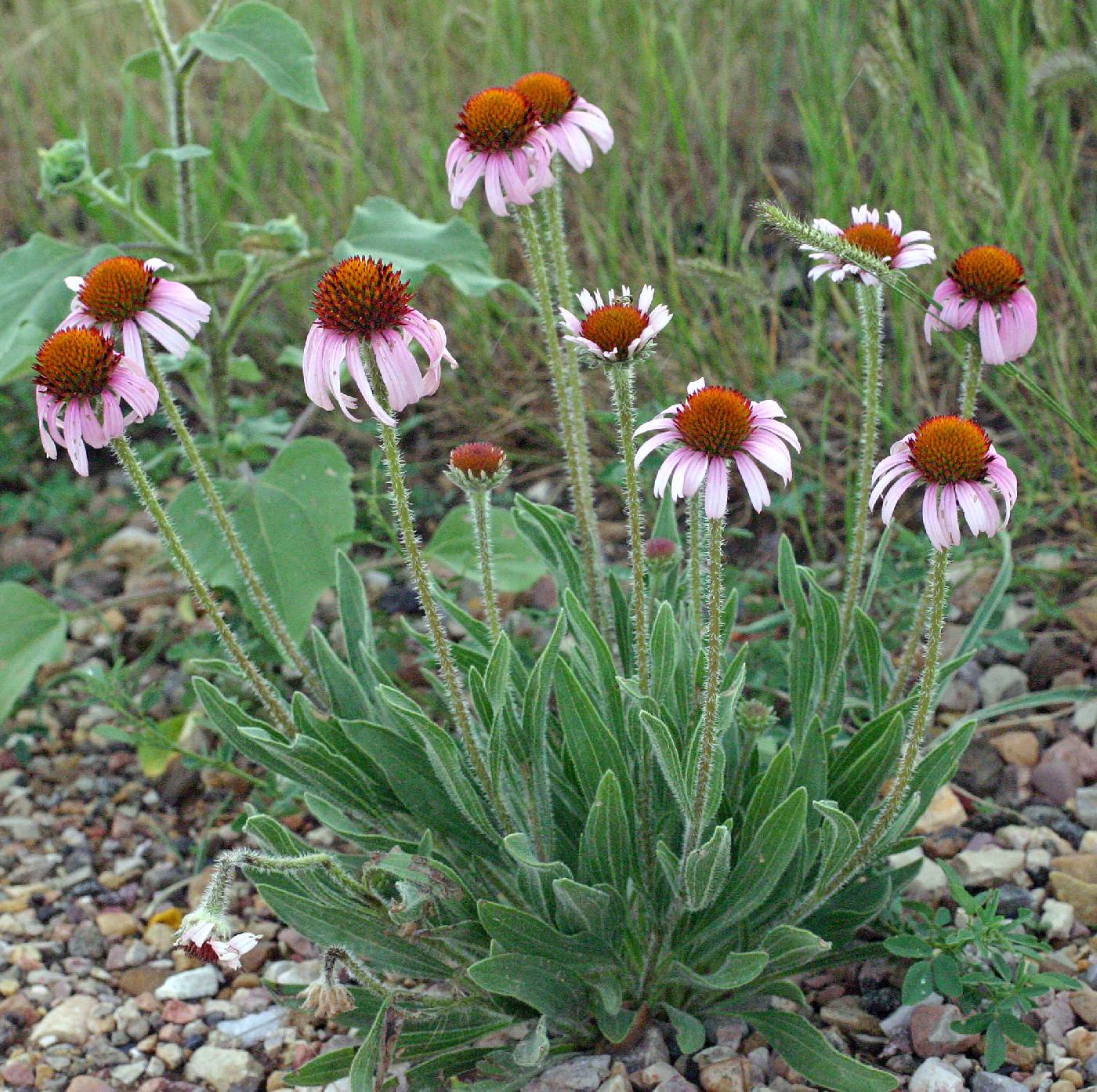
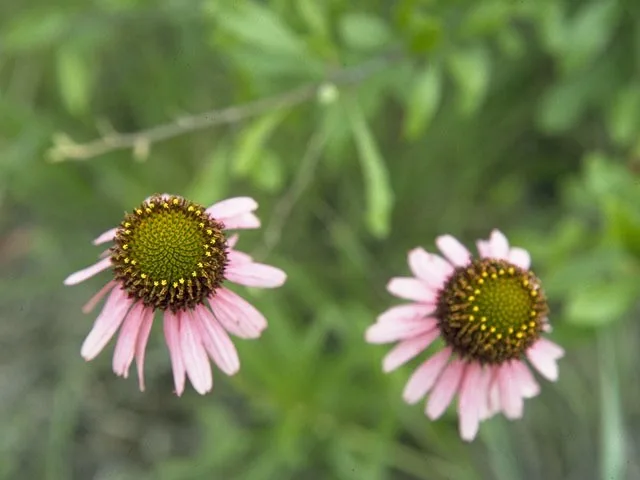
Blooms May-July. Growth form, stout stems, mostly unbranched. Oblong leaves with rough hairs. A single, purple flower on each stem, with a spiny, dark, central cone. The fruit is a cypsela: a dry, one-seeded fruit, usually topped by pappus.
Material Treatment Method Collection References
Seed Stratification Sow 1/4 inch deep in clean, form, seed bed, late fall, in the field or sow seed in flats following cold-moist stratification. For best results, cold-moist stratification in plastic bag in refrigerator for two to four months. They should germinate within two weeks after treatment. Field grown plants may be lifted in early spring for transplanting. Plants and seeds must be well watered until the plants are 1+ years old. Seed germination is usually slow and poor, often yielding only 50% germination rates without treatment. Mature heads may be clipped from plants. Harvest seeds in late fall. Collect seed that falls easily out of the dried flower head. Seed that is hard to remove is usually bad and difficult to germinate. 1) https://npn.rngr.net/renderNPNProtocolDetails?selectedProtocolIds=asteraceae-echinacea-1349 2) https://openprairie.sdstate.edu/nativeplant/11/#:~:text=Germination:%20Etherol%20treatment%20(1mM%20solution,Downloads:%203%20see%20details 3) /https://newcropsorganics.ces.ncsu.edu/wp-content/uploads/2017/06/Echinacea-Angustifolia.pdf?fwd=no
Seed Scarification Etherol treatment (1mM solution on paper towels in the refrigerator for 2 weeks} Seeds should germinate in two weeks after treatment. Seeds can be sown directly into an outdoor seedbed in fall or early spring, but the soil needs to be well prepared. Plant seeds just under the soil surface spacing them two inches apart. Keep the bed moist and weed-free. When seedlings emerge (at least 21 days), thin to the recommended spacing mentioned above. Plants and seeds must be well watered until the plants are 1+ years old. Seed germination is usually slow and poor, often yielding only 50% germination rates. without treatment. Mature heads may be clipped from plants. Harvest seeds in late fall. Collect seed that falls easily out of the dried flower head. Seed that is hard to remove is usually bad and difficult to germinate. 1) https://openprairie.sdstate.edu/nativeplant/11/#:~:text=Germination:%20Etherol%20treatment%20(1mM%20solution,Downloads:%203%20see%20details 2) https://newcropsorganics.ces.ncsu.edu/wp-content/uploads/2017/06/Echinacea-Angustifolia.pdf?fwd=no

About the Region

2026 Fall Symposium Logo

This low-elevations region of Texas extends inland from the barrier islands, about 60 or so miles, and stretches from Brownsville to Louisiana. In total, it covers about 9.5 million acres, with a high point of 150 feet in elevation. More than 1000 species of plants can be found in this region. On the southern end, species more common in Mexico (such as Sabal mexicana) and Central America occur.

The barrier islands provide us with dune systems, and clay flats to the inland side, which have species found in these areas alone. Many plants here, such as Ipomoea pes-caprae (beach morning glory), can be found throughout tropical regions of the globe. I’ve encountered the same species on the beaches of Guam.

Once inland, vast marshes and wet prairies occur. Occasionally, oak (Quercus fusiformis) groves can be found. Common grasses include species of Bothriochloa, Paspalum, and Sporobolus; eastern gamagrass (Tripsacum dactyloides); and switchgrass (Panicum species). Many rivers and creeks cut through the Gulf Prairies, and along these riparian areas various species of trees, Sabal minor, and other plants adapted to clay soils can be found. Due to overgrazing, farming, and fire suppression, woody species such as mesquite (Prosopis glandulosa) and huisache (Acacia farnesiana), and invasive species such as chinaberry (Melia azedarach), Brazilian pepper (Schinus terebinthifolius), and Chinese tallow (Sapium sebiferum) have increased and displaced our native flora.

Source: Wildflowers of Texas by Michael Eason