

Lace Cactus

Echinocereus reichenbachii

Other common name(s):

Lace Hedgehog Cactus, Lace Hedgehog, Purple Candle

Family:

Cactaceae (Cactus Family)

Plant Ecoregion Distribution Map

This map uses data from the US EPA. EPA  servers have been offline frequently so maps may not display. We are working on a solution.

Central Great Plains, Chihuahuan Deserts, Cross Timbers, Edwards Plateau, Southern Texas Plains, Southwestern Tablelands, Texas Blackland Prairies
Broken Red Plains, Limestone Plains, Red Prairie
Stockton Plateau
Carbonate Cross Timbers, Eastern Cross Timbers, Grand Prairie, Limestone Cut Plain, Western Cross Timbers
Balcones Canyonlands, Edwards Plateau Woodland, Llano Uplift, Semiarid Edwards Plateau
Arid Llano Estacado, Canadian/Cimarron High Plains, Llano Estacado, Rolling Sand Plains, Shinnery Sands
Northern Nueces Alluvial Plains, Rio Grande Floodplain and Terraces, Semiarid Edwards Bajada, Texas-Tamaulipan Thornscrub
Canadian/Cimarron Breaks, Caprock Canyons Badlands Breaks, Flat Tablelands and Valleys, Semiarid Canadian Breaks
Floodplains and Low Terraces1, Northern Blackland Prairie, Southern Blackland Prairie

Plant Characteristics

Growth Form

Cactus & Succulent

Height

.25
to
.75
ft.

Spread

.5
to
3
ft.

Leaf Retention

Evergreen

Lifespan

Perennial

Habitat and Care Requirements

Soil Type(s)

Caliche, Clay, Dry, Granitic, Gravelly, Rocky, Sand, Well Drained

Light Requirement

Sun

Water Requirement

Very Low, Low

Native Habitat

Desert, Grassland, Shrubland, Woodland

Bloom and Attraction

Bloom Color

Pink

Bloom Season

Spring

Seasonal Interest

Fruit, Pollen, Seeds

Wildlife Benefit

Bees, Small Mammals

Maintenance

Slow growing. Once established it requires minimal watering making it an ideal plant for xeriscapes. The flowers are very showy, fragrant, produced in profusion, opening during the day, always closing at night. Allow to dry out complete between waterings. Reduce watering in the winter dormant season to prevent root rot. Native habitat: desert scrub, grasslands, oak-juniper woodland.

Description

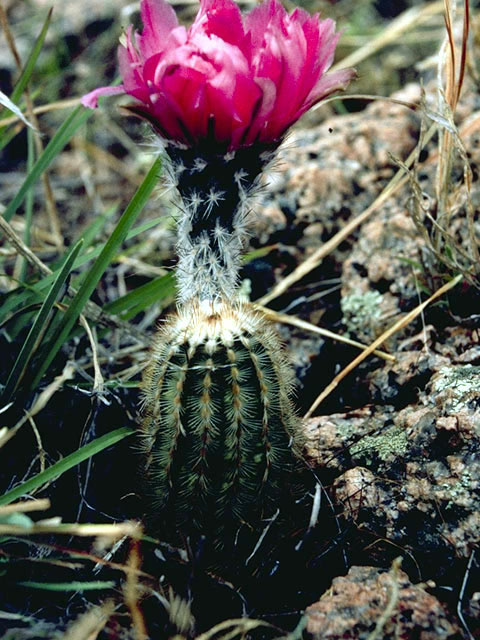
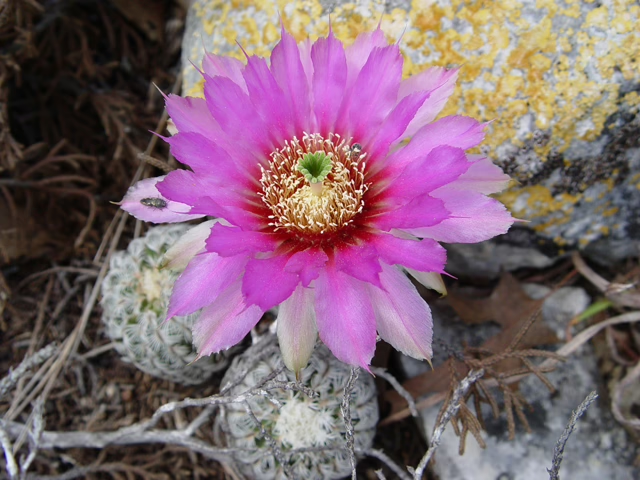
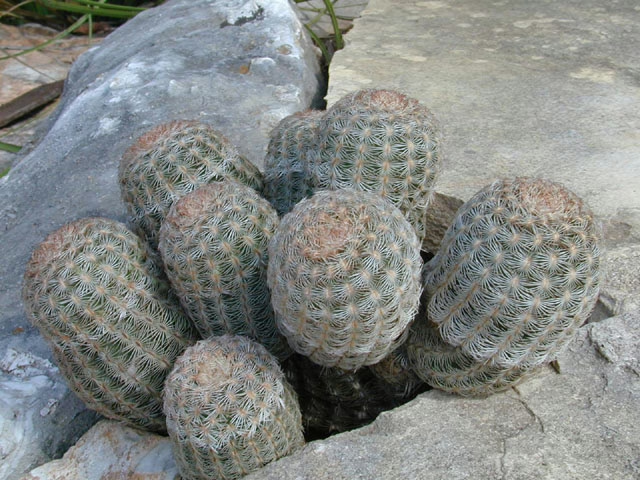
Blooms May-June. Lace Cactus starts out as a sphere and gradually evolves its cylindrical form as it matures. It varies from unbranched to sometimes 12-branched with 10-20 narrow ribs. Stems are erect, cylindrical and cover in spines flattened to the stem, giving it a lacey appearance. The flowers are brilliant purple or rose-pink, 2-5 inches tall and almost as wide. The fruit is a green berry, produced 1.5-2.5 months after flowering
Previous Scientific Name(s): Echinocereus reichenbachii var. albertii, Echinocereus reichenbachii var. fitchii, Echinocereus melanocentrus, Echinocereus albispinus, Echinocereus baileyi, Echinocereus caespitosus, Echinocereus fitchii, Echinocereus perbellus, Echinocereus baileyi var. albispinus, Echinocereus caespitosus var. minor, Echinocereus caespitosus var. perbellus, Echinocereus caespitosus var. purpureus, Echinocereus reichenbachii var. albispinus, Echinocereus purpureus, Echinocereus reichenbachii ssp. baileyi, Echinocereus reichenbachii ssp. armatus, Echinocereus reichenbachii ssp. burrensis, Echinocereus reichenbachii ssp. fitchii, Echinocereus reichenbachii ssp. perbellus, Echinocereus reichenbachii ssp. reichenbachii, Cereus pectinatus var. armatus
Material Treatment Method Collection References
Seed Scarification Use fine-grain sandpaper or a file to gently abrade the seeds, which possess a tough outer layer. Scarification boosts water absorption and aids the germination process. This mild rubbing only removes a portion of the seed coat, improving germination rates without harming the seed embryo. Plant in well-draining cactus mix soil to ensure good air circulation and proper water runoff. This soil blend prevents water accumulation around the roots. Containers with drainage holes are essential to prevent excessive moisture. Use plastic bags or a humidity dome to cover seed trays to maintain a high moisture environment, which is crucial for the germination of Lace Hedgehog Cactus seeds. Wait for the fruit to mature and starting to dry and shrivel; this is when seeds are ripe for the picking. Use a sharp, sterile knife or scalpel to precisely detach seed pods from the hedgehog cactus without harming plant tissue. A keen blade ensures a clean cut, lessening plant stress and enhancing recovery and regrowth periods. 1) https://www.forwardplant.com/care/propagate/echinocereus-reichenbachii/ 2) https://www.wildflower.org/plants/result.php?id_plant=ECRE
Stem Cutting Successfully rooting cuttings from this cactus can be challenging, but stem cuttings provide faster results and this method maintains the parent plant's characteristics. Allow the cut end to callous over for several days to a week to prevent rot. This step is crucial for giving your cutting the ability to fend off root rot and infection. Then plant in a well-draining, barely moist potting mix and maintain a warm and dry environment during the rooting process. Excessive watering can lead to rot. Roots develop within a month, after which you can begin regular watering. Seeing new growth from the cutting indicates that it has successfully rooted and is growing. Take cuttings from mature stems during the growing season (spring or early summer). Look for stems that are healthy and have a semi-hardwood consistency. About 4-6 inches in length is ideal, with several leaf nodes — the spots where roots will emerge. Use sharp, sterilized scissors or pruners to remove an offset stem with a clean, angled cut at the base just below a node. 1) https://propagate.one/how-to-propagate-echinocereus-reichenbachii/ 2) https://plantiary.com/plant/echinocereus-reichenbachii_636.html
Clump Division Allow the cut ends of both the mother plant and the offsets to callous over for a few days before planting them in a well-draining potting mix. Division works well for established clumps. This works best in spring as growth resumes. Carefully separate offsets (pups) from the mother plant with roots attached using a sharp, sterilized knife or blade. Damage to the mother plant or the offsets can occur if done improperly. Offsets should be of sufficient size before separation to ensure viability. Ignore the runts; bigger offsets mean a head start. 1) https://propagate.one/how-to-propagate-echinocereus-reichenbachii/

About the Region

2026 Fall Symposium Logo

This low-elevations region of Texas extends inland from the barrier islands, about 60 or so miles, and stretches from Brownsville to Louisiana. In total, it covers about 9.5 million acres, with a high point of 150 feet in elevation. More than 1000 species of plants can be found in this region. On the southern end, species more common in Mexico (such as Sabal mexicana) and Central America occur.

The barrier islands provide us with dune systems, and clay flats to the inland side, which have species found in these areas alone. Many plants here, such as Ipomoea pes-caprae (beach morning glory), can be found throughout tropical regions of the globe. I’ve encountered the same species on the beaches of Guam.

Once inland, vast marshes and wet prairies occur. Occasionally, oak (Quercus fusiformis) groves can be found. Common grasses include species of Bothriochloa, Paspalum, and Sporobolus; eastern gamagrass (Tripsacum dactyloides); and switchgrass (Panicum species). Many rivers and creeks cut through the Gulf Prairies, and along these riparian areas various species of trees, Sabal minor, and other plants adapted to clay soils can be found. Due to overgrazing, farming, and fire suppression, woody species such as mesquite (Prosopis glandulosa) and huisache (Acacia farnesiana), and invasive species such as chinaberry (Melia azedarach), Brazilian pepper (Schinus terebinthifolius), and Chinese tallow (Sapium sebiferum) have increased and displaced our native flora.

Source: Wildflowers of Texas by Michael Eason