
Texas Bluebell

Eustoma exaltatum ssp. russellianum

Other common name(s):

Bluebell, Showy Prairie Gentian, Prairie Gentian

Family:

Gentianaceae (Gentian Family)

Plant Ecoregion Distribution Map

This map uses data from the US EPA. EPA  servers have been offline frequently so maps may not display. We are working on a solution.

Central Great Plains, Chihuahuan Deserts, Cross Timbers, East Central Texas Plains, Edwards Plateau, Gulf Coast Prairies and Marshes, High Plains, Southern Texas Plains, Southwestern Tablelands, Texas Blackland Prairies, Western Gulf Coastal Plain
Broken Red Plains, Limestone Plains, Red Prairie
Stockton Plateau
Carbonate Cross Timbers, Eastern Cross Timbers, Grand Prairie, Limestone Cut Plain, Western Cross Timbers
Bastrop Lost Pines, Floodplains and Low Terraces2, Northern Post Oak Savanna, Northern Prairie Outliers, San Antonio Prairie, Southern Post Oak Savanna
Balcones Canyonlands, Edwards Plateau Woodland, Llano Uplift
Lower Rio Grande Valley
Canadian/Cimarron High Plains, Llano Estacado, Rolling Sand Plains
Northern Nueces Alluvial Plains, Semiarid Edwards Bajada
Canadian/Cimarron Breaks, Caprock Canyons Badlands Breaks, Flat Tablelands and Valleys, Semiarid Canadian Breaks
Floodplains and Low Terraces1, Northern Blackland Prairie, Southern Blackland Prairie
Flatwoods, Southern Tertiary Uplands

Plant Characteristics

Growth Form

Herbaceous

Height

1
to
3
ft.

Spread

.75
to
1
ft.

Leaf Retention

Deciduous

Lifespan

Annual

Habitat and Care Requirements

Soil Type(s)

Loam, Moist, Sand

Light Requirement

Sun

Water Requirement

Medium, High

Native Habitat

Grassland, Riparian

Bloom and Attraction

Bloom Color

Blue

Bloom Season

Summer, Fall

Seasonal Interest

Nectar, Pollen, Seeds

Wildlife Benefit

Bees, Birds, Butterflies, Hummingbirds

Maintenance

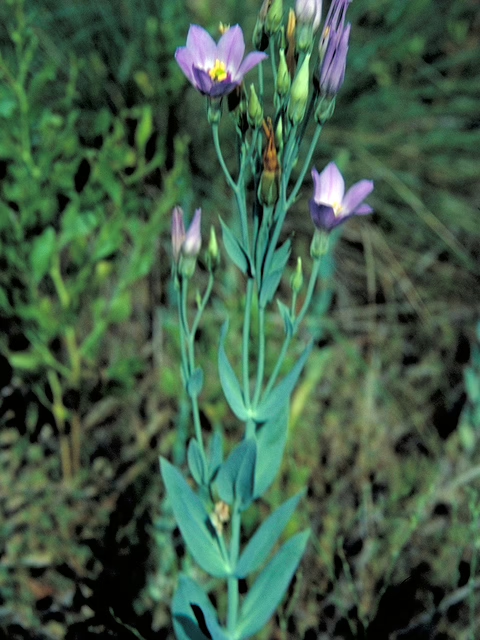
Has broad habitat preferences for relatively abundant habitat type. While it prefers full sun, the Texas bluebell will grow in part shade. During periods of rain, the beautiful blue blossoms will close and will re-open when the sun emerges. The plant is heat tolerant and continues to produce blooms during the summer when other wildflowers are past their prime. In the home landscape, Perfect for the edges of water or rain gardens, in ornamental beds, borders or cutting gardens. Easy to maintain and have no known serious insect or disease problems. Consider beginning with young rosettes; starting from seed can be challenging. Not common in the wild or commercially, but may be found at NPSOT Chapter Plant Sales. Native habitat: moist places in fields and prairies, adjacent to streams.

Description

Blooms June-September. Can also grow as a perennial, or biennial depending on the region. This perennial plant develops a long taproot to access the required moisture from deep within the soil. The two-inch bell-shaped flowers stand upright on deep blue-green stems with thick leaves covered with a waxy bloom. The major pollinator for this plant is the metallic green sweat bee, whose long tongue is able to reach the nectar deep within the large flower.
Previous Scientific Name(s): Eustoma grandiflorum, Eustoma russellianum
Material Treatment Method Collection References
Seed No Treatment The seed is exceptionally small and somewhat difficult to germinate. The best results have come from surface seeding (since the seed requires light for germination) in flats at approximately 70 75 degrees. Field seeding can be done in spring or fall, however, spring germination usually results in the vegetative growth overwintering and not flowering until the second summer. Fall germination should produce flowers the first season. Collect seed when seeds inside the capsule are black. https://www.wildflower.org/plants/result.php?id_plant=EUEXR

About the Region

2026 Fall Symposium Logo

This low-elevations region of Texas extends inland from the barrier islands, about 60 or so miles, and stretches from Brownsville to Louisiana. In total, it covers about 9.5 million acres, with a high point of 150 feet in elevation. More than 1000 species of plants can be found in this region. On the southern end, species more common in Mexico (such as Sabal mexicana) and Central America occur.

The barrier islands provide us with dune systems, and clay flats to the inland side, which have species found in these areas alone. Many plants here, such as Ipomoea pes-caprae (beach morning glory), can be found throughout tropical regions of the globe. I’ve encountered the same species on the beaches of Guam.

Once inland, vast marshes and wet prairies occur. Occasionally, oak (Quercus fusiformis) groves can be found. Common grasses include species of Bothriochloa, Paspalum, and Sporobolus; eastern gamagrass (Tripsacum dactyloides); and switchgrass (Panicum species). Many rivers and creeks cut through the Gulf Prairies, and along these riparian areas various species of trees, Sabal minor, and other plants adapted to clay soils can be found. Due to overgrazing, farming, and fire suppression, woody species such as mesquite (Prosopis glandulosa) and huisache (Acacia farnesiana), and invasive species such as chinaberry (Melia azedarach), Brazilian pepper (Schinus terebinthifolius), and Chinese tallow (Sapium sebiferum) have increased and displaced our native flora.

Source: Wildflowers of Texas by Michael Eason