
Red Yucca

Hesperaloe parviflora

Other common name(s):

Red False Yucca

Family:

Asparagaceae (Asparagus Family)

Plant Ecoregion Distribution Map

This map uses data from the US EPA. EPA  servers have been offline frequently so maps may not display. We are working on a solution.

Edwards Plateau
Limestone Cut Plain
Balcones Canyonlands, Edwards Plateau Woodland, Llano Uplift
Semiarid Edwards Bajada

Plant Characteristics

Growth Form

Cactus & Succulent

Height

2
to
4
ft.

Spread

2
to
3
ft.

Leaf Retention

Evergreen

Lifespan

Perennial

Habitat and Care Requirements

Soil Type(s)

Calcareous, Dry, Limestone, Rocky, Sand, Well Drained

Light Requirement

Sun, Part Shade

Water Requirement

Very Low, Low

Native Habitat

Grassland

Bloom and Attraction

Bloom Color

Pink, Red

Bloom Season

Spring, Summer

Seasonal Interest

Flowers, Fruit, Nectar, Pollen

Wildlife Benefit

Deer, Hummingbirds, Moths

Maintenance

Drought tolerant and adapts to many soils types. May colonize. Selectively prune leaves from the base and flowering stalks away from sidewalks or patios for safety reasons. Flowering stalks can be removed after blooming for a neater aesthetic, however, consider leaving for wildlife habitat. Rare in the wild, but propagated commercially. Can be grown in container gardens. Native habitat: prairies; rocky slopes; mesquite groves.

Description

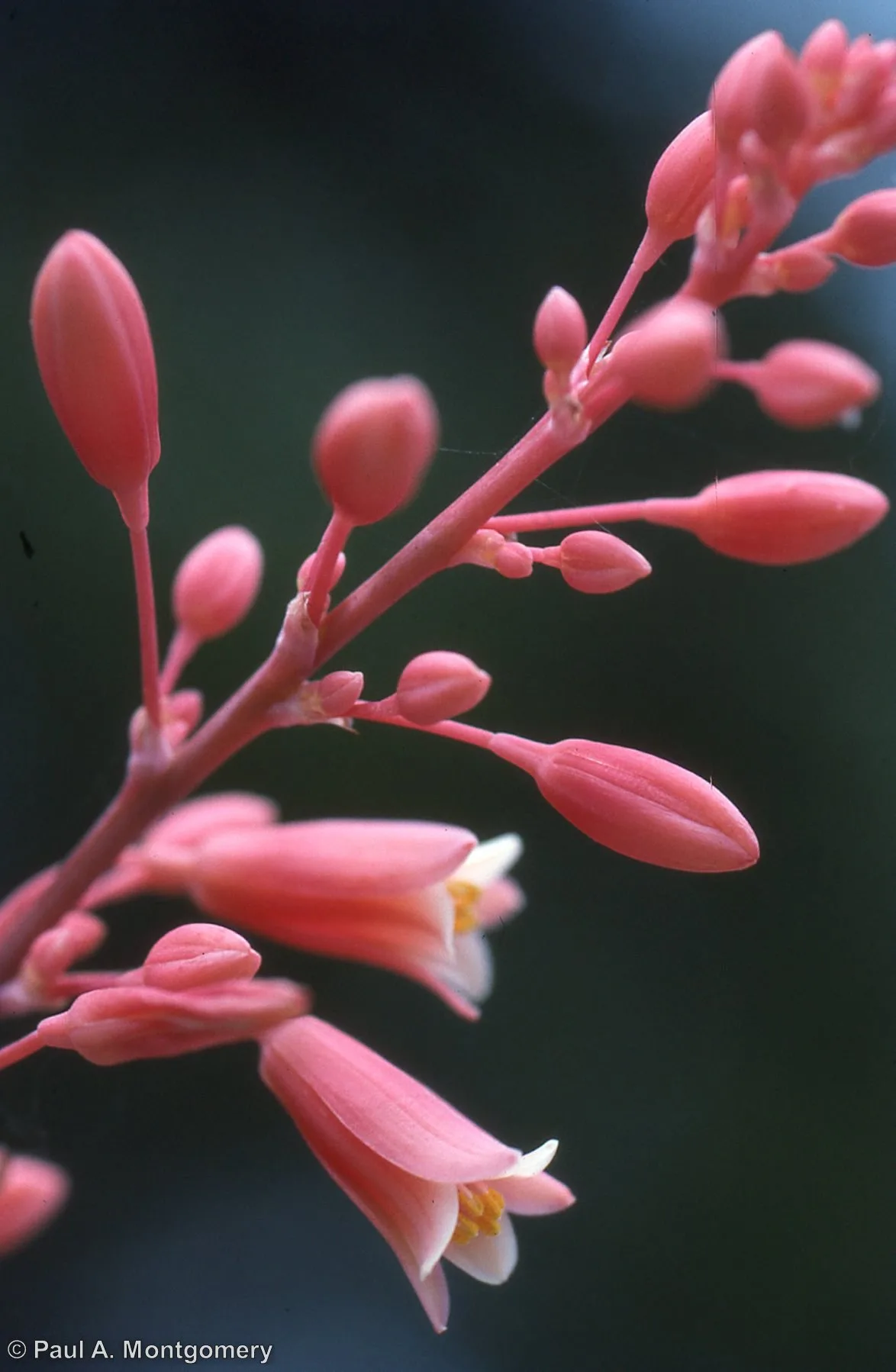
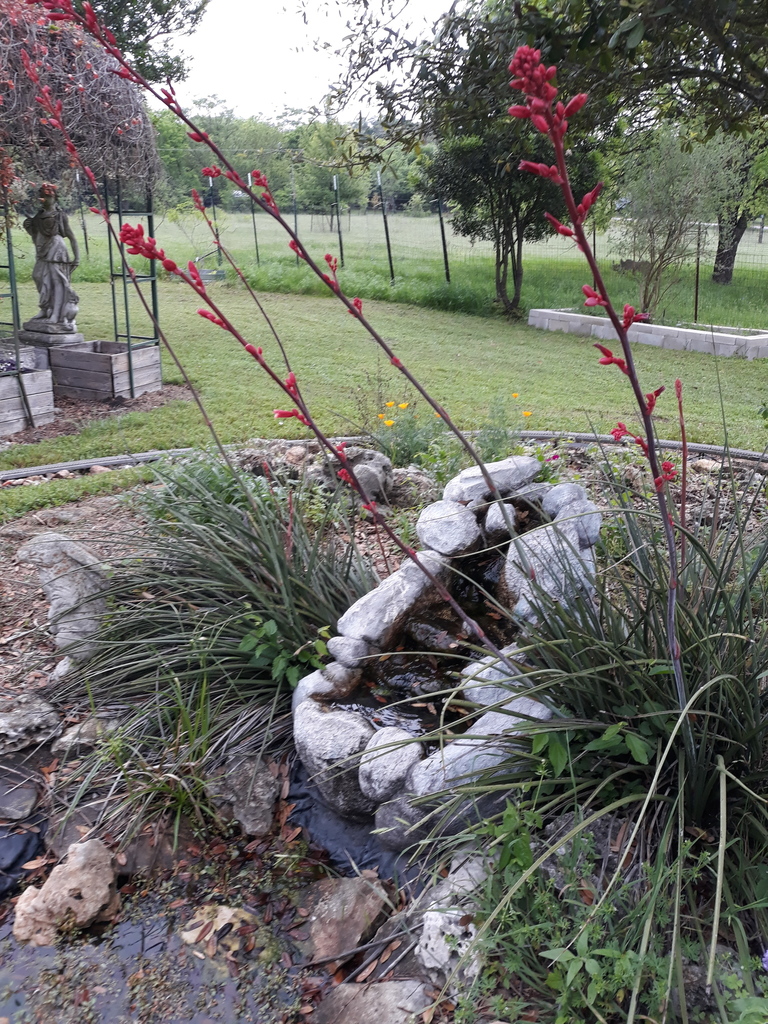
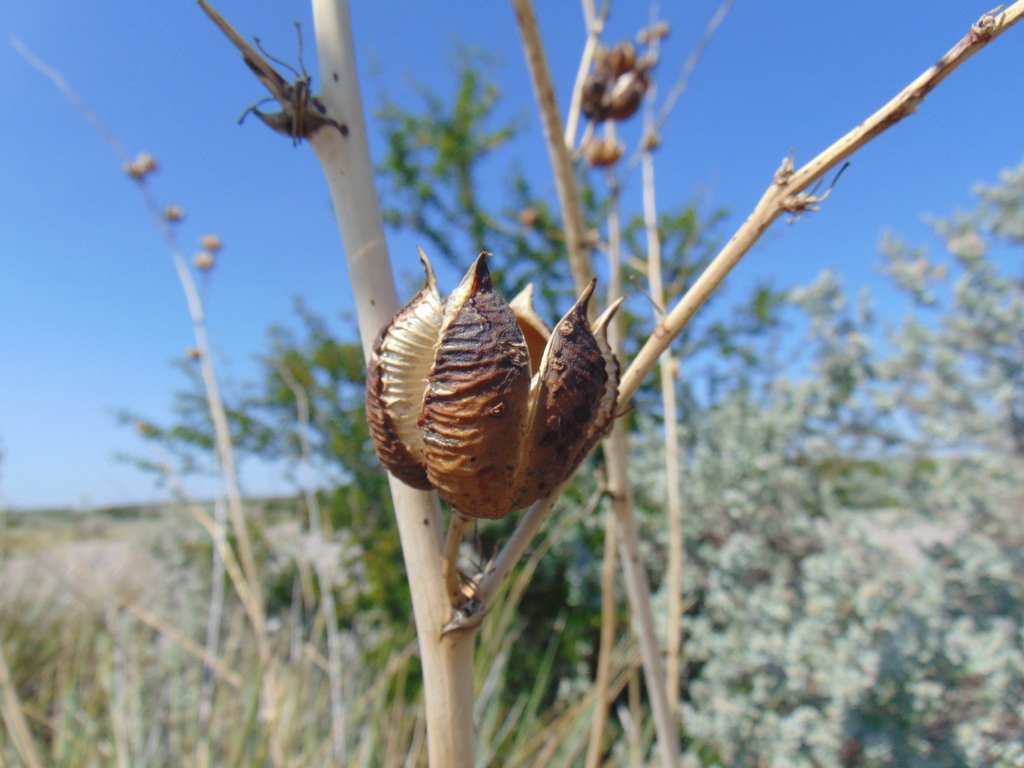
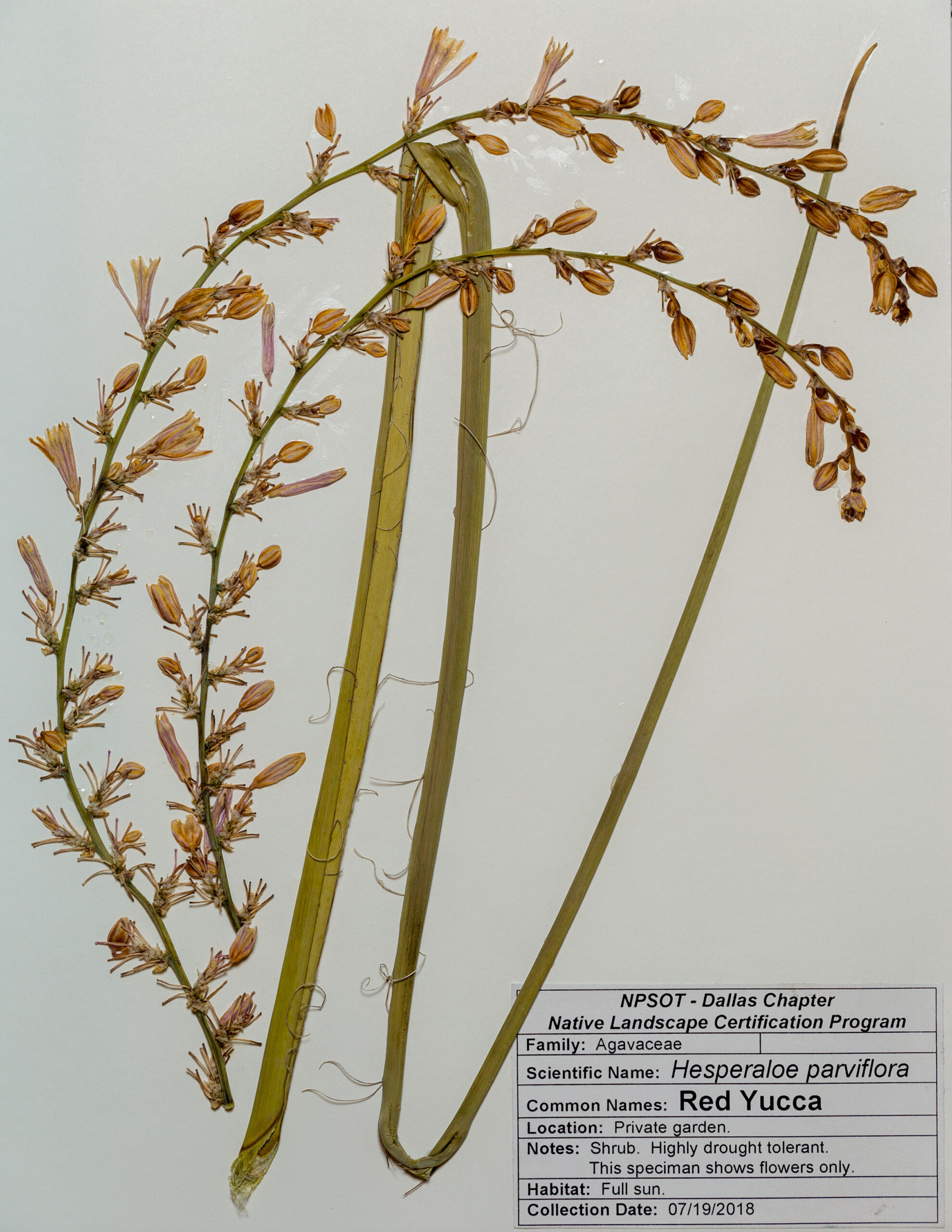
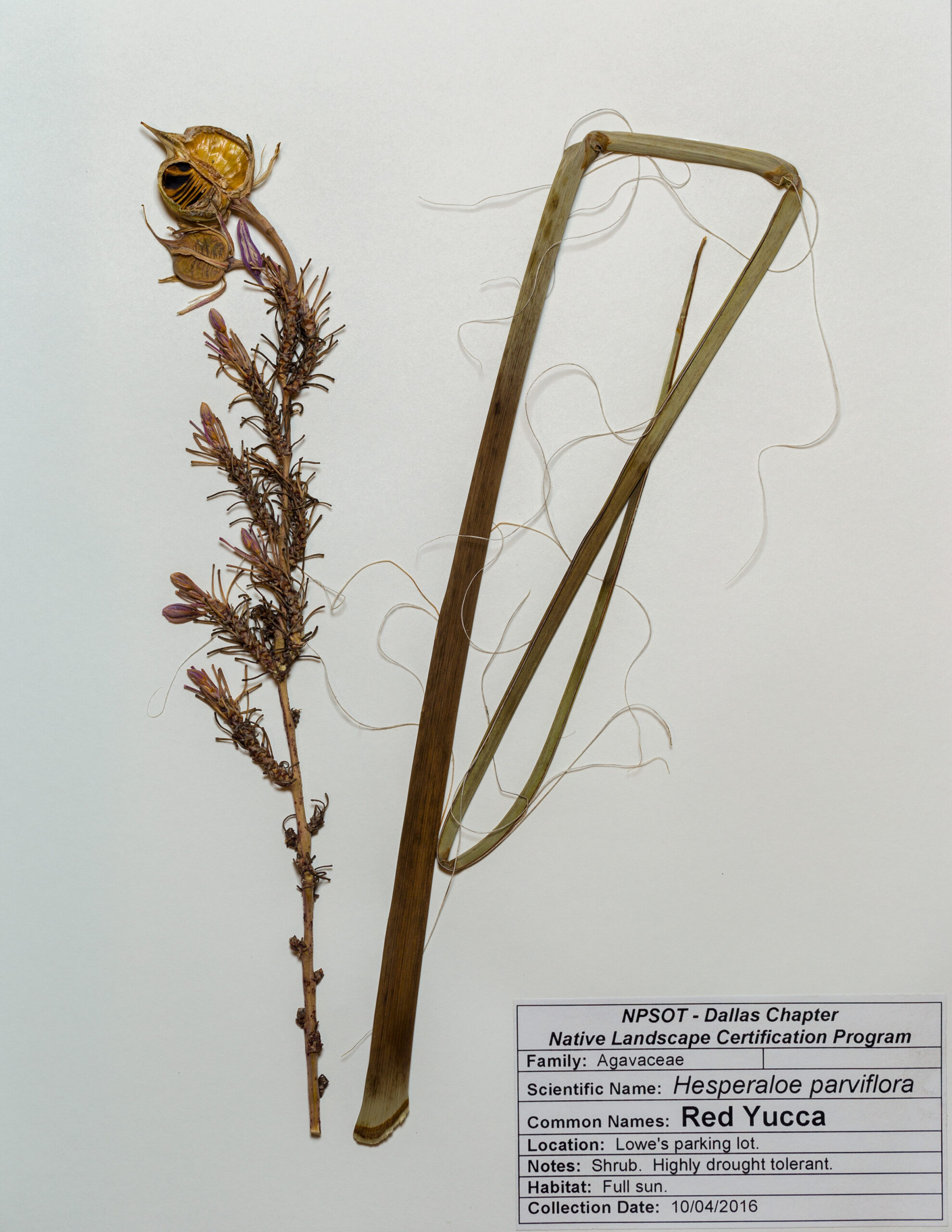
Blooms February-July. Produces stiff, yucca-like, evergreen leaves, growing from the base. Coral-colored, tubular flowers occur at the end of long arching stems. The fruit is a round, woody seed capsule that contains flat, black seeds. Although in the same family as Yucca, the common name is misleading. Hesperaloe, false yucca, are in their own genus. Deer will eat blooms but not the foliage. Although still listed by some in the Agavaceae Family, the majority of botanical organizations now list it in the Asparagaceae Family.
Material Treatment Method Collection References
Offshoots Transplant Select a location with full sun and well-drained soil. Space harvested “pups,” at least 2-3 feet apart to allow for mature growth; young plants may be small, but they will spread relatively quickly. Established plants will eventually develop offsets or “pups” that grow to the side of the plant. To propagate, dig up the offsets and replant them. https://dallascountymastergardeners.org/red-yucca-hesperaloe-parviflora/#:~:text=Propagation%20&%20Planting:,they%20will%20spread%20relatively%20quickly.
Seed Scarification Presoak seeds overnight before planting 2 seeds per cell or plant. Once seedlings sprout, ensure they receive plenty of light by placing them on a sunny windowsill or positioning them 3-4 inches below fluorescent plant lights that are switched on for 16 hours daily and off for 8 hours at night. Adjust the lights as the plants grow taller. Avoid using incandescent bulbs as they generate excessive heat. Remember, most plants need a period of darkness to thrive, so do not keep the lights on for 24 hours. Transplant into garden when temperatures are consistently warm. Before transplanting seedlings into the garden, it's essential to "harden them off". This involves acclimating young plants to outdoor conditions by placing them in a sheltered outdoor area for about a week. Initially, shield them from strong winds and direct sunlight. If there's a risk of frost overnight, either cover the plants or bring them indoors, then return them outside in the morning. This hardening off method helps strengthen the plant's cell structure, minimizing transplant shock and sun damage. Space plants 48 - 60 inches apart in garden. https://www.outsidepride.com/resources/planting/redyucca-planting/#:~:text=Presoak%20seeds%20overnight%20before%20planting,for%208%20hours%20at%20night.

About the Region

2026 Fall Symposium Logo

This low-elevations region of Texas extends inland from the barrier islands, about 60 or so miles, and stretches from Brownsville to Louisiana. In total, it covers about 9.5 million acres, with a high point of 150 feet in elevation. More than 1000 species of plants can be found in this region. On the southern end, species more common in Mexico (such as Sabal mexicana) and Central America occur.

The barrier islands provide us with dune systems, and clay flats to the inland side, which have species found in these areas alone. Many plants here, such as Ipomoea pes-caprae (beach morning glory), can be found throughout tropical regions of the globe. I’ve encountered the same species on the beaches of Guam.

Once inland, vast marshes and wet prairies occur. Occasionally, oak (Quercus fusiformis) groves can be found. Common grasses include species of Bothriochloa, Paspalum, and Sporobolus; eastern gamagrass (Tripsacum dactyloides); and switchgrass (Panicum species). Many rivers and creeks cut through the Gulf Prairies, and along these riparian areas various species of trees, Sabal minor, and other plants adapted to clay soils can be found. Due to overgrazing, farming, and fire suppression, woody species such as mesquite (Prosopis glandulosa) and huisache (Acacia farnesiana), and invasive species such as chinaberry (Melia azedarach), Brazilian pepper (Schinus terebinthifolius), and Chinese tallow (Sapium sebiferum) have increased and displaced our native flora.

Source: Wildflowers of Texas by Michael Eason