

Halberd Leaf Hibiscus

Hibiscus laevis

Other common name(s):

Halberdleaf Rosemallow, Scarlet Rose Mallow, Halberd-leaved Hibiscus, Halberd-leaved Rose-mallow

Family:

Malvaceae (Mallow Family)

Plant Ecoregion Distribution Map

This map uses data from the US EPA. EPA  servers have been offline frequently so maps may not display. We are working on a solution.

East Central Texas Plains, Gulf Coast Prairies and Marshes, Texas Blackland Prairies, Western Gulf Coastal Plain
Bastrop Lost Pines, Floodplains and Low Terraces2, Northern Post Oak Savanna, Northern Prairie Outliers, San Antonio Prairie, Southern Post Oak Savanna
Northern Humid Gulf Coastal Prairies
Floodplains and Low Terraces1, Northern Blackland Prairie, Southern Blackland Prairie
Flatwoods, Floodplains and Low Terraces3, Pleistocene Fluvial Terraces, Red River Bottomlands, Southern Tertiary Uplands, Tertiary Uplands

Plant Characteristics

Growth Form

Herbaceous, Wetland

Height

5
to
6
ft.

Spread

6
to
8
ft.

Leaf Retention

Deciduous

Lifespan

Perennial

Habitat and Care Requirements

Soil Type(s)

Clay, Loam, Moist, Mud, Poor Drainage, Sand, Wet

Light Requirement

Sun, Part Shade

Water Requirement

Medium, High

Native Habitat

Riparian, Wetland

Bloom and Attraction

Bloom Color

Pink, White

Bloom Season

Spring, Summer, Fall

Seasonal Interest

Larval Host, Nectar, Nesting Material, Pollen

Wildlife Benefit

Bees, Birds, Butterflies, Hummingbirds, Moths

Maintenance

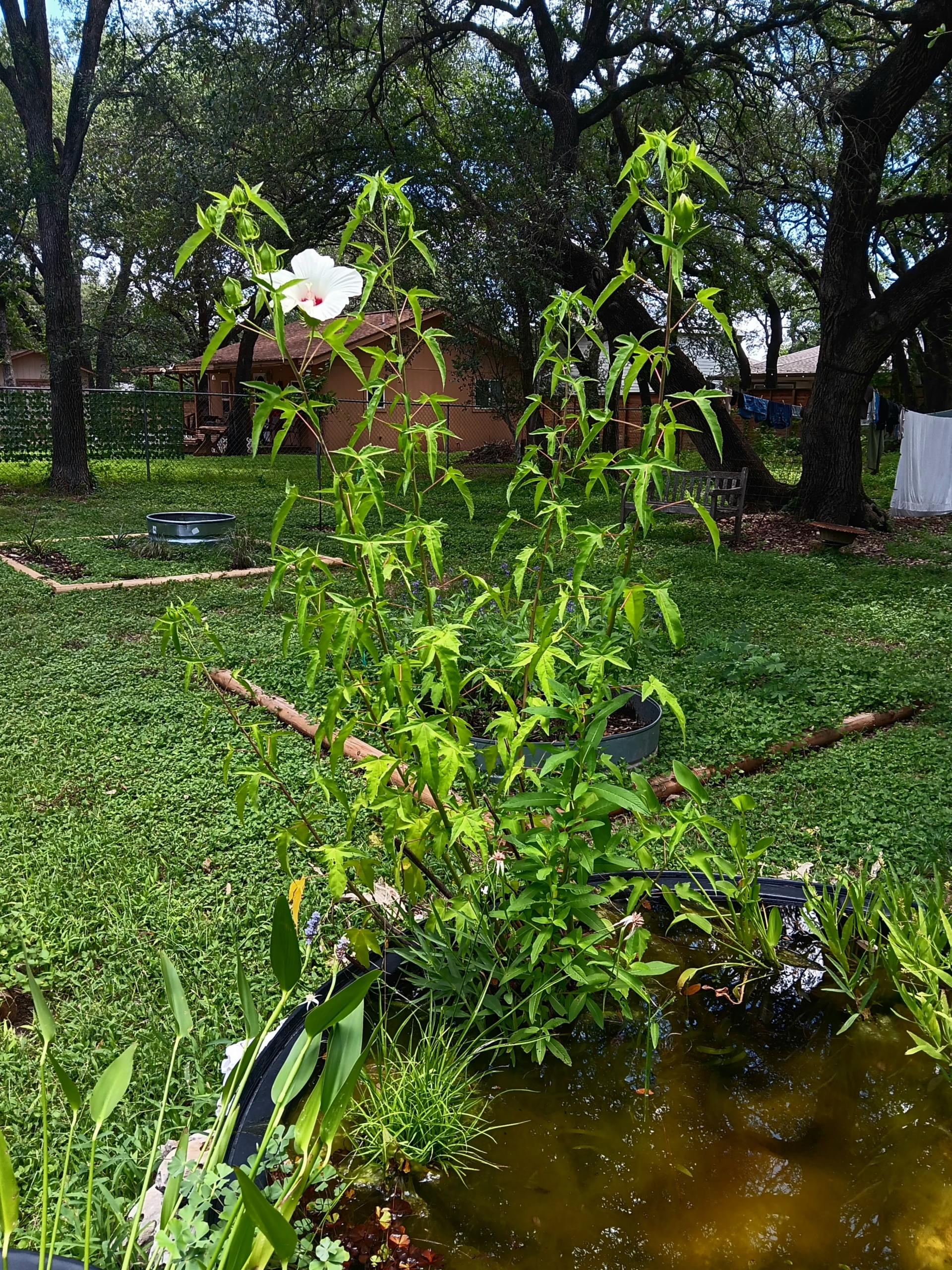
Grows quickly in warm weather. No pruning necessary, dies back after frost. Showy flowers last for one day each, extending through the summer. They brighten moist perennial gardens, bogs or pond areas. Tall stems are important for over-wintering insects. Native habitat: marshes, muddy shores, islands of rivers and streams, and also in shallow water dept, or moist soil, pond edge where it will periodically dry out.

Description

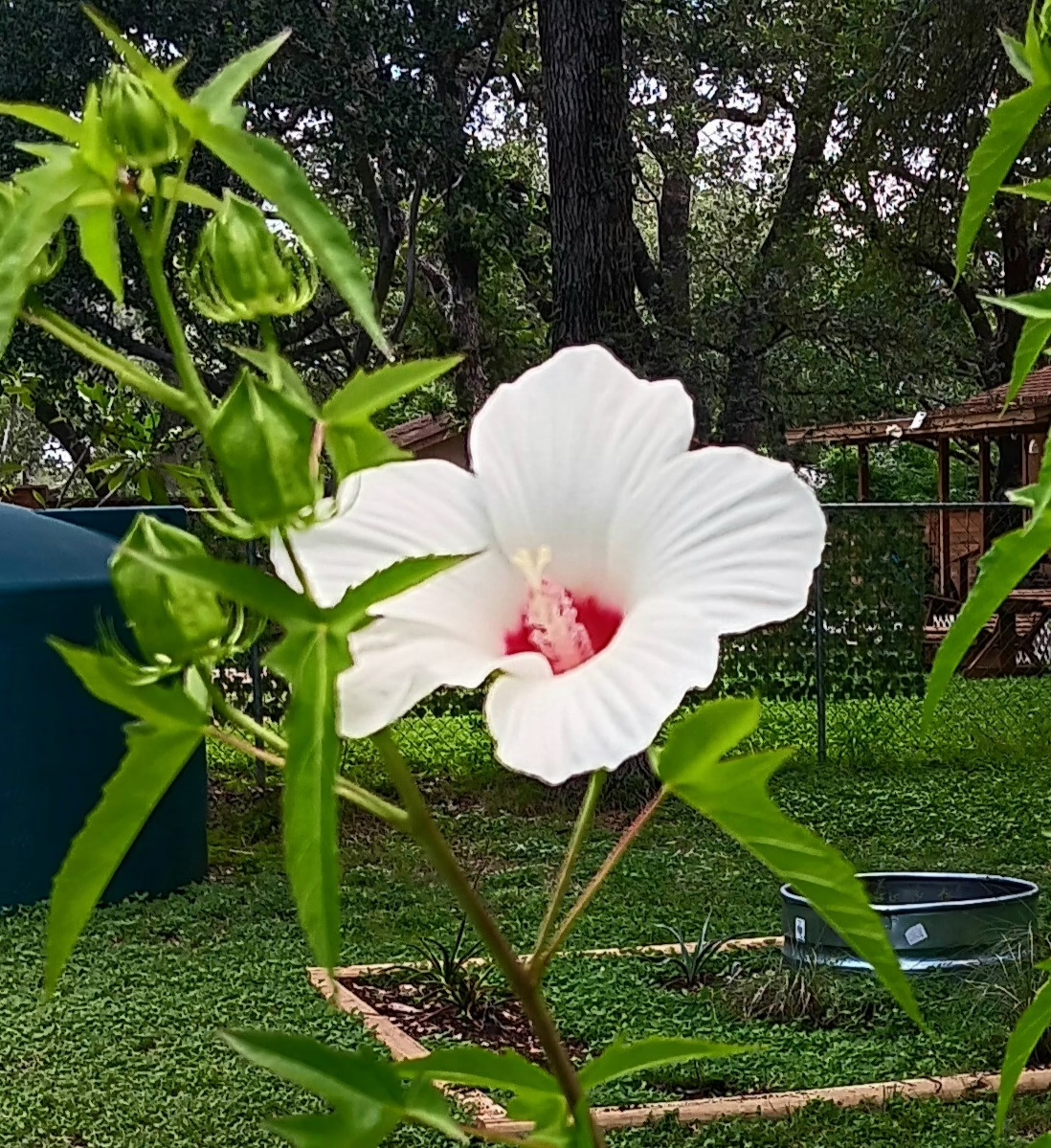
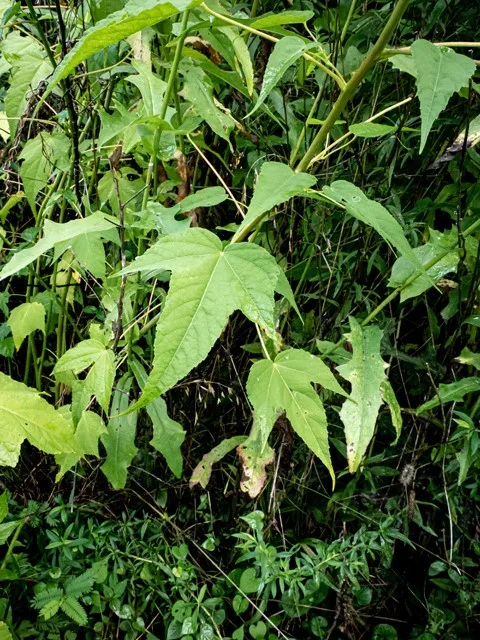
Blooms May-November. A multi stemmed, branched shrub, with gummy, slimy sap. Leaves are three-lobed, resembling dagger-axes. Large flowers are either pink or white, with red throats. Blooms from bottom to top of stem all summer. Seeds dry in large capsules. Larval host: Automeris Io, Gray Hairstreak, and Straight Lined Mallow Moth.
Previous Scientific Name(s): Hibiscus militaris
Material Treatment Method Collection References
Seed No Treatment Containers: Soaking them in water for 12 to 24 hours before sowing and/or providing extra warmth from a heat mat can help to speed germination. Fill a container with moistened potting soil. Pack the soil firm, but leave a 1/2″ (12 mm) gap at the top. The soil should be moist, not wet. If you squeeze a handful, only a couple of drops of water should fall out. Plant the Hibiscus laevis seeds 1/4″ deep (6 mm). TIP – use a pencil to make the hole. Set the container in a location that receives morning sun and afternoon shade. This is a very important step, as the afternoon shade will help ensure that the seeds, and eventual seedlings won’t dry out in hot afternoon sun. Germination should occur in Spring as evening temperatures warm up. 1) https://growitbuildit.com/hibiscus-laevis-halbred-leaf-rose-mallow/#:~:text=The%20soil%20should%20be%20moist,pencil%20to%20make%20the%20hole. 2) https://hayefield.com/product/hibiscus-laevis-smooth-rose-mallow/#:~:text=Germination%20Information:%20Sow%20these%20seeds,description%20as%20well%20before%20ordering.
Seed No Treatment Direct sow: Soaking them in water for 12 to 24 hours before sowing and/or providing extra warmth from a heat mat can help to speed germination. It helps to have a disturbed or somewhat barren area. Otherwise more established plants could shade out the tiny seedlings. In very wet areas, like the edge of a newly installed pond or disturbed area near water, you can just press seed into the soil, and lightly cover it with nearby dirt. If the area is somewhat uneven or fairly disturbed, you may even be able to just broadcast then walk on the seed. The first year of Hibicus laevis’s life will be establishing a strong taproot system. The foliage may grow a couple of feet, but it will probably just resemble a green leafy bush. But by the second year of life, it will produce at least one flowering stalk (perhaps more). By the 3rd year, the plant should be fully mature, putting out 4-8 stalks with multiple flowers. 1) https://growitbuildit.com/hibiscus-laevis-halbred-leaf-rose-mallow/#:~:text=The%20soil%20should%20be%20moist,pencil%20to%20make%20the%20hole. 2) https://hayefield.com/product/hibiscus-laevis-smooth-rose-mallow/#:~:text=Germination%20Information:%20Sow%20these%20seeds,description%20as%20well%20before%20ordering.

About the Region

2026 Fall Symposium Logo

This low-elevations region of Texas extends inland from the barrier islands, about 60 or so miles, and stretches from Brownsville to Louisiana. In total, it covers about 9.5 million acres, with a high point of 150 feet in elevation. More than 1000 species of plants can be found in this region. On the southern end, species more common in Mexico (such as Sabal mexicana) and Central America occur.

The barrier islands provide us with dune systems, and clay flats to the inland side, which have species found in these areas alone. Many plants here, such as Ipomoea pes-caprae (beach morning glory), can be found throughout tropical regions of the globe. I’ve encountered the same species on the beaches of Guam.

Once inland, vast marshes and wet prairies occur. Occasionally, oak (Quercus fusiformis) groves can be found. Common grasses include species of Bothriochloa, Paspalum, and Sporobolus; eastern gamagrass (Tripsacum dactyloides); and switchgrass (Panicum species). Many rivers and creeks cut through the Gulf Prairies, and along these riparian areas various species of trees, Sabal minor, and other plants adapted to clay soils can be found. Due to overgrazing, farming, and fire suppression, woody species such as mesquite (Prosopis glandulosa) and huisache (Acacia farnesiana), and invasive species such as chinaberry (Melia azedarach), Brazilian pepper (Schinus terebinthifolius), and Chinese tallow (Sapium sebiferum) have increased and displaced our native flora.

Source: Wildflowers of Texas by Michael Eason