
Trailing Ratany

Krameria lanceolata

Other common name(s):

Trailing Krameria, Ratany, Crameria, Prairie Sandbur,

Family:

Krameriaceae (Ratany Family)

Plant Ecoregion Distribution Map

This map uses data from the US EPA. EPA  servers have been offline frequently so maps may not display. We are working on a solution.

Central Great Plains, Chihuahuan Deserts, Cross Timbers, East Central Texas Plains, Edwards Plateau, Gulf Coast Prairies and Marshes, High Plains, Southern Texas Plains, Southwestern Tablelands, Texas Blackland Prairies
Broken Red Plains, Limestone Plains, Red Prairie
Chihuahuan Basins and Playas, Chihuahuan Desert Grasslands, Chihuahuan Montane Woodlands, Low Mountains and Bajadas, Stockton Plateau
Carbonate Cross Timbers, Eastern Cross Timbers, Grand Prairie, Limestone Cut Plain, Western Cross Timbers
Bastrop Lost Pines, Floodplains and Low Terraces2, Northern Post Oak Savanna, Northern Prairie Outliers, San Antonio Prairie, Southern Post Oak Savanna
Balcones Canyonlands, Edwards Plateau Woodland, Llano Uplift, Semiarid Edwards Plateau
Coastal Sand Plain, Floodplains and Low Terraces4, Laguna Madre Barrier Island and Coastal Marshes, Lower Rio Grande Alluvial Floodplain, Lower Rio Grande Valley, Mid-Coast Barrier Islands and Coastal Marshes, Northern Humid Gulf Coastal Prairies, Southern Subhumid Gulf Coastal Prairies, Texas-Louisiana Coastal Marshes
Arid Llano Estacado, Canadian/Cimarron High Plains, Llano Estacado, Rolling Sand Plains, Shinnery Sands
Northern Nueces Alluvial Plains, Rio Grande Floodplain and Terraces, Semiarid Edwards Bajada, Texas-Tamaulipan Thornscrub
Canadian/Cimarron Breaks, Caprock Canyons Badlands Breaks, Flat Tablelands and Valleys, Semiarid Canadian Breaks
Floodplains and Low Terraces1, Northern Blackland Prairie, Southern Blackland Prairie

Plant Characteristics

Growth Form

Groundcover, Herbaceous

Height

1
to
3
ft.

Spread

1
to
3
ft.

Leaf Retention

Deciduous

Lifespan

Perennial

Habitat and Care Requirements

Soil Type(s)

Calcareous, Rocky, Sand, Well Drained

Light Requirement

Part Shade

Water Requirement

Low

Native Habitat

Grassland

Bloom and Attraction

Bloom Color

Purple, Red

Bloom Season

Spring, Summer, Fall

Seasonal Interest

Nectar

Wildlife Benefit

Bees

Maintenance

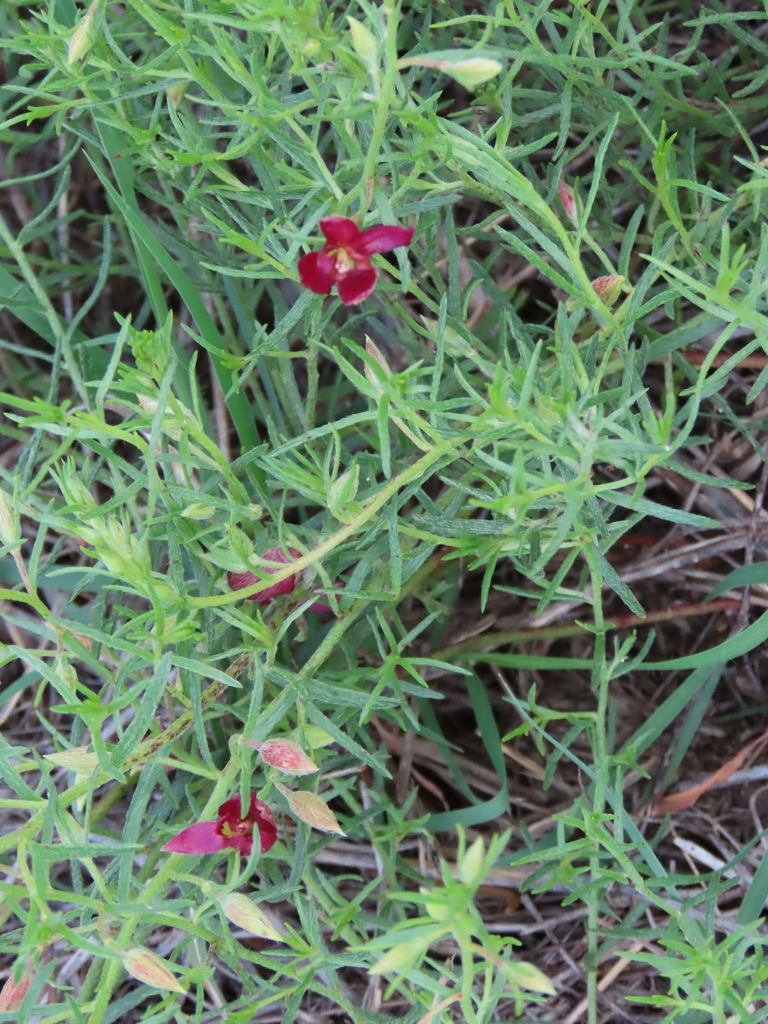
Although it is very drought tolerant, it needs supplemental water to get established. Well drained soil is need to avoid root rot. Makes a good ground cover. Plant away from foot traffic given its spiny seeds. Native habitat: widespread over Texas, missing only from the wettest, densest pine forests of east Texas.

Description

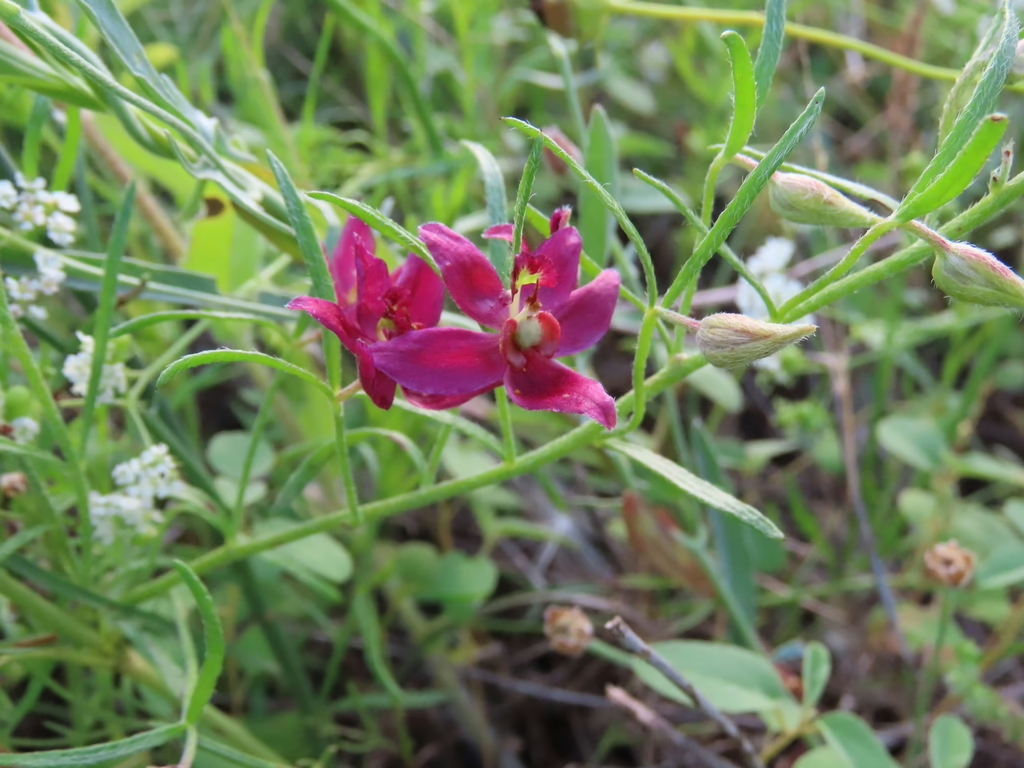
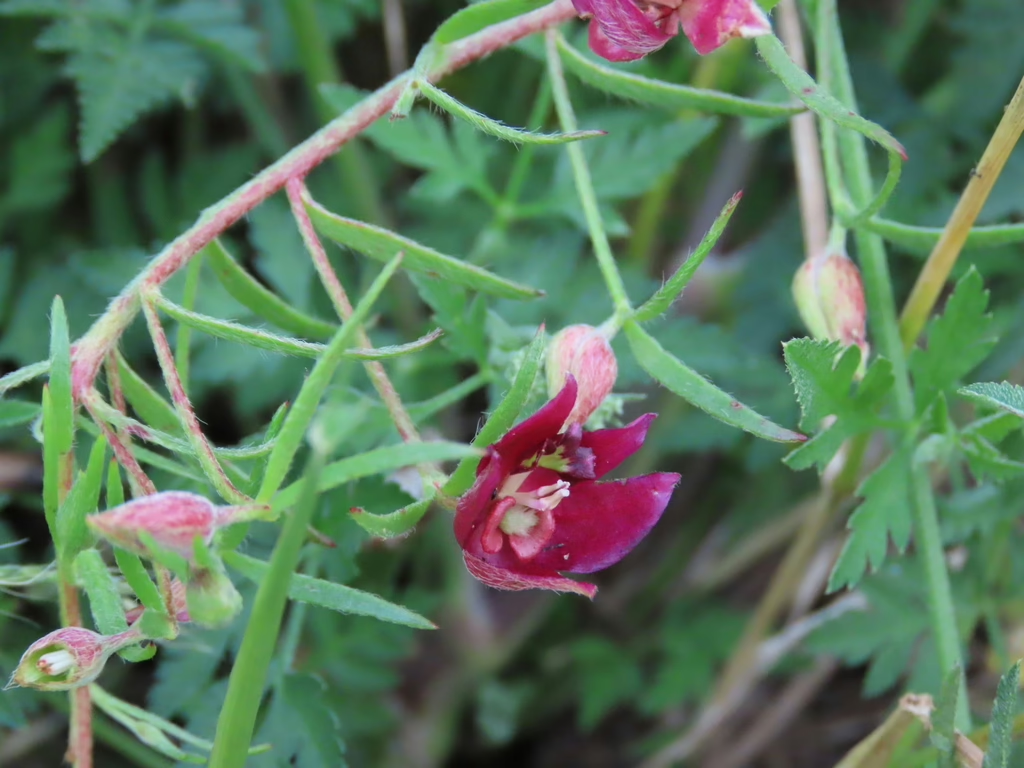
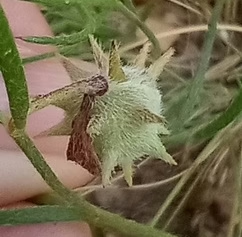
Blooms April-October. The flowers and short silky leaves grow on prostrate stems, up to 3 feet long, from a thick woody root. The 5 red to purple sepals may be mistaken for the petals, which are smaller and tinged with green, the upper 3 being united. The flowers are about 1 inch wide. The fruit is a spiny capsule. densely covered with white hairs Two petals of the flower produce oils which are collected by members of the bee genus, Centris and fed to their larvae. Centris spp. are the primary pollinators of Krameria lanceolata.
Previous Scientific Name(s): Krameria secundiflora, Krameria spathulata
Material Treatment Method Collection References
Seed Scarification Use a small, triangular, fine-toothed file to create a groove that penetrates the capsule just to the point that the seed inside becomes visible. The seed is tan and fills the capsule, so don’t blithely file away through the capsule into the seed. Holding the capsule firmly with small needle-nose pliers saves getting numerous stabs from the spines. Be careful of crushing the capsule and the seed within. Empty capsules became apparent when the file groove opened into an empty space. Floating in water seems to be a way to separate empty from viable capsules, with viable seeds sinking quickly, but more information is needed. Plant the seeds in a well-draining soil mix. The seeds are reported to require light for germination, so don’t bury them too deep. germination can be slow and erratic, sometimes taking several months. In my case, using six fresh seeds collected 2 days prior (some taken from the plant, others from the ground where they had fallen), the six seeds all germinated within 2 weeks. Three germinated outside in potting soil medium and three germinated indoors in damp vermiculite (before I could get them into cold stratification). K. lanceolata is reported to be an obligate semi-parasite, forming haustoria on the roots of a broad range of host plants. In pots it may be necessary to include one or more other native plants. The wild plants providing my seeds are growing among primarily Nolina lindheimeriana and Aristida purpurea. Collect seed in summer when fruit is brown and sharp. 1) https://www.wildflower.org/plants/result.php?id_plant=KRLA 2) https://propagate.one/how-to-propagate-krameria-lanceolata/?print=print 3) https://beetlesinthebush.com/2009/08/07/friday-flower-krameria-lanceolata/ 4) Tom Heger, NPSOT member, personal growing experience.
Stem Cutting Dip the cut end in a rooting hormone to encourage root development. Plant the cuttings in a well-draining potting mix and place them in a humid environment. A propagation box or covering the pot with a plastic bag can help retain moisture. Once the cuttings have developed a strong root system, they can be transplanted into individual pots or directly into the ground. Take cuttings in the spring or early summer from healthy, new growth.Choose stems that are about 4-6 inches long and remove the lower leaves. https://propagate.one/how-to-propagate-krameria-lanceolata/?print=print

About the Region

2026 Fall Symposium Logo

This low-elevations region of Texas extends inland from the barrier islands, about 60 or so miles, and stretches from Brownsville to Louisiana. In total, it covers about 9.5 million acres, with a high point of 150 feet in elevation. More than 1000 species of plants can be found in this region. On the southern end, species more common in Mexico (such as Sabal mexicana) and Central America occur.

The barrier islands provide us with dune systems, and clay flats to the inland side, which have species found in these areas alone. Many plants here, such as Ipomoea pes-caprae (beach morning glory), can be found throughout tropical regions of the globe. I’ve encountered the same species on the beaches of Guam.

Once inland, vast marshes and wet prairies occur. Occasionally, oak (Quercus fusiformis) groves can be found. Common grasses include species of Bothriochloa, Paspalum, and Sporobolus; eastern gamagrass (Tripsacum dactyloides); and switchgrass (Panicum species). Many rivers and creeks cut through the Gulf Prairies, and along these riparian areas various species of trees, Sabal minor, and other plants adapted to clay soils can be found. Due to overgrazing, farming, and fire suppression, woody species such as mesquite (Prosopis glandulosa) and huisache (Acacia farnesiana), and invasive species such as chinaberry (Melia azedarach), Brazilian pepper (Schinus terebinthifolius), and Chinese tallow (Sapium sebiferum) have increased and displaced our native flora.

Source: Wildflowers of Texas by Michael Eason