
Big Bend Bluebonnet

Lupinus havardii

Other common name(s):

Big Bend Lupine, Havard Bluebonnet, Chisos Bluebonnet

Family:

Fabaceae (Pea Family)

Plant Ecoregion Distribution Map

This map uses data from the US EPA. EPA  servers have been offline frequently so maps may not display. We are working on a solution.

Chihuahuan Deserts
Chihuahuan Desert Grasslands, Chihuahuan Montane Woodlands, Low Mountains and Bajadas

Plant Characteristics

Growth Form

Herbaceous

Height

3
to
6
ft.

Spread

2
to
3
ft.

Leaf Retention

Deciduous

Lifespan

Annual

Habitat and Care Requirements

Soil Type(s)

Dry, Gravelly, Limestone, Loam, Sand

Light Requirement

Sun

Water Requirement

Low

Native Habitat

Desert

Bloom and Attraction

Bloom Color

Blue, Purple

Bloom Season

Spring

Seasonal Interest

Flowers, Forage, Larval Host, Nectar, Pollen

Wildlife Benefit

Bees, Browsers, Butterflies, Deer, Nectar Insects

Maintenance

Low maintenance, drought tolerant. The tallest of the Bluebonnets, looks gorgeous when planted in mass. Excellent for flower borders, prairies and meadows, any xeric, native or high desert garden, cactus garden or xeriscape. Prune out any dead stems in early spring. WARNING: plants in the genus Lupinus, especially the seeds, can be toxic to humans and animals if ingested. Native habitat: desert, alluvial areas.

Description

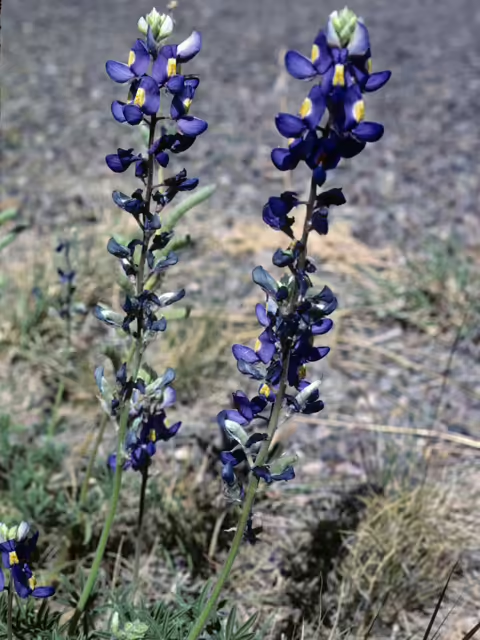
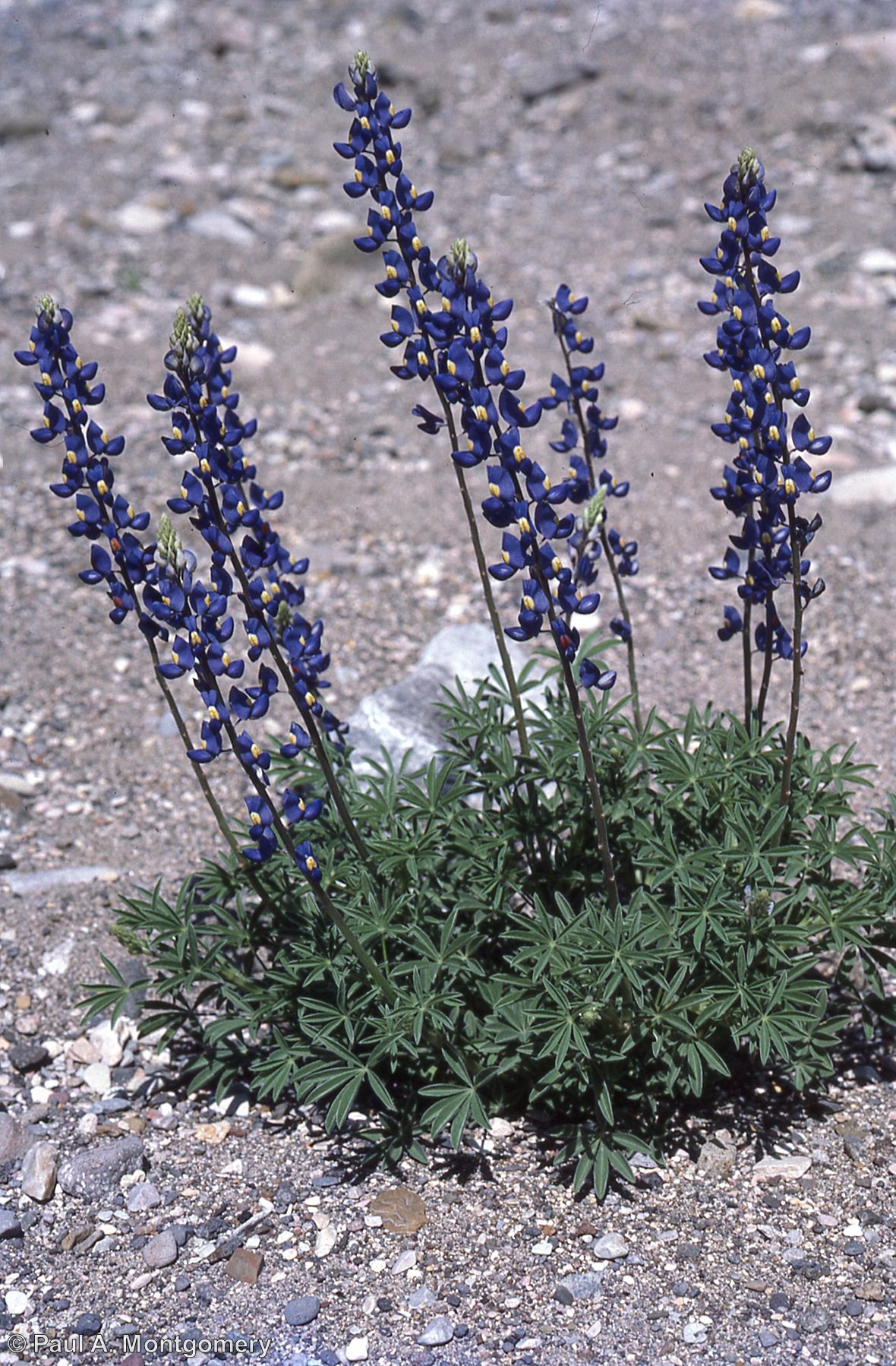
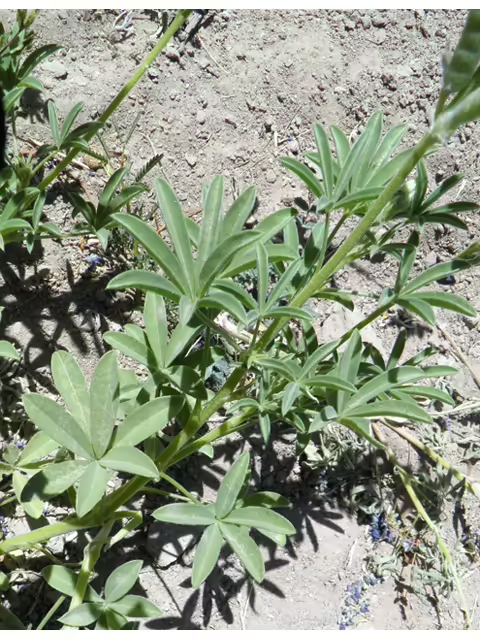
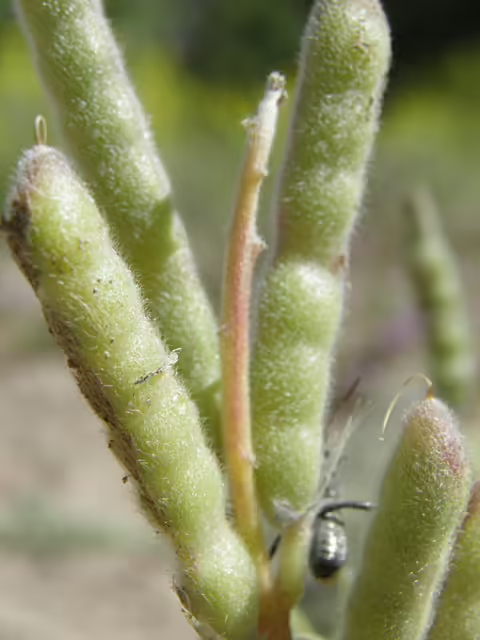
Blooms February-April. Much taller than most bluebonnets. The flowers are very deep blue with a lemon blotch. Palmate leaves are divided into seven leaflets. The fruit is a long bean-like seed pod. Larval host: Sulphurs.

References

1) Griffith, Bryce, Omernick & Rodgers (2007). Ecoregions of Texas. 2) Wasowski, Sally and Wasowski, Andy, Native Texas Plants, Landscaping Region by Region, 1988, 1991, pg 158. 3) Miller, George O., Landscaping with Native Plants of Texas 2nd Ed., 2013, pg 48, 53. 4) http://bonap.net/TDC/Image/Map?taxonType=Species&taxonId=11280&locationType=County&mapType=Normal. 5) https://www.wildflower.org/plants/result.php?id_plant=LUHA, 6) https://www.itis.gov/servlet/SingleRpt/SingleRpt?search_topic=TSN&search_value=26025#null, 7) https://www.gardenia.net/plant/lupinus-havardii, 8) http://www.highplainsgardening.com/plant-profiles/leucophyllum-minus
Material Treatment Method Collection References
Seed Scarification Big Bend Bluebonnet seeds have a hard seed coat that benefits from scarification to improve germination rates. Gently nick the seed coat with a file or sandpaper, or soak the seeds in warm water for 12-24 hours to soften them. This helps the seeds absorb water more readily and speeds up germination. Sow seeds directly outdoors in the fall. Seeds can handle light frost and germinate best in cooler temperatures. Fall sowing allows the seeds to experience natural cold stratification over the winter. Scatter the seeds on the soil surface and cover lightly with soil, about 1/4 inch deep. Press them gently to ensure good seed-to-soil contact. Water gently to keep the soil moist until seeds germinate. https://pemdasgarden.com/products/lupinus-havardii-big-bend-bluebonnet-authentic-seeds-perennial-gmo-free-flower-seeds-asian-garden-herbs-8113?
Stem Cutting Remove the lower leaves and plant the cutting in well-draining soil, making sure the remaining leaves are above the soil line. Water well and keep the cutting in a humid environment until new growth is observed. Cut a stem with at least two nodes in early spring or fall. https://www.botanikks.com/plants/lupinus-havardii-s-wats/546817/1
Clump Division Plant these sections in well-draining soil and water well. Dig up a mature plant in the early spring or fall and use a sharp tool to divide the plant into several sections, each with its own root system. https://www.botanikks.com/plants/lupinus-havardii-s-wats/546817/1

About the Region

2026 Fall Symposium Logo

This low-elevations region of Texas extends inland from the barrier islands, about 60 or so miles, and stretches from Brownsville to Louisiana. In total, it covers about 9.5 million acres, with a high point of 150 feet in elevation. More than 1000 species of plants can be found in this region. On the southern end, species more common in Mexico (such as Sabal mexicana) and Central America occur.

The barrier islands provide us with dune systems, and clay flats to the inland side, which have species found in these areas alone. Many plants here, such as Ipomoea pes-caprae (beach morning glory), can be found throughout tropical regions of the globe. I’ve encountered the same species on the beaches of Guam.

Once inland, vast marshes and wet prairies occur. Occasionally, oak (Quercus fusiformis) groves can be found. Common grasses include species of Bothriochloa, Paspalum, and Sporobolus; eastern gamagrass (Tripsacum dactyloides); and switchgrass (Panicum species). Many rivers and creeks cut through the Gulf Prairies, and along these riparian areas various species of trees, Sabal minor, and other plants adapted to clay soils can be found. Due to overgrazing, farming, and fire suppression, woody species such as mesquite (Prosopis glandulosa) and huisache (Acacia farnesiana), and invasive species such as chinaberry (Melia azedarach), Brazilian pepper (Schinus terebinthifolius), and Chinese tallow (Sapium sebiferum) have increased and displaced our native flora.

Source: Wildflowers of Texas by Michael Eason