
California Loosestrife

Lythrum californicum

Other common name(s):

Family:

Lythraceae (Loosestrife Family)

Plant Ecoregion Distribution Map

This map uses data from the US EPA. EPA  servers have been offline frequently so maps may not display. We are working on a solution.

Chihuahuan Deserts, Cross Timbers, Edwards Plateau, Gulf Coast Prairies and Marshes, High Plains, Southern Texas Plains, Southwestern Tablelands, Texas Blackland Prairies
Low Mountains and Bajadas
Carbonate Cross Timbers, Eastern Cross Timbers, Grand Prairie, Limestone Cut Plain, Western Cross Timbers
Balcones Canyonlands, Edwards Plateau Woodland, Llano Uplift, Semiarid Edwards Plateau
Southern Subhumid Gulf Coastal Prairies
Arid Llano Estacado, Canadian/Cimarron High Plains, Llano Estacado, Rolling Sand Plains, Shinnery Sands
Northern Nueces Alluvial Plains, Rio Grande Floodplain and Terraces, Semiarid Edwards Bajada, Texas-Tamaulipan Thornscrub
Canadian/Cimarron Breaks, Caprock Canyons Badlands Breaks, Flat Tablelands and Valleys, Semiarid Canadian Breaks
Floodplains and Low Terraces1, Northern Blackland Prairie, Southern Blackland Prairie

Plant Characteristics

Growth Form

Herbaceous

Height

1
to
5
ft.

Spread

.5
to
1
ft.

Leaf Retention

Deciduous

Lifespan

Perennial

Habitat and Care Requirements

Soil Type(s)

Moist

Light Requirement

Sun

Water Requirement

Medium, High

Native Habitat

Riparian

Bloom and Attraction

Bloom Color

Purple

Bloom Season

Spring, Summer, Fall

Seasonal Interest

Larval Host, Nectar, Pollen, Seeds

Wildlife Benefit

Bees, Birds, Butterflies, Moths, Nectar Insects

Maintenance

California Loosestrife is a native species, not to be confused with the exotic and invasive Purple Loosestrife (Lythrum salicaria and others). It colonizes by stoloniferous roots and does well in water gardens. Native habitat: riparian areas, near water bodies, and low spots.

Description

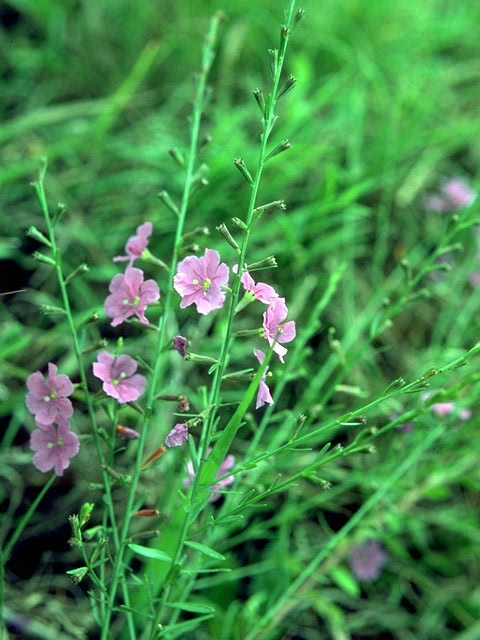
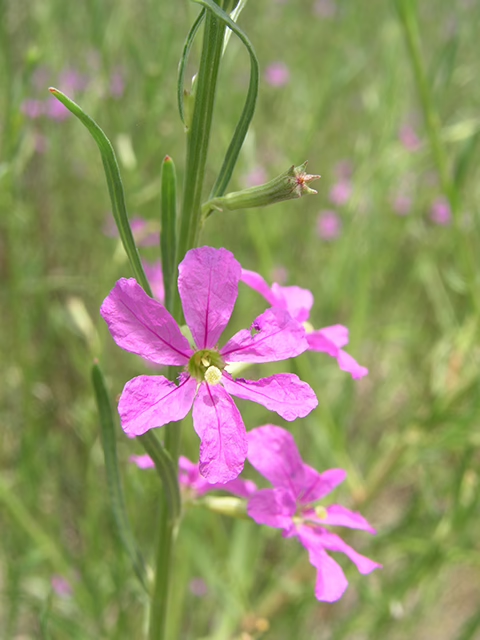
Blooms March-November. Has an erect form and sometimes branching stems with noticeable ridges running lengthwise. Produces waxy linear to lance-shaped leaves, The six-petaled flowers are clustered on terminal spikes, The fruit is an oval capsule containing many minute seeds, Larval host: Polyphemus moth (Antheraea polyphemus), Nevada Buckmoth (Hemileuca nevadensis), Glover’s Silkmoth (Hyalophora gloveri).

About the Region

2026 Fall Symposium Logo

This low-elevations region of Texas extends inland from the barrier islands, about 60 or so miles, and stretches from Brownsville to Louisiana. In total, it covers about 9.5 million acres, with a high point of 150 feet in elevation. More than 1000 species of plants can be found in this region. On the southern end, species more common in Mexico (such as Sabal mexicana) and Central America occur.

The barrier islands provide us with dune systems, and clay flats to the inland side, which have species found in these areas alone. Many plants here, such as Ipomoea pes-caprae (beach morning glory), can be found throughout tropical regions of the globe. I’ve encountered the same species on the beaches of Guam.

Once inland, vast marshes and wet prairies occur. Occasionally, oak (Quercus fusiformis) groves can be found. Common grasses include species of Bothriochloa, Paspalum, and Sporobolus; eastern gamagrass (Tripsacum dactyloides); and switchgrass (Panicum species). Many rivers and creeks cut through the Gulf Prairies, and along these riparian areas various species of trees, Sabal minor, and other plants adapted to clay soils can be found. Due to overgrazing, farming, and fire suppression, woody species such as mesquite (Prosopis glandulosa) and huisache (Acacia farnesiana), and invasive species such as chinaberry (Melia azedarach), Brazilian pepper (Schinus terebinthifolius), and Chinese tallow (Sapium sebiferum) have increased and displaced our native flora.

Source: Wildflowers of Texas by Michael Eason