

Tahoka Daisy

Machaeranthera tanacetifolia

Other common name(s):

Tansyaster, Tansy-aster, Tansey-leaf, Tansyleaf Tansyaster

Family:

Asteraceae (Aster Family)

Plant Ecoregion Distribution Map

This map uses data from the US EPA. EPA  servers have been offline frequently so maps may not display. We are working on a solution.

Central Great Plains, Chihuahuan Deserts, High Plains, Southwestern Tablelands
Broken Red Plains
Chihuahuan Basins and Playas, Chihuahuan Desert Grasslands, Chihuahuan Montane Woodlands, Low Mountains and Bajadas, Stockton Plateau
Arid Llano Estacado, Canadian/Cimarron High Plains, Llano Estacado, Rolling Sand Plains, Shinnery Sands
Canadian/Cimarron Breaks, Caprock Canyons Badlands Breaks, Flat Tablelands and Valleys, Semiarid Canadian Breaks

Plant Characteristics

Growth Form

Herbaceous

Height

2
to
3
ft.

Spread

1
to
2
ft.

Leaf Retention

Deciduous

Lifespan

Annual

Habitat and Care Requirements

Soil Type(s)

Clay, Dry, Loam, Sand, Well Drained

Light Requirement

Sun, Part Shade

Water Requirement

Medium

Native Habitat

Disturbed Areas, Grassland, Shrubland, Woodland

Bloom and Attraction

Bloom Color

Blue, Purple, Violet

Bloom Season

Spring, Summer, Fall

Seasonal Interest

Nectar, Pollen

Wildlife Benefit

Bees, Butterflies, Nectar Insects

Maintenance

Plant in a short grass meadow. on a rocky slope. between flagstones. Periodic watering will encourage blooms. Shake out seeds when you pull up the dead plants and allow the new ones to come up where they will. Good drainage is required for success. Native habitat: grasslands, desert scrub, pine-oak and pinyon-juniper woodlands, streambeds, roadsides, disturbed areas, dry, open places.

Description

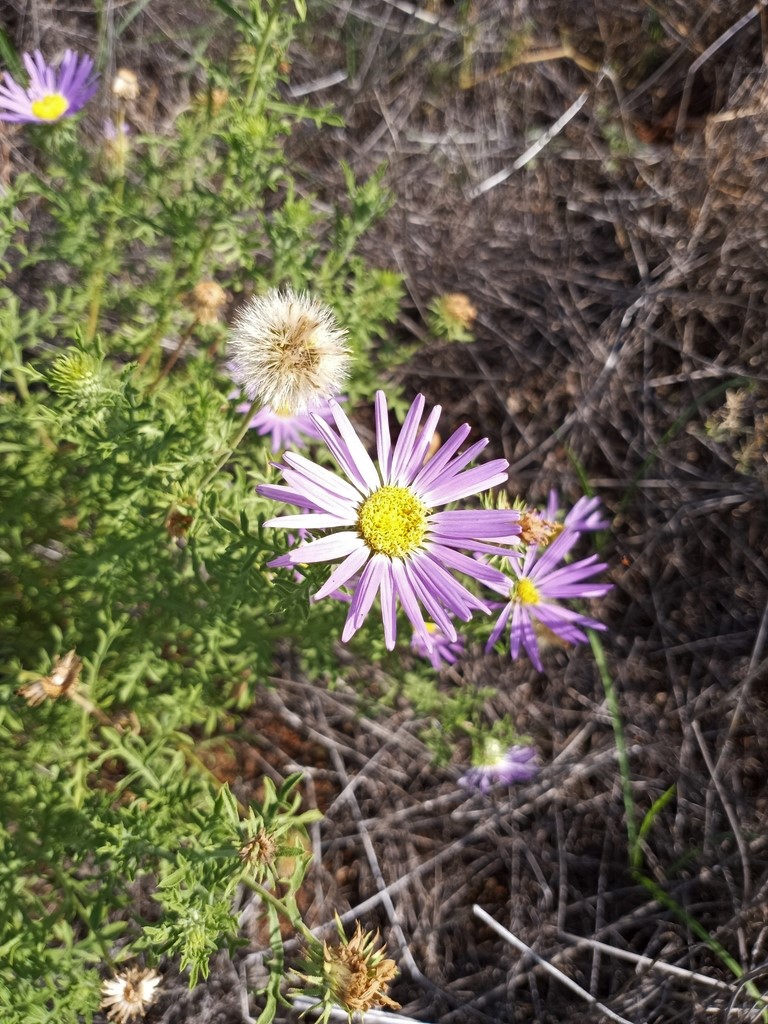
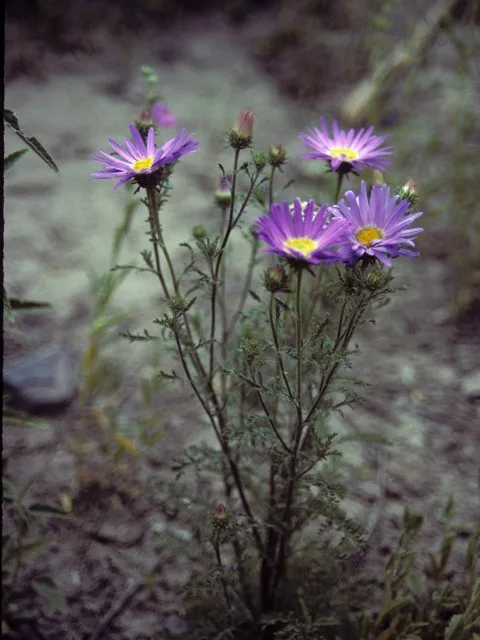
Blooms March-October. Plants often form clumps or mounds. Flower heads with many bright purple, very narrow rays surrounding a yellow central disc. Densely covered with sharp-pointed, deeply cut leaves which appear fern-like. The fruit is a cypsela: a dry, one-seeded fruit, usually topped by pappus.
Previous Scientific Name(s): Aster tanacetifolius, Machaeranthera coronopifolia, Machaeranthera parthenium
Material Treatment Method Collection References
Seed No Treatment Sow the seeds directly in the garden or in pots in early spring. Ensure they receive plenty of sunlight and keep the soil lightly moist until germination occurs. https://earthone.io/plant/machaeranthera%20tanacetifolia
Seed Stratification Machaeranthera tanacetifolia seeds benefit from stratification (cold treatment). This helps break dormancy and improve germination rates, especially for spring planting. Place seeds in a sealed plastic bag with a slightly damp paper towel or vermiculite. Store the bag in the refrigerator for 4-6 weeks before planting. Timing: Start seeds 6-8 weeks before the last expected frost in your area. Containers: Use seed starting trays or small pots with drainage holes. Soil: Use a seed starting mix or a well-draining potting mix. Planting: Sow seeds very shallowly, barely covering them with soil. They need light to germinate. Watering: Keep the soil consistently moist but not waterlogged. Use a spray bottle or gentle watering can to avoid disturbing the seeds. Light: Provide ample light. A sunny window may not be enough, especially in early spring. Grow lights are highly recommended for starting Machaeranthera tanacetifolia indoors. Transplanting: Transplant seedlings outdoors after the last frost and when they have developed a few sets of true leaves. Harden them off gradually before transplanting. Space plants about 1-2 feet apart. https://nativefloraseeds.org/products/tahoka-daisy#:~:text=Follow%20the%20same%20planting%20steps,4%2D6%20weeks%20before%20planting.
Seed Scarification Scarification 1(lightly scratching or nicking the seed coat) is not generally required, but it can sometimes improve germination rates. If you choose to scarify, gently rub the seeds with fine-grit sandpaper or use a nail file to nick the seed coat. Be careful not to damage the inner part of the seed. Timing: Start seeds 6-8 weeks before the last expected frost in your area. Containers: Use seed starting trays or small pots with drainage holes. Soil: Use a seed starting mix or a well-draining potting mix. Planting: Sow seeds very shallowly, barely covering them with soil. They need light to germinate. Watering: Keep the soil consistently moist but not waterlogged. Use a spray bottle or gentle watering can to avoid disturbing the seeds. Light: Provide ample light. A sunny window may not be enough, especially in early spring. Grow lights are highly recommended for starting Machaeranthera tanacetifolia indoors. Transplanting: Transplant seedlings outdoors after the last frost and when they have developed a few sets of true leaves. Harden them off gradually before transplanting. Space plants about 1-2 feet apart. https://nativefloraseeds.org/products/tahoka-daisy#:~:text=Follow%20the%20same%20planting%20steps,4%2D6%20weeks%20before%20planting.

About the Region

2026 Fall Symposium Logo

This low-elevations region of Texas extends inland from the barrier islands, about 60 or so miles, and stretches from Brownsville to Louisiana. In total, it covers about 9.5 million acres, with a high point of 150 feet in elevation. More than 1000 species of plants can be found in this region. On the southern end, species more common in Mexico (such as Sabal mexicana) and Central America occur.

The barrier islands provide us with dune systems, and clay flats to the inland side, which have species found in these areas alone. Many plants here, such as Ipomoea pes-caprae (beach morning glory), can be found throughout tropical regions of the globe. I’ve encountered the same species on the beaches of Guam.

Once inland, vast marshes and wet prairies occur. Occasionally, oak (Quercus fusiformis) groves can be found. Common grasses include species of Bothriochloa, Paspalum, and Sporobolus; eastern gamagrass (Tripsacum dactyloides); and switchgrass (Panicum species). Many rivers and creeks cut through the Gulf Prairies, and along these riparian areas various species of trees, Sabal minor, and other plants adapted to clay soils can be found. Due to overgrazing, farming, and fire suppression, woody species such as mesquite (Prosopis glandulosa) and huisache (Acacia farnesiana), and invasive species such as chinaberry (Melia azedarach), Brazilian pepper (Schinus terebinthifolius), and Chinese tallow (Sapium sebiferum) have increased and displaced our native flora.

Source: Wildflowers of Texas by Michael Eason