
Barbados Cherry

Malpighia glabra

Other common name(s):

Wild Crapemyrtle, Acerola, Manzanita

Family:

Malpighiaceae (Barbados Cherry Family)

Plant Ecoregion Distribution Map

This map uses data from the US EPA. EPA  servers have been offline frequently so maps may not display. We are working on a solution.

Gulf Coast Prairies and Marshes, Southern Texas Plains
Coastal Sand Plain, Lower Rio Grande Alluvial Floodplain, Lower Rio Grande Valley, Southern Subhumid Gulf Coastal Prairies
Rio Grande Floodplain and Terraces, Texas-Tamaulipan Thornscrub

Plant Characteristics

Growth Form

Shrub

Height

3
to
6
ft.

Spread

3
to
6
ft.

Leaf Retention

Semi Evergreen

Lifespan

Perennial

Habitat and Care Requirements

Soil Type(s)

Clay, Dry, Limestone, Loam, Sand, Well Drained

Light Requirement

Part Shade

Water Requirement

Medium

Native Habitat

Shrubland, Woodland

Bloom and Attraction

Bloom Color

Pink

Bloom Season

Spring, Summer, Fall

Seasonal Interest

Flowers, Forage, Fruit, Larval Host, Nectar

Wildlife Benefit

Birds, Browsers, Butterflies, Small Mammals

Maintenance

Useful as a dense screening hedge that may be left soft, sheared, or as a specimen. Usually a shrub, but sometimes a small tree in regions with more rainfall. Native habitat: thickets, brushland (matorral), and palm groves.

Description

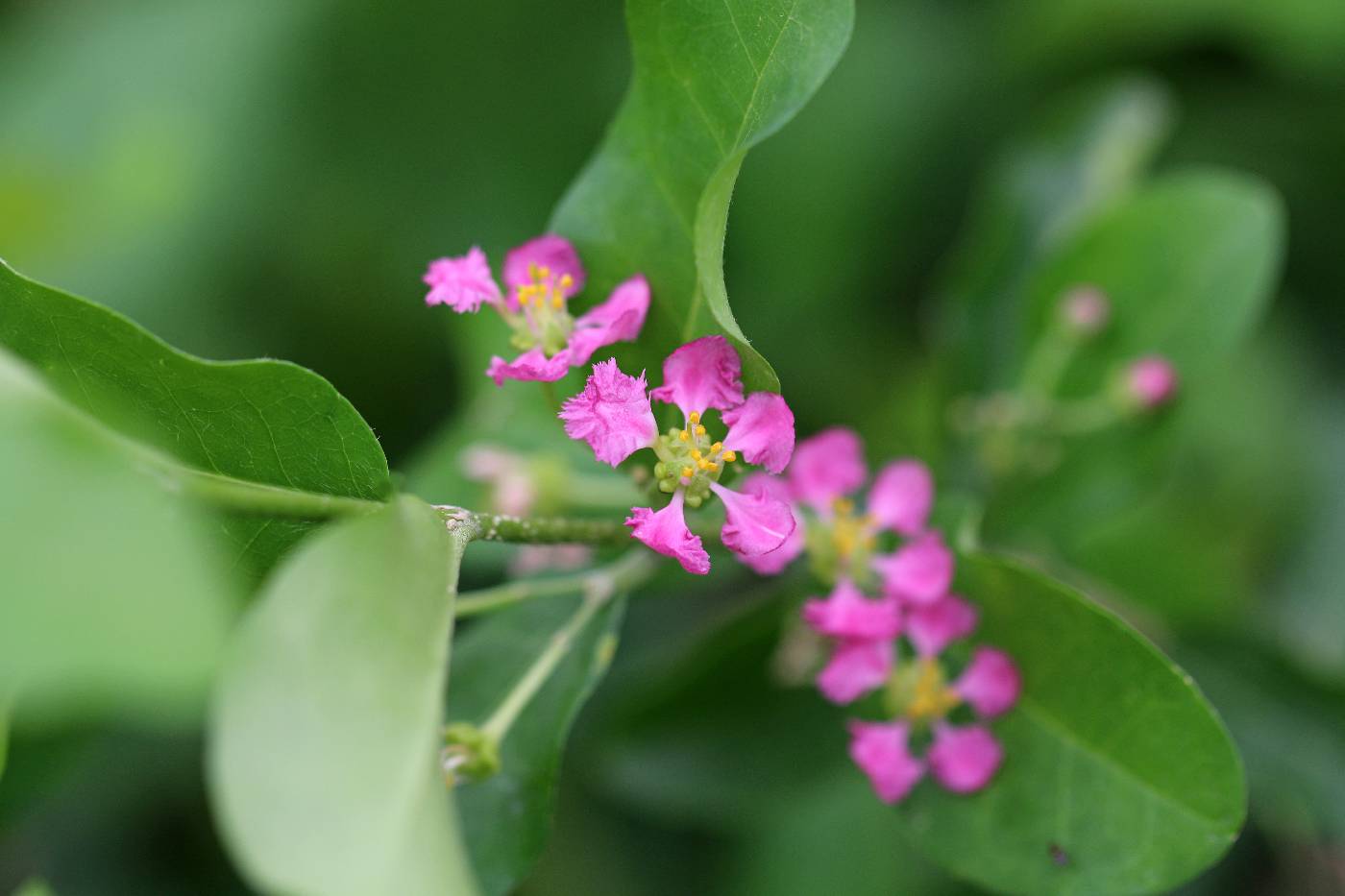
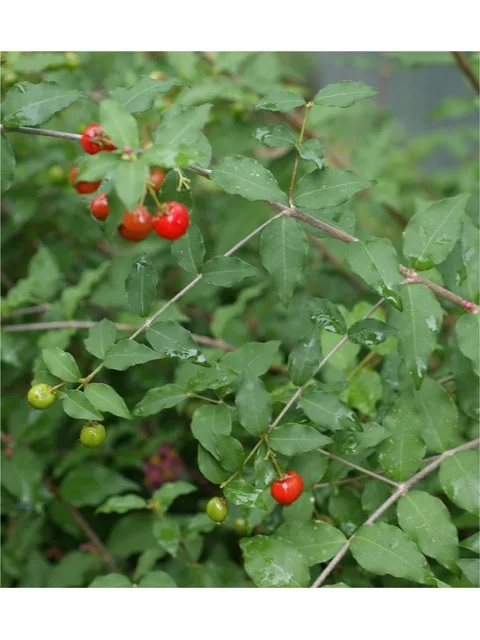
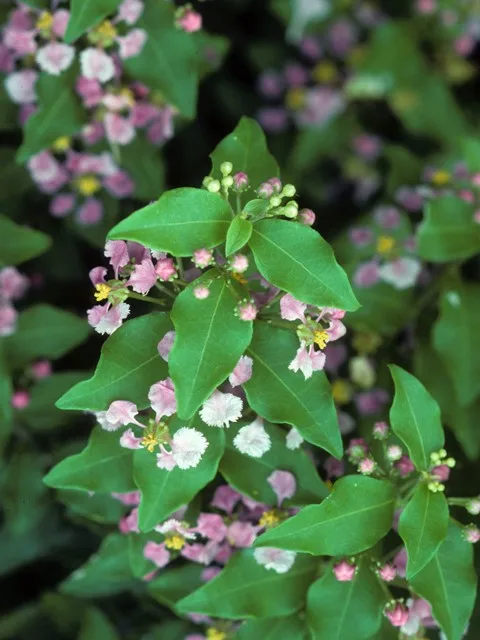
Blooms April-October. Barbados Cherry develops into a thick, rounded canopy of fairly delicate foliage. It is evergreen above 25 degrees F. Small pink flowers are followed by bright red berries. Larval host: Brown-banded Skipper, White-patched Skipper, Florida Duskywing, Cassius Blue. Replaces non-native: Nandina.

References

1) Griffith, Bryce, Omernick & Rodgers (2007). Ecoregions of Texas. 2) Wasowski and Wasowski, Native Texas Plants Landscaping Region by Region, 1991, pg. 250. 3) https://www.wildflower.org/plants/result.php?id_plant=MAGL6. 4) http://bonap.net/TDC/Image/Map?taxonType=Species&taxonId=14453&locationType=County&mapType=Normal. 5) https://www.itis.gov/servlet/SingleRpt/SingleRpt?search_topic=TSN&search_value=565291#null, 6) Native and Adapted Landscape Plants, City of Austin and Texas A&M, 2014.
Material Treatment Method Collection References
Stem Cutting Moisten some rooting medium with a small amount of water, but do not make it soggy. Use a commercial rooting mix, coarse sand, some vermiculite or a half-peat, half-perlite mixture. Fill a container with the moistened mix. Dip the cut end of the stem in hormone rooting powder, if desired. Insert the cut end of the stem vertically into the rooting medium in the container so that half the stem is covered. Pat the soil firmly around the stem. Place the container in bright, indirect light in a warm location. Mist the cutting with water to keep the soil evenly moist throughout the rooting period. Transplant the rooted stem cutting after two months into a larger container or directly into the ground. Cut a 2- to 6-inch stem from the growing tip of a healthy, mature Barbados cherry shrub with a sharp knife in spring or summer after new growth appears. The cutting should have at least one leaf node. Two or more leaf nodes are better. Strip the leaves from the lower half of the stem cutting. Remove any blossoms as well. https://www.weekand.com/home-garden/article/propagate-barbados-cherry-18065017.php
Semi-harwood Layering Insert a wooden matchstick or toothpick to keep the cut open. Sprinkle the cut with rooting hormone powder, if desired. Soak unmilled sphagnum moss in water until wet. Wrap moss around the branch of the Barbados cherry, covering the cut. Cover the ball of moss with plastic wrap or aluminum foil. Tape the ball with duct tape to secure it to the stem and keep the cover in place. Remove the tape and plastic wrap or foil in six to eight weeks, when roots have grown into the moss. Cut the branch of the shrub just below the new root ball, and transplant the new Barbados cherry to a pot or into the ground. Make a cut with a sharp knife halfway through a healthy branch of the Barbados cherry shrub, slicing just below a leaf node. Cut into the branch during spring or in summer while there are at least six weeks left in the growing season, making sure the branch is still partially attached to the parent shrub despite the cut. 1) https://www.weekand.com/home-garden/article/propagate-barbados-cherry-18065017.php 2) https://lexiplant.com/en/plant/malpighia-glabra-escobillo

About the Region

2026 Fall Symposium Logo

This low-elevations region of Texas extends inland from the barrier islands, about 60 or so miles, and stretches from Brownsville to Louisiana. In total, it covers about 9.5 million acres, with a high point of 150 feet in elevation. More than 1000 species of plants can be found in this region. On the southern end, species more common in Mexico (such as Sabal mexicana) and Central America occur.

The barrier islands provide us with dune systems, and clay flats to the inland side, which have species found in these areas alone. Many plants here, such as Ipomoea pes-caprae (beach morning glory), can be found throughout tropical regions of the globe. I’ve encountered the same species on the beaches of Guam.

Once inland, vast marshes and wet prairies occur. Occasionally, oak (Quercus fusiformis) groves can be found. Common grasses include species of Bothriochloa, Paspalum, and Sporobolus; eastern gamagrass (Tripsacum dactyloides); and switchgrass (Panicum species). Many rivers and creeks cut through the Gulf Prairies, and along these riparian areas various species of trees, Sabal minor, and other plants adapted to clay soils can be found. Due to overgrazing, farming, and fire suppression, woody species such as mesquite (Prosopis glandulosa) and huisache (Acacia farnesiana), and invasive species such as chinaberry (Melia azedarach), Brazilian pepper (Schinus terebinthifolius), and Chinese tallow (Sapium sebiferum) have increased and displaced our native flora.

Source: Wildflowers of Texas by Michael Eason