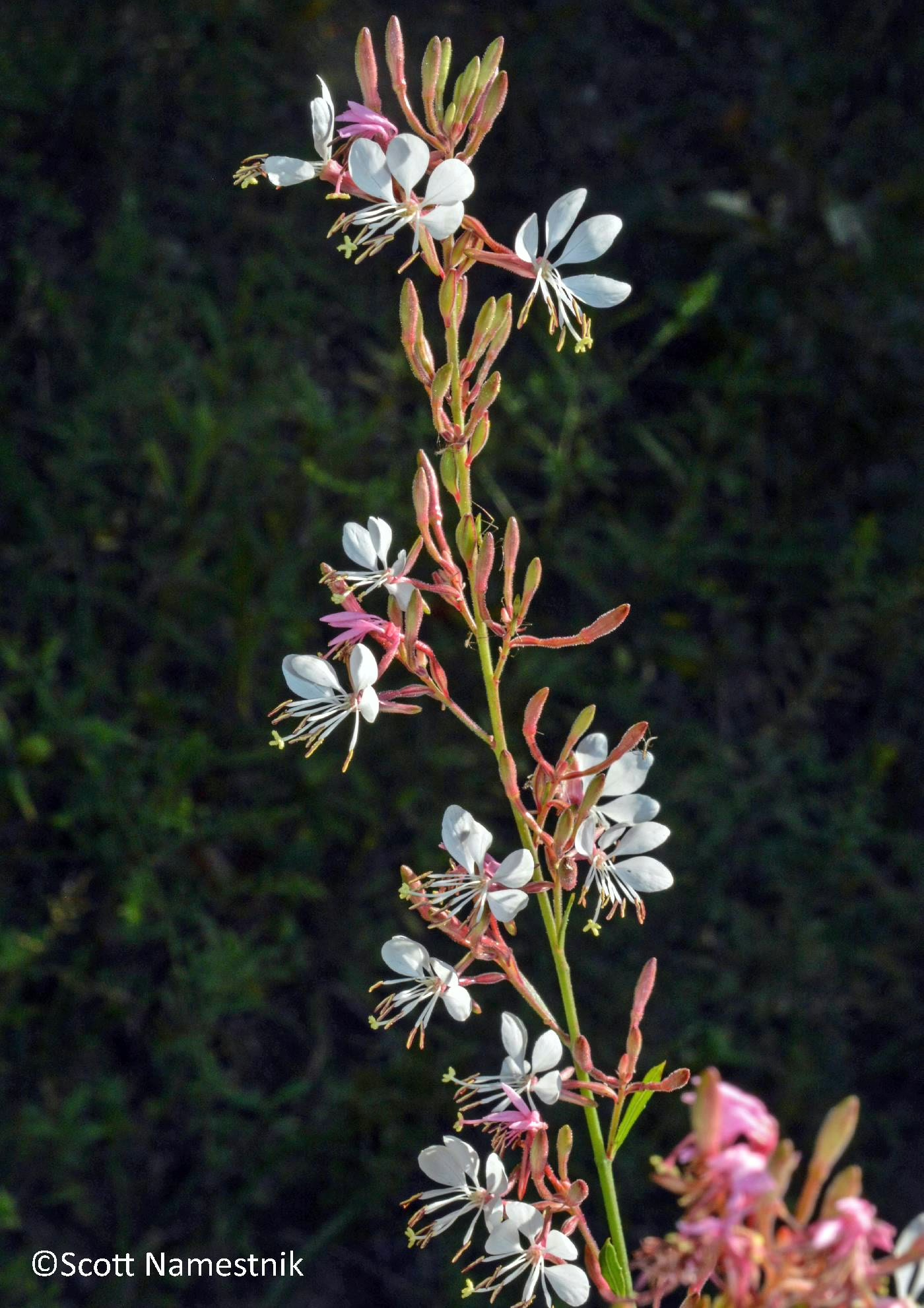
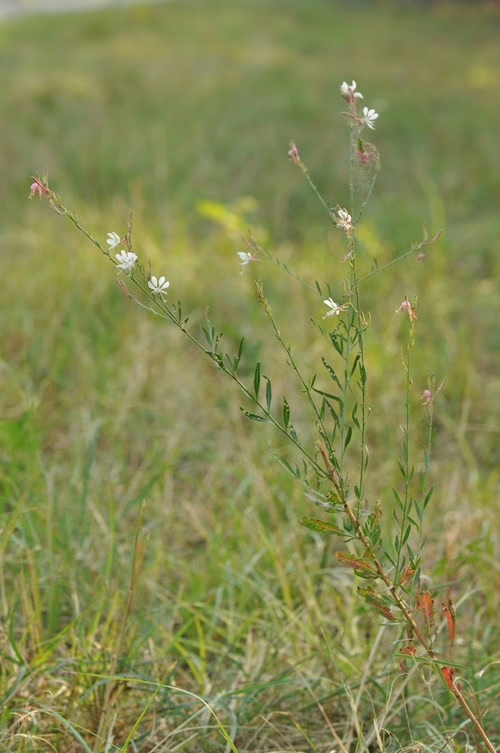

Long Flower Beeblossom

Oenothera filiformis

Other common name(s):

Longflower Gaura, Large-flowered Gaura, Kearney Gaura, Tall Gaura, Long-Flower Evening-Primrose

Family:

Onagraceae (Evening Primrose Family)

Plant Ecoregion Distribution Map

This map uses data from the US EPA. EPA  servers have been offline frequently so maps may not display. We are working on a solution.

East Central Texas Plains, Gulf Coast Prairies and Marshes, Texas Blackland Prairies, Western Gulf Coastal Plain
Bastrop Lost Pines, Floodplains and Low Terraces2, Northern Post Oak Savanna, Northern Prairie Outliers, San Antonio Prairie, Southern Post Oak Savanna
Coastal Sand Plain, Floodplains and Low Terraces4, Laguna Madre Barrier Island and Coastal Marshes, Lower Rio Grande Alluvial Floodplain, Lower Rio Grande Valley, Mid-Coast Barrier Islands and Coastal Marshes, Northern Humid Gulf Coastal Prairies, Southern Subhumid Gulf Coastal Prairies, Texas-Louisiana Coastal Marshes
Floodplains and Low Terraces1, Northern Blackland Prairie, Southern Blackland Prairie
Flatwoods, Floodplains and Low Terraces3, Pleistocene Fluvial Terraces, Red River Bottomlands, Southern Tertiary Uplands, Tertiary Uplands

Plant Characteristics

Growth Form

Herbaceous

Height

10
to
12
ft.

Spread

1
to
2
ft.

Leaf Retention

Deciduous

Lifespan

Annual

Habitat and Care Requirements

Soil Type(s)

Calcareous, Limestone, Rocky

Light Requirement

Sun

Water Requirement

Low, Medium

Native Habitat

Disturbed Areas, Grassland, Woodland

Bloom and Attraction

Bloom Color

Pink, White

Bloom Season

Summer, Fall

Seasonal Interest

Nectar, Pollen

Wildlife Benefit

Bees, Butterflies, Hummingbirds

Maintenance

Drought and heat tolerant. A great option in prairie plantings and pollinator gardens. Can establish itself quickly and provide late season blooms. Native habitat: rocky prairie hillsides, open woodlands, streambanks, shell middens and calcareous hammocks, openings in bottomland forests, disturbed areas, especially over calcareous soils.

Description

Blooms July-September. Can also grow as perennial or biennial depending on the region. Erect stalk, branching near the top. Leaves borne singly on the stems and frequently in a basal rosette. The 4 petals are on the upper side of the flower, giving it a slightly bilateral symmetry. The fruit is a capsule. Larval host: White-lined Sphinx Moth. The genus is easily recognized, but the species are sometimes difficult, due partly to a great deal of hybridization.
Previous Scientific Name(s): Gaura longiflora, Gaura filiformis, Gaura pitcheri, Gaura biennis var. pitcheri
Material Treatment Method Collection References
Seed No Treatment Prepare a well-draining soil mix. A mix of loamy soil with some sand can provide the right texture for longflower beeblossom. Ensure the planting medium is free from weeds and pathogens. Sow the seeds on the soil surface and lightly press them in, ensuring they are in good contact with the soil but not deeply buried. Light is necessary for germination, so do not cover them with soil. Mist the soil lightly to keep it consistently moist but not waterlogged. Use a spray bottle to ensure even moisture without displacing the seeds. Place the sown seeds in a warm area with ample indirect sunlight. Maintain a stable temperature and humidity by covering the seed tray with a clear plastic cover or a plastic bag to create a mini greenhouse effect. Choose healthy, mature seeds from longflower beeblossom. Opt for seeds that are visually free of any damage or discoloration. 1) https://www.picturethisai.com/care/propagate/Oenothera_filiformis.html 2) https://earthone.io/plant/oenothera%20lindheimeri

About the Region

2026 Fall Symposium Logo

This low-elevations region of Texas extends inland from the barrier islands, about 60 or so miles, and stretches from Brownsville to Louisiana. In total, it covers about 9.5 million acres, with a high point of 150 feet in elevation. More than 1000 species of plants can be found in this region. On the southern end, species more common in Mexico (such as Sabal mexicana) and Central America occur.

The barrier islands provide us with dune systems, and clay flats to the inland side, which have species found in these areas alone. Many plants here, such as Ipomoea pes-caprae (beach morning glory), can be found throughout tropical regions of the globe. I’ve encountered the same species on the beaches of Guam.

Once inland, vast marshes and wet prairies occur. Occasionally, oak (Quercus fusiformis) groves can be found. Common grasses include species of Bothriochloa, Paspalum, and Sporobolus; eastern gamagrass (Tripsacum dactyloides); and switchgrass (Panicum species). Many rivers and creeks cut through the Gulf Prairies, and along these riparian areas various species of trees, Sabal minor, and other plants adapted to clay soils can be found. Due to overgrazing, farming, and fire suppression, woody species such as mesquite (Prosopis glandulosa) and huisache (Acacia farnesiana), and invasive species such as chinaberry (Melia azedarach), Brazilian pepper (Schinus terebinthifolius), and Chinese tallow (Sapium sebiferum) have increased and displaced our native flora.

Source: Wildflowers of Texas by Michael Eason