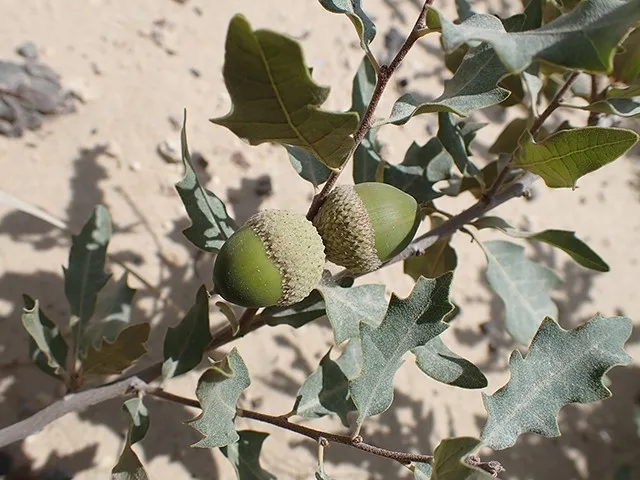
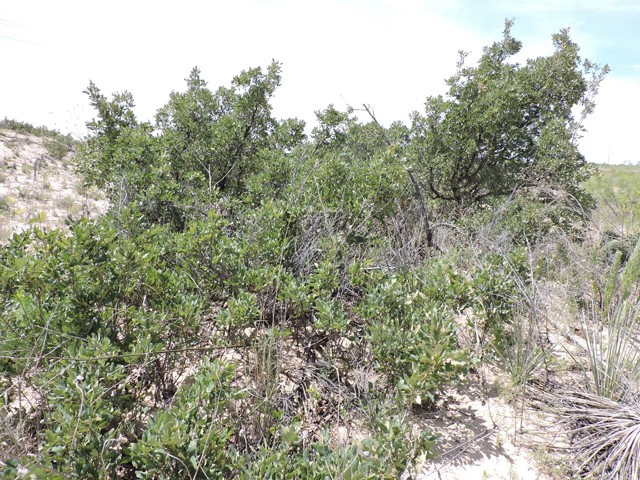


Havard Oak

Quercus havardii

Other common name(s):

Havard Shin-oak, Shinnery Oak

Family:

Fagaceae (Beech Family)

Plant Ecoregion Distribution Map

This map uses data from the US EPA. EPA  servers have been offline frequently so maps may not display. We are working on a solution.

Edwards Plateau, High Plains, Southwestern Tablelands
Semiarid Edwards Plateau
Arid Llano Estacado, Llano Estacado, Rolling Sand Plains, Shinnery Sands
Canadian/Cimarron Breaks, Caprock Canyons Badlands Breaks, Flat Tablelands and Valleys, Semiarid Canadian Breaks

Plant Characteristics

Growth Form

Shrub

Height

3
to
5
ft.

Spread

1
to
3
ft.

Leaf Retention

Deciduous

Lifespan

Perennial

Habitat and Care Requirements

Soil Type(s)

Dry, Sand

Light Requirement

Sun, Part Shade

Water Requirement

Low

Native Habitat

Grassland, Sand Dunes & Beaches

Bloom and Attraction

Bloom Color

Green

Bloom Season

Spring

Seasonal Interest

Nesting Material, Nuts

Wildlife Benefit

Birds, Small Mammals

Maintenance

Slow growing, it doesn’t get established easily. Creates a thicket in deep sands. May be several years before it begins to spread by suckers. Its rhizomes form good dune stabilization. It is in the white oak group and therefore less susceptible to oak wilt. Native habitat: sand dunes, areas devoid of almost all other trees.

Description

Blooms March-May. A shrub or small tree with papery, light gray bark. Thick leaves are oval or elliptical, margins with deep lobes. The leaf surface is shiny, light green, with lower surface tawny and woolly. Tiny flowers are arranged in a catkin. The fruit is an acorn with a pubescent reddish-brown cup, which covers 1⁄3 – 1⁄2 of the nut.

References

Material Treatment Method Collection References
Stem Cutting Dip the bottom end of the cutting in rooting hormone powder and shake off excess. Plant the cutting in a pot of well-draining soil mix and water it thoroughly. Place the pot in a bright but indirect light and keep the soil moist. After several weeks, gently tug on the cutting to see if it has rooted. Once roots have formed, you can transplant the new plant into a larger container or outdoors. Take a cutting from a healthy branch that is at least 6 inches long and has several leaves attached. Remove the leaves from the bottom half of the cutting. https://plantiary.com/plant/quercus-havardii_11821.html#:~:text=How%20to%20Propagate,with%20bright%20but%20indirect%20light.
Seed Scarification Soak the acorns in water for 24 hours to remove any toxins and improve germination. Fill a pot or small container with well-draining soil mix and plant the acorn with the pointed end facing down, around 1-2 inches deep. Water the soil until it is moist but not waterlogged. Keep the pot in a warm location with bright but indirect light. Once the seedling has emerged, you can gradually acclimate it to more sunlight and outdoor conditions. Collect ripe acorns from a mature Quercus Havardii tree. https://plantiary.com/plant/quercus-havardii_11821.html#:~:text=How%20to%20Propagate,with%20bright%20but%20indirect%20light.
Stem Layering Wrap the cut section with moist sphagnum moss and cover it with plastic wrap, securing the ends tightly. Check the moisture level of the moss regularly and mist it if needed to keep it damp. After several weeks, roots should have formed at the cut section. Cut the branch below the rooted section and pot it in well-draining soil mix. Keep the new plant in a warm, bright location with moderate humidity, watering it regularly. Select a healthy, non-flowering branch and peel off a narrow strip of bark around one-third to one-half of the stem, exposing the inner cambium layer. https://plantiary.com/plant/quercus-havardii_11821.html#:~:text=How%20to%20Propagate,with%20bright%20but%20indirect%20light.

About the Region

2026 Fall Symposium Logo

This low-elevations region of Texas extends inland from the barrier islands, about 60 or so miles, and stretches from Brownsville to Louisiana. In total, it covers about 9.5 million acres, with a high point of 150 feet in elevation. More than 1000 species of plants can be found in this region. On the southern end, species more common in Mexico (such as Sabal mexicana) and Central America occur.

The barrier islands provide us with dune systems, and clay flats to the inland side, which have species found in these areas alone. Many plants here, such as Ipomoea pes-caprae (beach morning glory), can be found throughout tropical regions of the globe. I’ve encountered the same species on the beaches of Guam.

Once inland, vast marshes and wet prairies occur. Occasionally, oak (Quercus fusiformis) groves can be found. Common grasses include species of Bothriochloa, Paspalum, and Sporobolus; eastern gamagrass (Tripsacum dactyloides); and switchgrass (Panicum species). Many rivers and creeks cut through the Gulf Prairies, and along these riparian areas various species of trees, Sabal minor, and other plants adapted to clay soils can be found. Due to overgrazing, farming, and fire suppression, woody species such as mesquite (Prosopis glandulosa) and huisache (Acacia farnesiana), and invasive species such as chinaberry (Melia azedarach), Brazilian pepper (Schinus terebinthifolius), and Chinese tallow (Sapium sebiferum) have increased and displaced our native flora.

Source: Wildflowers of Texas by Michael Eason