

Post Oak

Quercus stellata

Other common name(s):

Iron Oak, Cross Oak

Family:

Fagaceae (Beech Family)

Plant Ecoregion Distribution Map

This map uses data from the US EPA. EPA  servers have been offline frequently so maps may not display. We are working on a solution.

Central Great Plains, Cross Timbers, East Central Texas Plains, Edwards Plateau, Gulf Coast Prairies and Marshes, Texas Blackland Prairies, Western Gulf Coastal Plain
Broken Red Plains, Limestone Plains, Red Prairie
Carbonate Cross Timbers, Eastern Cross Timbers, Grand Prairie, Limestone Cut Plain, Western Cross Timbers
Bastrop Lost Pines, Floodplains and Low Terraces2, Northern Post Oak Savanna, Northern Prairie Outliers, San Antonio Prairie, Southern Post Oak Savanna
Balcones Canyonlands, Edwards Plateau Woodland, Llano Uplift
Northern Humid Gulf Coastal Prairies
Floodplains and Low Terraces1, Northern Blackland Prairie, Southern Blackland Prairie
Flatwoods, Floodplains and Low Terraces3, Pleistocene Fluvial Terraces, Red River Bottomlands, Southern Tertiary Uplands, Tertiary Uplands

Plant Characteristics

Growth Form

Tree

Height

40
to
50
ft.

Spread

30
to
40
ft.

Leaf Retention

Deciduous

Lifespan

Perennial

Habitat and Care Requirements

Soil Type(s)

Clay, Dry, Gravelly, Sand, Well Drained

Light Requirement

Sun, Part Shade

Water Requirement

Low, Medium

Native Habitat

Grassland, Woodland

Bloom and Attraction

Bloom Color

Brown, Yellow

Bloom Season

Spring

Seasonal Interest

Forage, Larval Host, Nectar, Nesting Material, Nuts, Pollen

Wildlife Benefit

Birds, Butterflies, Deer, Small Mammals

Maintenance

One of the most common oaks throughout Texas. Displays a great variation in leaf, bark and growth form. In central and southern forest regions, it is a medium-sized tree. It is smaller in the western part of its range. Low maintenance and very drought tolerant; also tolerant of soggy situations. Its roots are extremely sensitive to disturbance. Slow growing and long lived. It is in the white oak group and therefore less susceptible to oak wilt. Can be pruned for shape or to raise canopy. Native Habitat: dry, upland ridges, prairie edges, on gravelly and sandy, dry clays soils, prairies, limestone hills, woodlands and deciduous forests.

Description

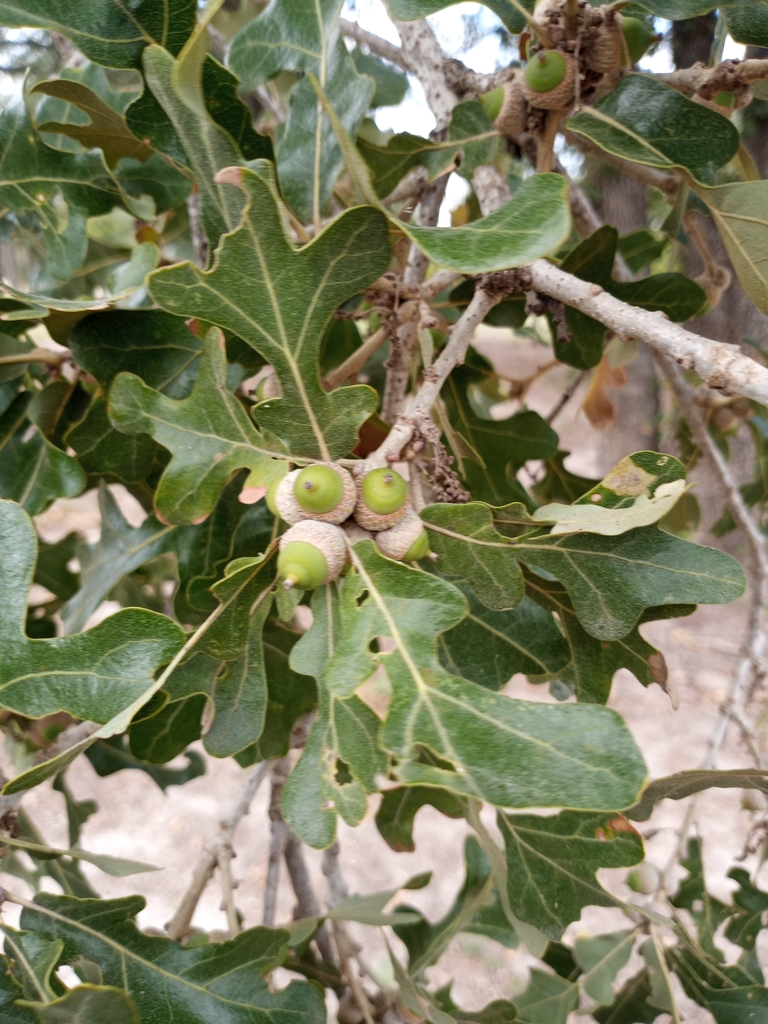
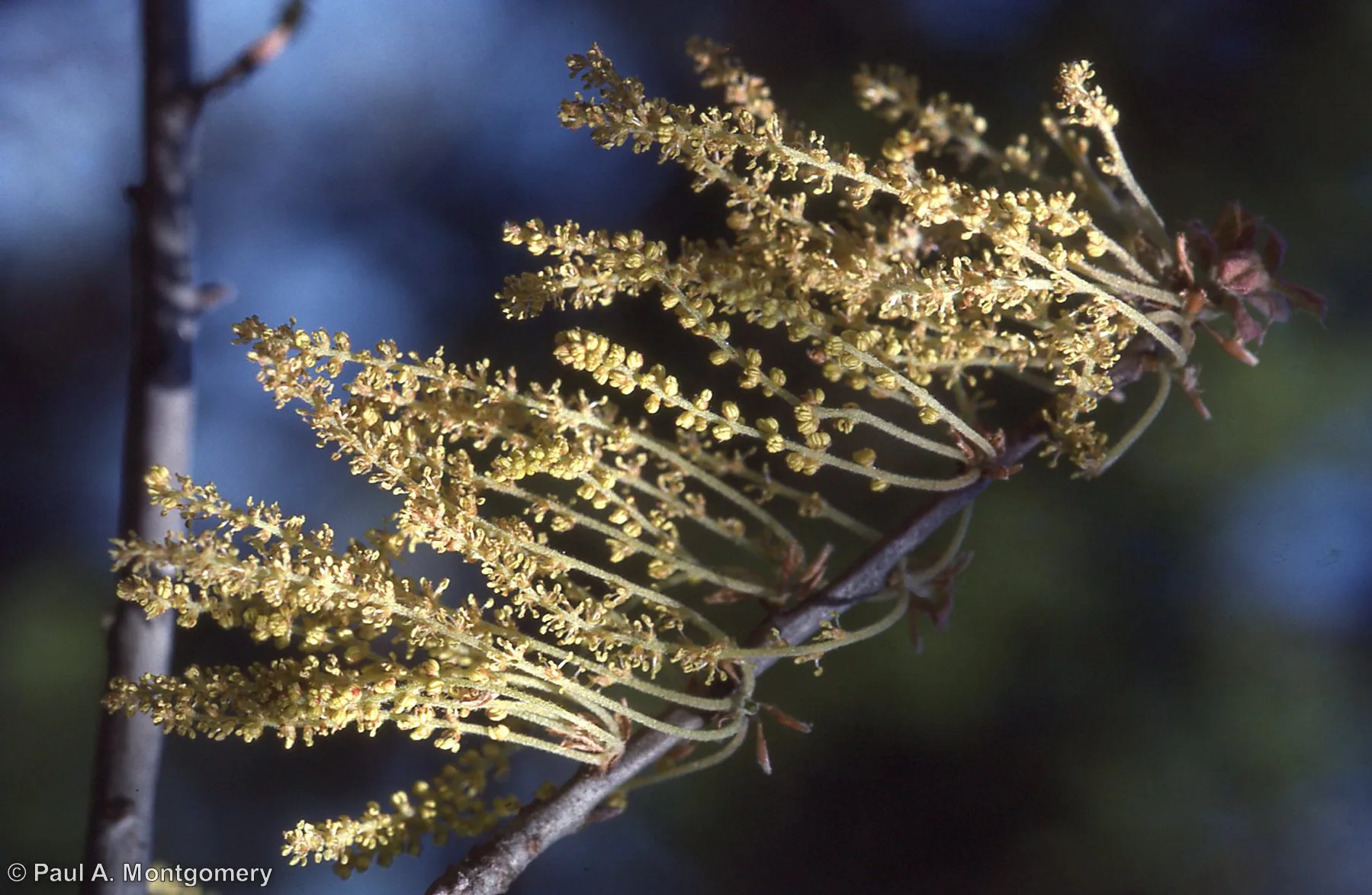
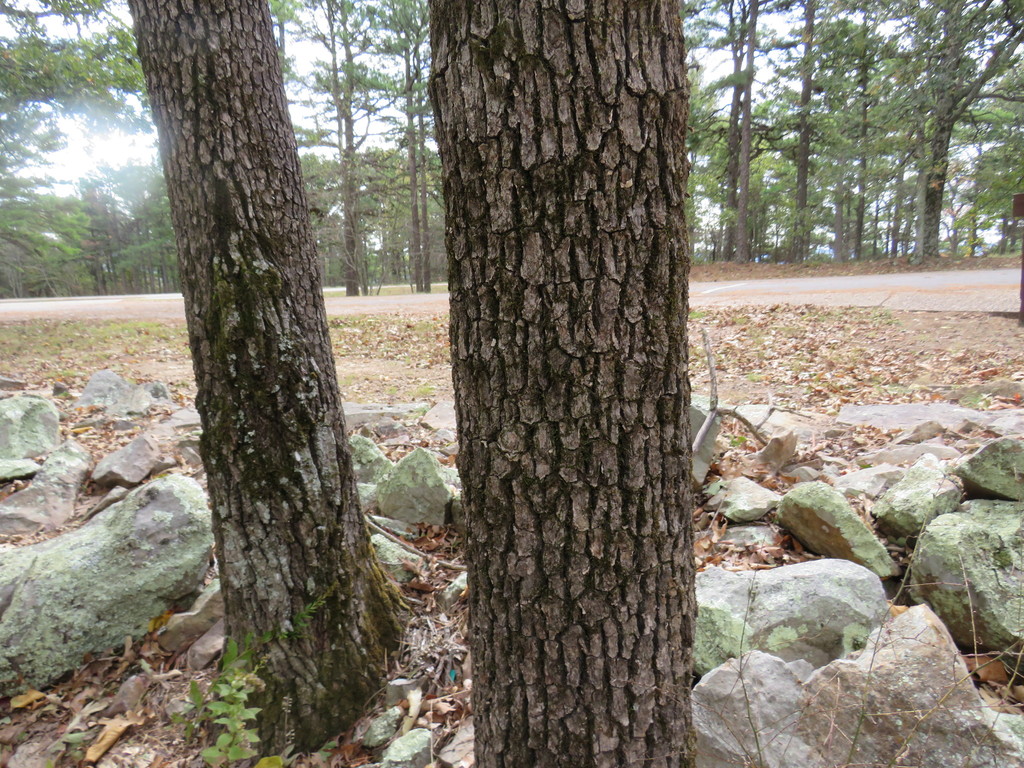
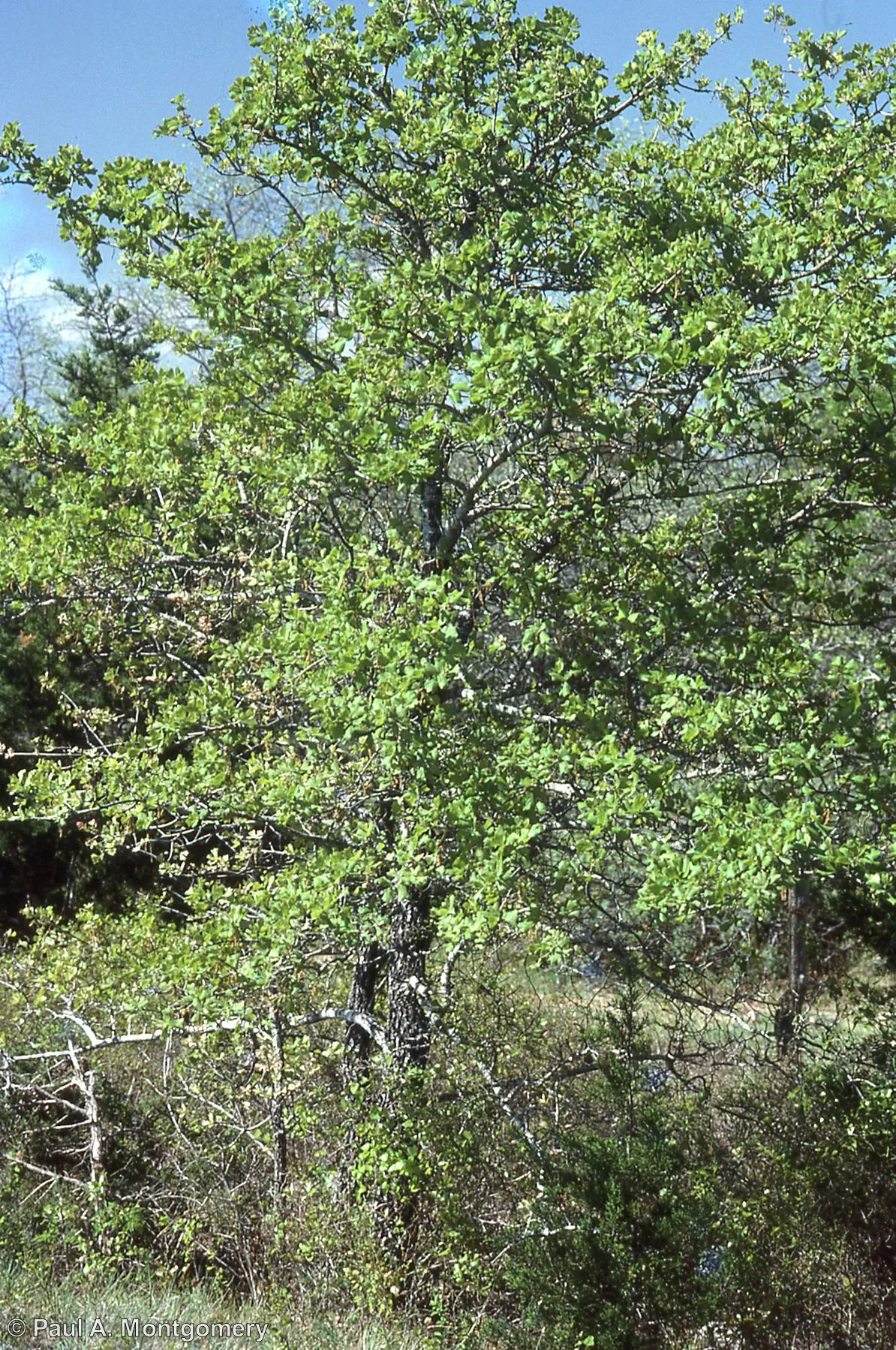
Blooms March-May. A tall, coarse-branched tree, with a dense, oval crown. The trunk is gray to light reddish-brown. Leaves have wavy margins to deep lobes, the upper pair often much larger than the others. Tiny flowers are clustered on catkins. The fruit is an acorn. Larval host: Northern Hairstreak and Horace’s Duskywing.
Previous Scientific Name(s): Quercus stellata var. attenuata, Quercus stellata var. parviloba

References

1) Griffith, Bryce, Omernick & Rodgers (2007). Ecoregions of Texas. 2) Miller, George O., Landscaping with Native Plants of Texas 2nd Ed., 2013, pg 48. 3) Wasowski and Wasowski, Native Texas Plants Landscaping Region by Region, 1991, pg. 344. 4) https://www.wildflower.org/plants/result.php?id_plant=QUST. 5) https://portal.torcherbaria.org/portal/taxa/index.php?taxon=Quercus+stellata&formsubmit=Search+Terms. 6) http://bonap.net/TDC/Image/Map?taxonType=Species&taxonId=11977&locationType=County&mapType=Normal. 7) https://www.itis.gov/servlet/SingleRpt/SingleRpt?search_topic=TSN&search_value=19422#null, 8) chrome-extension://efaidnbmnnnibpcajpcglclefindmkaj/https://texasoakwilt.org/backend/Docs/NOW/Rapid-Decline-of-Post-Oaks-in-TX.pdf
Material Treatment Method Collection References
Seed No Treatment Best if sown immediately as acorns lose viability quickly in storage. Plant outdoors or in deep containers to accommodate long initial taproot. Plant in permanent location after a year. Acorns to be sown immediately can be soaked in hot water for 15 min. to prevent weevil infestation. Stored seed should be fumigated with methyl bromide. Gently coaxing post oak into a new location thrives best when done in the warmth of late spring into early summer, providing ample growing time. Choose sites that mimic its native, well-drained soils and offer partial sun. Remember, patience is key with post oak's slow rooting nature. Collect when color has changed to brown. Stored seeds have a reduced chance of germination. 1) https://www.wildflower.org/plants/result.php?id_plant=QUST 2) https://pfaf.org/user/Plant.aspx?LatinName=Quercus+stellata#:~:text=Plant%20Propagation,they%20will%20transplant%20very%20badly. 3) https://www.picturethisai.com/care/Quercus_stellata.html#:~:text=How%20to%20Propagate%20Post%20oak?&text=Post%20oak%20(Quercus%20stellata)%20propagates,propagating%20using%20cuttings%20or%20layering. 4) https://www.nrcs.usda.gov/plantmaterials/wvpmcot12019.pdf 5) https://treeshepherds.net/post-oak/#:~:text=Propagation,a%20reduced%20chance%20of%20germination.
Hardwood Cutting Sharp pruning shears are essential for taking clean cuts from the parent post oak without crushing or damaging the tissues. Clean cuts help prevent infection and encourage healthy root development. Rooting hormone when applied to the cut end of the post oak cutting, it promotes faster and more reliable root initiation, greatly increasing the chances of successful propagation. Sterile soil mix provides a pathogen-free environment for the post oak cuttings to establish roots, which is crucial for preventing disease and ensuring the cuttings remain healthy. Propagation trays with domes offers a controlled environment with optimal humidity to encourage rooting in post oak cuttings and protect them from external stress factors. A watering can with fine hole delivers gentle, even watering that doesn't disturb the planting medium or newly established roots of the post oak cuttings, promoting steady growth. A mister or spray bottle helps maintain high humidity around the post oak cuttings, which is significant for preventing water loss from the leaves and encouraging root formation. Care for post oak post-propagation involves gradually acclimating the new plant to outside conditions after roots have established, which may take several weeks. Once acclimated, plant post oak in a location with full to partial sun and well-drained soil. Water the young tree deeply to encourage deep root growth, but allow the soil to dry out between watering, as post oak is drought-resistant. Pruning is minimal except to remove dead or diseased wood. Extra care must be taken not to overwater as post oak's native habitat is typically dry, and it is adapted to these conditions. The ideal time to propagate post oak by cutting is during autumn, when the tree is entering dormancy and resource allocation shifts from foliage to root development, enhancing rooting potential. Cooler temperatures reduce transpiration stress on cuttings, while autumn's diffused light supports gradual acclimatization. This seasonal timing promotes successful root establishment before spring growth. https://www.picturethisai.com/care/propagate/Quercus_stellata.html
Seed Stratification Stratify them by storing in a moist, cool environment for several months, and then plant them in well-drained soil in the spring. Collect acorns in the fall. Stored seeds have a reduced chance of germination. 1) https://earthone.io/plant/quercus%20stellata https://treeshepherds.net/post-oak/#:~:text=Propagation,a%20reduced%20chance%20of%20germination.

About the Region

2026 Fall Symposium Logo

This low-elevations region of Texas extends inland from the barrier islands, about 60 or so miles, and stretches from Brownsville to Louisiana. In total, it covers about 9.5 million acres, with a high point of 150 feet in elevation. More than 1000 species of plants can be found in this region. On the southern end, species more common in Mexico (such as Sabal mexicana) and Central America occur.

The barrier islands provide us with dune systems, and clay flats to the inland side, which have species found in these areas alone. Many plants here, such as Ipomoea pes-caprae (beach morning glory), can be found throughout tropical regions of the globe. I’ve encountered the same species on the beaches of Guam.

Once inland, vast marshes and wet prairies occur. Occasionally, oak (Quercus fusiformis) groves can be found. Common grasses include species of Bothriochloa, Paspalum, and Sporobolus; eastern gamagrass (Tripsacum dactyloides); and switchgrass (Panicum species). Many rivers and creeks cut through the Gulf Prairies, and along these riparian areas various species of trees, Sabal minor, and other plants adapted to clay soils can be found. Due to overgrazing, farming, and fire suppression, woody species such as mesquite (Prosopis glandulosa) and huisache (Acacia farnesiana), and invasive species such as chinaberry (Melia azedarach), Brazilian pepper (Schinus terebinthifolius), and Chinese tallow (Sapium sebiferum) have increased and displaced our native flora.

Source: Wildflowers of Texas by Michael Eason