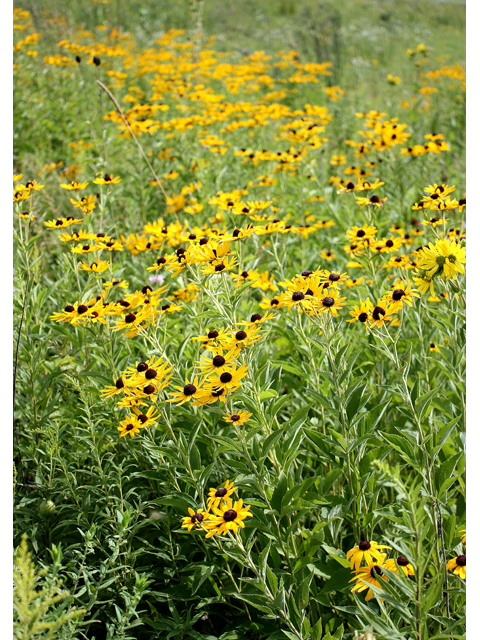


Sweet Coneflower

Rudbeckia subtomentosa

Other common name(s):

Sweet Black-eyed Susan

Family:

Asteraceae (Aster Family)

Plant Ecoregion Distribution Map

This map uses data from the US EPA. EPA  servers have been offline frequently so maps may not display. We are working on a solution.

Western Gulf Coastal Plain
Flatwoods

Plant Characteristics

Growth Form

Herbaceous

Height

3
to
6
ft.

Spread

1
to
2
ft.

Leaf Retention

Deciduous

Lifespan

Perennial

Habitat and Care Requirements

Soil Type(s)

Clay, Loam, Moist, Well Drained

Light Requirement

Part Shade

Water Requirement

Medium

Native Habitat

Grassland, Woodland Edge

Bloom and Attraction

Bloom Color

Yellow

Bloom Season

Summer

Seasonal Interest

Nectar, Pollen, Seeds

Wildlife Benefit

Bees, Birds, Butterflies, Beetles

Maintenance

Tolerates hot and humid summers and some drought. Landscape uses include rain gardens and cut flower gardens, Powdery mildew may appear. Taller plants may need some support, particularly if grown in part shade. Uncommon in the wild and commercially, but may be offered at chapter NPSOT plant sales in East Texas. Native habitat: wet prairies; woodland edges, roadsides.

Description

Blooms July-August. Will grow as biennial or short-lived perennial depending on the region. Upright stems covered in toothed gray-green leaves that are downy underneath. Bright-yellow ray flowers surround a center of dark disc flowers. They have a mild aroma of anise, hence the common name.
Material Treatment Method Collection References
Stem Cutting Dip the cut end in a rooting hormone to encourage root growth. Plant the cutting in a pot filled with a mix of perlite and peat moss. Ensure the pot has adequate drainage holes. Water the substrate lightly to keep it moist but not waterlogged. Place the pot in a location where the cutting can receive indirect sunlight. A humidity dome or plastic bag can be placed over the plant to maintain humidity, which is crucial for root development. Clean, sharp tools are needed to reduce the risk of introducing diseases. Choose a healthy stem from a mature plant. The cutting should be about 4-6 inches long and include several sets of leaves. Remove the leaves from the lower half of the cutting to prevent rotting when planted. https://www.picturethisai.com/care/propagate/Rudbeckia_subtomentosa.html
Seed Stratification If starting indoors, use cold, moist stratification. Start at least 5 weeks before outdoor night temperatures are reliably in the 10 C (50 F) range. Mix the seed with a slightly moistened, sterile, growing mix. Put this in a labelled, sealed plastic bag and store in a refrigerator for one day. The next day place this in the freezer for one day. Repeat this for one week, alternating between the fridge and the freezer. After stratifying, plant seed 1/8 inch deep in pots. Keep moist but not soggy and very warm (70 F). When seedlings are 5 cm (2 inches) tall or more, transplant into the garden, spaced 1 foot apart. 1) https://www.wildflowerfarm.com/rudbeckia-subtomentosa-sweet-black-eyed-susan.html#:~:text=You%20can%20germinate%20Rudbeckia%20subtomentosa%20seeds%20indoors,Makes%20great%20cut%20flowers%20*%20Juglone%20tolerant 2) https://www.finegardening.com/plant/sweet-coneflower-rudbeckia-subtomentosa?srsltid=AfmBOoqMTajZeHh6lw0tN8oomqk8HuRilqh6UDK9yWs3nazYSUM5rV5d
Seed No Treatment In late fall through to mid-winter fill plastic pots with a slightly moistened, sterile, growing mix. Plant seed 1/8 inch deep in pots and label the pots. Place them outdoors in an area where they will experience the snow and cold of winter. The seed will germinate in the pots in spring as the weather warms up. Be sure to water the pots regularly in spring and once the plants are 2 inches tall, transplant them into your garden. 1) https://www.wildflowerfarm.com/rudbeckia-subtomentosa-sweet-black-eyed-susan.html#:~:text=You%20can%20germinate%20Rudbeckia%20subtomentosa%20seeds%20indoors,Makes%20great%20cut%20flowers%20*%20Juglone%20tolerant 2) https://www.finegardening.com/plant/sweet-coneflower-rudbeckia-subtomentosa?srsltid=AfmBOoqMTajZeHh6lw0tN8oomqk8HuRilqh6UDK9yWs3nazYSUM5rV5d

About the Region

Fall Symposium 2025 Logo - Teach for the Future

Salado, the location of our Fall 2025 Symposium, lies at the intersection of two ecoregions: the Edwards Plateau (Limestone Cut Plain) and Blackland Prairie (Northern Blackland Prairie).

The Edwards Plateau area is also called the Hill Country; however, this general term covers a much larger area extending farther north. Spring-fed creeks are found throughout the region; deep limestone canyons, rivers, and lakes (reservoirs) are common. Ashe juniper is perhaps the most common woody species found throughout the region. Additional woody species include various species of oak, with live oak (Quercus fusiformis) being the most common. Sycamores (Platanus occidentalis) and bald cypress (Taxodium distichum) border waterways. This area is well known for its spring wildflower displays, though they may be viewed in spring, late summer, and fall, as well. According to Texas Parks and Wildlife, average annual rainfall in the Edwards Plateau ranges from 15 to 34 inches.

The Blackland Prairie extends from the Red River south to San Antonio, bordered on the west by the Edwards Plateau and the Cross Timbers, and on the east by the Post Oak Savannah. Annual rainfall averages 30 to 40 inches, with higher averages to the east. This region is dominated by prairie species. The most common grass species include little bluestem (Schizachyrium scoparium) and Indian grass (Sorghastrum nutans) in the uplands and switchgrass (Panicum virgatum) in the riparian areas and drainages. Common herbaceous flowering plants include salvias, penstemons, and silphiums. This area has suffered greatly from overgrazing and agricultural use. Few intact areas remain, though many of the plants can be found along county roadsides throughout the region.

Our fall Symposium host chapter, the Tonkawa Chapter, includes both of these ecoregions.

Source: Wildflowers of Texas by Michael Eason