
Texas Sabal Palm

Sabal mexicana

Other common name(s):

Texas Palm, Texas Palmetto, Mexican Palm, Mexican Palmetto, Rio Grande Palmetto, Victoria Palmetto, Palma De Micharos, Apachite

Family:

Aracaceae (Palm Family)

Plant Ecoregion Distribution Map

This map uses data from the US EPA. EPA  servers have been offline frequently so maps may not display. We are working on a solution.

Gulf Coast Prairies and Marshes
Lower Rio Grande Alluvial Floodplain, Lower Rio Grande Valley, Northern Humid Gulf Coastal Prairies, Texas-Louisiana Coastal Marshes

Plant Characteristics

Growth Form

Tree

Height

35
to
45
ft.

Spread

12
to
15
ft.

Leaf Retention

Evergreen

Lifespan

Perennial

Habitat and Care Requirements

Soil Type(s)

Clay, Dry, Loam, Moist, Poor Drainage, Sand

Light Requirement

Sun, Part Shade

Water Requirement

Low, Medium

Native Habitat

Grassland

Bloom and Attraction

Bloom Color

White

Bloom Season

Spring

Seasonal Interest

Fruit, Nesting Material

Wildlife Benefit

Birds

Maintenance

Slow growing and disease-resistant. This is a low maintenance tree which prefers moist well drained soils. Grow in sunny spots. For tree health, do not remove base of dead leaves. Very deep root system makes it hard to transplant after it gets a foot tall. Winter hardy as far north as Austin. Takes a lot of water to establish. Rare in the wild, but propagated commercially. May need extra care if grown outside of its native range.

Description

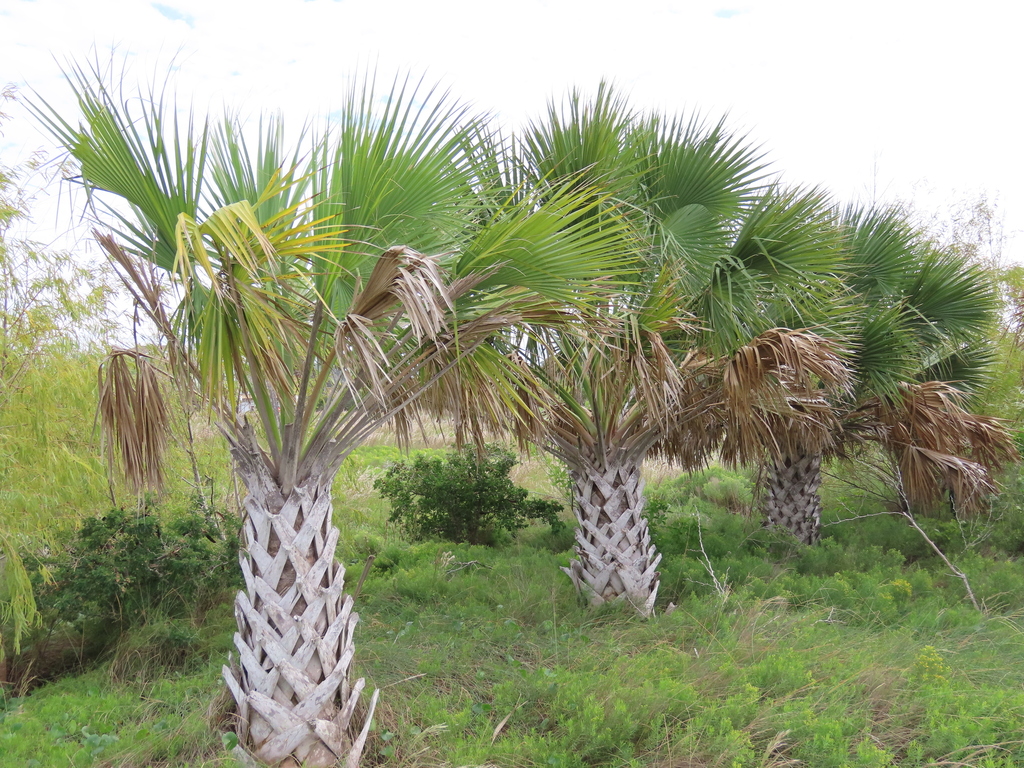
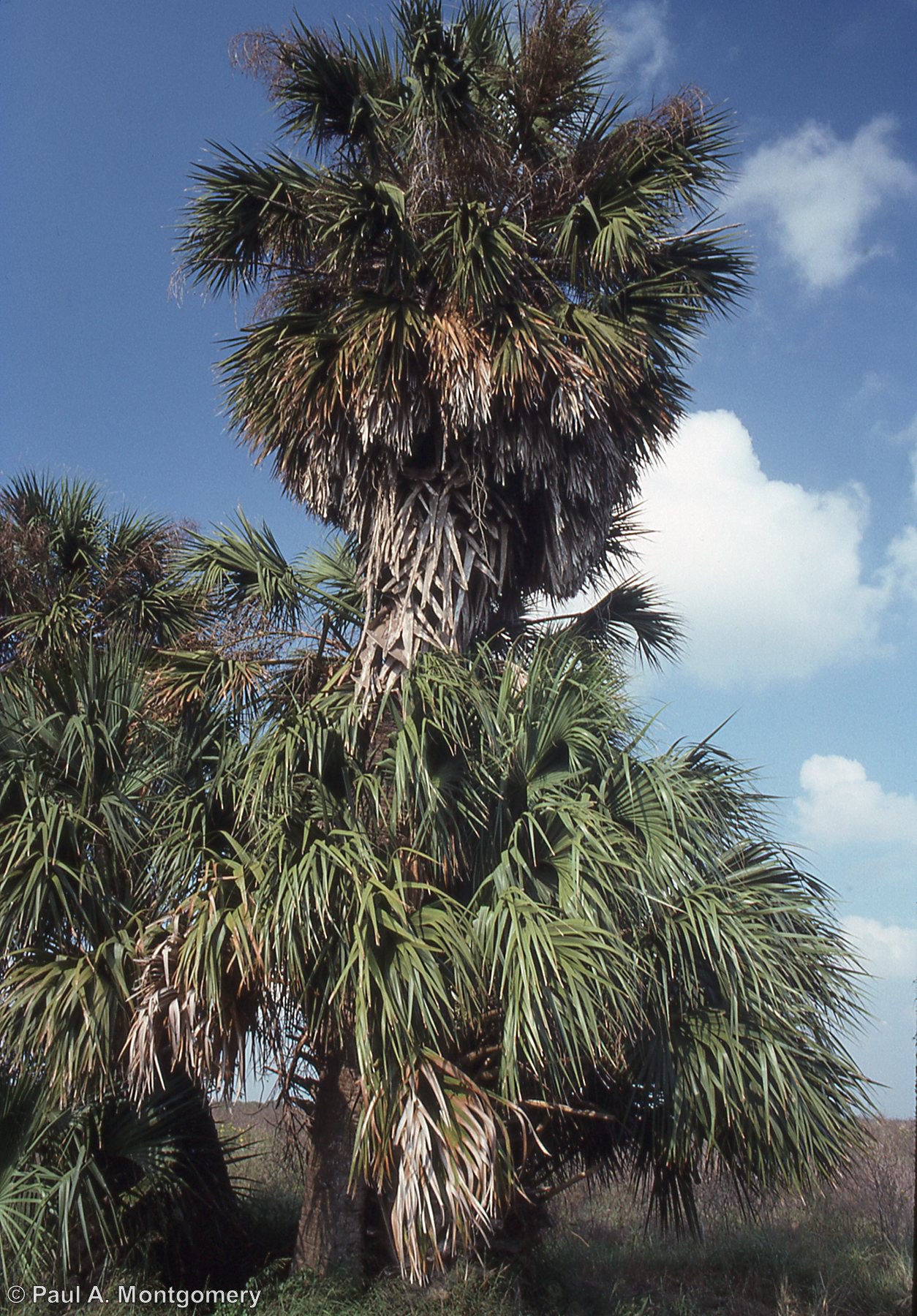
Blooms March-May. The trunk does not appear until the tree is 10 years old. Produces large, blue-green, fan-shaped leaves. Dark purple fruit hangs down in clusters.
Previous Scientific Name(s): Inodes exul, Inodes texana, Sabal exul, Sabal texana

References

1) Griffith, Bryce, Omernick & Rodgers (2007). Ecoregions of Texas. 2) Miller, George O., Landscaping with Native Plants of Texas 2nd Ed., 2013, pg 48. 3) Wasowski and Wasowski, Native Texas Plants Landscaping Region by Region, 1991, pg. 346. 4) https://www.wildflower.org/plants/result.php?id_plant=SAME8. 5) https://portal.torcherbaria.org/portal/taxa/index.php?taxon=Sabal+mexicana&formsubmit=Search+Terms. 6) http://bonap.net/TDC/Image/Map?taxonType=Species&taxonId=1788&locationType=County&mapType=Normal, 7) https://www.itis.gov/servlet/SingleRpt/SingleRpt?search_topic=TSN&search_value=42504#null
Material Treatment Method Collection References
Seed Scarification Soak the seeds in water for 24 hours. This softens the outer shell and aids in germination. You can scarify the seeds by gently nicking the outer shell with a sharp object. This further promotes water absorption and germination. Choose a well-draining potting mix suitable for seedlings. Fill pots or trays with the mix and sow the seeds, spacing them a few inches apart. Cover the seeds lightly with soil and water thoroughly. Place the pots in a warm, sunny location. Sabal Mexicana seeds can take anywhere from 6 to 12 weeks to germinate. Maintain the seedlings in a consistently moist environment, avoiding overwatering. As the seedlings grow, repot them into larger containers as needed. Look for black, fully matured seeds on the palm. Green seeds are not yet viable. Gently remove the seeds from the palm by hand. It’s best to collect seeds from the ground as they naturally fall when ripe, ensuring they are ready for propagation. Remove any fruit flesh attached to the seeds. This can be done by soaking them in water for a few days to soften the pulp, then scrubbing them clean. 1) https://propagate.one/how-to-propagate-sabal-mexicana/ 2) https://johndenson.com/2024/05/22/propagating-sabal-minor-from-seed-a-comprehensive-guide/
Offshoots Division Choose a suitable outdoor location with well-drained soil and partial shade. Dig a hole slightly larger than the offshoot’s root ball. Place the offshoot in the prepared hole and backfill with soil, ensuring the root ball is at or slightly above ground level. Water thoroughly and provide consistent moisture during the establishment period. Select a mature Sabal Mexicana with established offshoots, or “suckers,” growing at its base. Ensure the offshoots are at least 1-2 feet tall with their own root systems. Use a sharp, sterilized shovel or knife to carefully sever the offshoot from the parent plant. Be sure to include a portion of the root system with the offshoot. 1) https://propagate.one/how-to-propagate-sabal-mexicana/ 2) https://www.picturethisai.com/care/propagate/Sabal_mexicana.html
Seed Stratification For better germination results, especially in cooler climates, stratify the seeds by placing them in a moist medium like sand or peat moss and refrigerating them for 30 to 60 days. Choose a well-draining potting mix suitable for seedlings. Fill pots or trays with the mix and sow the seeds, spacing them a few inches apart. Cover the seeds lightly with soil and water thoroughly. Place the pots in a warm, sunny location. Sabal Mexicana seeds can take anywhere from 6 to 12 weeks to germinate. Maintain the seedlings in a consistently moist environment, avoiding overwatering. As the seedlings grow, repot them into larger containers as needed. 1) https://propagate.one/how-to-propagate-sabal-mexicana/ 2) https://johndenson.com/2024/05/22/propagating-sabal-minor-from-seed-a-comprehensive-guide/

About the Region

Fall Symposium 2025 Logo - Teach for the Future

Salado, the location of our Fall 2025 Symposium, lies at the intersection of two ecoregions: the Edwards Plateau (Limestone Cut Plain) and Blackland Prairie (Northern Blackland Prairie).

The Edwards Plateau area is also called the Hill Country; however, this general term covers a much larger area extending farther north. Spring-fed creeks are found throughout the region; deep limestone canyons, rivers, and lakes (reservoirs) are common. Ashe juniper is perhaps the most common woody species found throughout the region. Additional woody species include various species of oak, with live oak (Quercus fusiformis) being the most common. Sycamores (Platanus occidentalis) and bald cypress (Taxodium distichum) border waterways. This area is well known for its spring wildflower displays, though they may be viewed in spring, late summer, and fall, as well. According to Texas Parks and Wildlife, average annual rainfall in the Edwards Plateau ranges from 15 to 34 inches.

The Blackland Prairie extends from the Red River south to San Antonio, bordered on the west by the Edwards Plateau and the Cross Timbers, and on the east by the Post Oak Savannah. Annual rainfall averages 30 to 40 inches, with higher averages to the east. This region is dominated by prairie species. The most common grass species include little bluestem (Schizachyrium scoparium) and Indian grass (Sorghastrum nutans) in the uplands and switchgrass (Panicum virgatum) in the riparian areas and drainages. Common herbaceous flowering plants include salvias, penstemons, and silphiums. This area has suffered greatly from overgrazing and agricultural use. Few intact areas remain, though many of the plants can be found along county roadsides throughout the region.

Our fall Symposium host chapter, the Tonkawa Chapter, includes both of these ecoregions.

Source: Wildflowers of Texas by Michael Eason