
False Pennyroyal

Trichostema brachiatum

Other common name(s):

Fluxweed

Family:

Lamiaceae (Mint Family)

Plant Ecoregion Distribution Map

This map uses data from the US EPA. EPA  servers have been offline frequently so maps may not display. We are working on a solution.

Edwards Plateau, Texas Blackland Prairies
Balcones Canyonlands, Edwards Plateau Woodland
Northern Blackland Prairie

Plant Characteristics

Growth Form

Herbaceous

Height

.75
to
2
ft.

Spread

.5
to
1
ft.

Leaf Retention

Deciduous

Lifespan

Annual

Habitat and Care Requirements

Soil Type(s)

Calcareous, Dry, Gravelly, Limestone, Moist, Sand, Shallow

Light Requirement

Part Shade

Water Requirement

Low

Native Habitat

Grassland, Woodland

Bloom and Attraction

Bloom Color

Blue, Pink, Purple

Bloom Season

Summer, Fall

Seasonal Interest

Flowers, Pollen

Wildlife Benefit

Bees

Maintenance

Will re-seed easily. Grows in a variety of soils. Thin and transplant as needed. Somewhat uncommon in Texas, although common in its native habitat. Native habitat: thin-soil areas of upland prairies, streambanks, gravel bars, roadsides.

Description

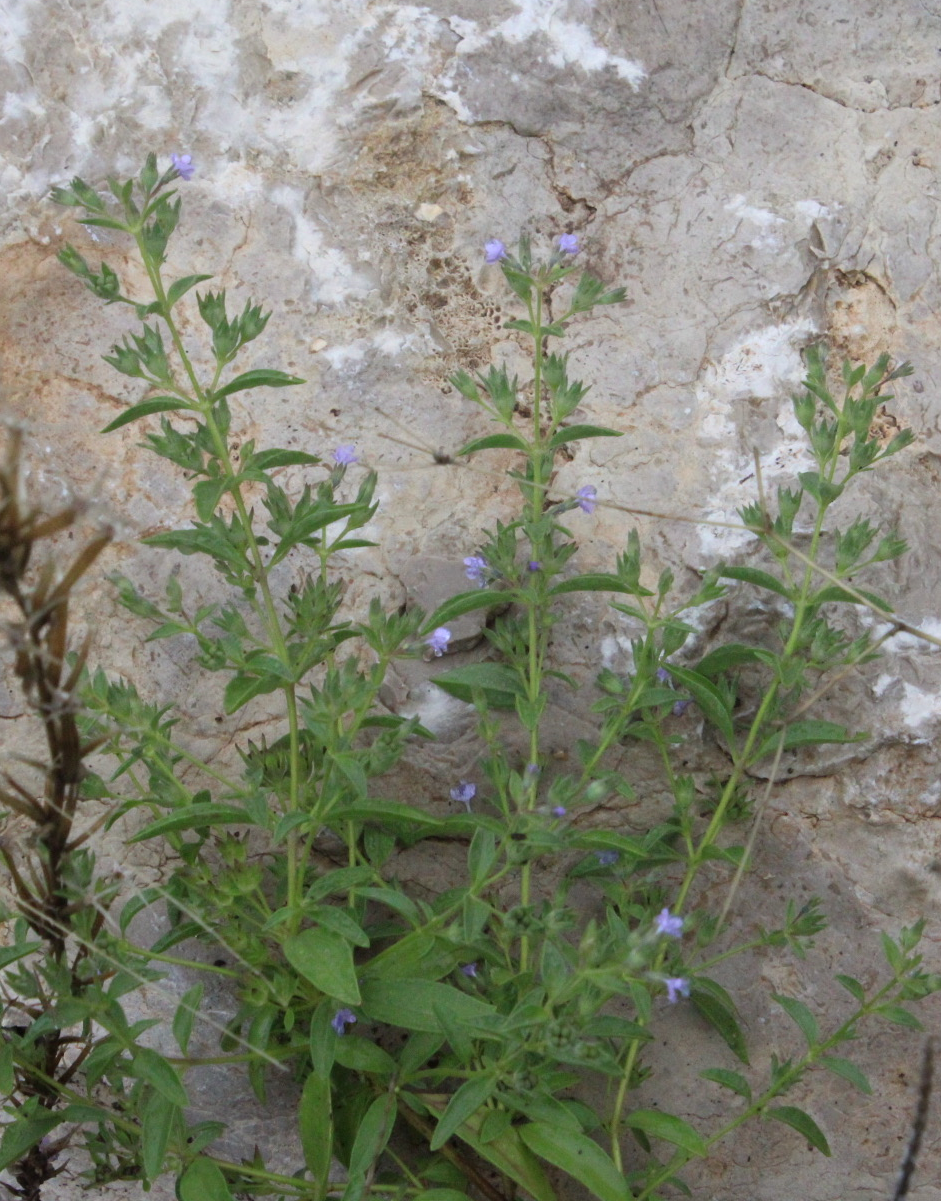
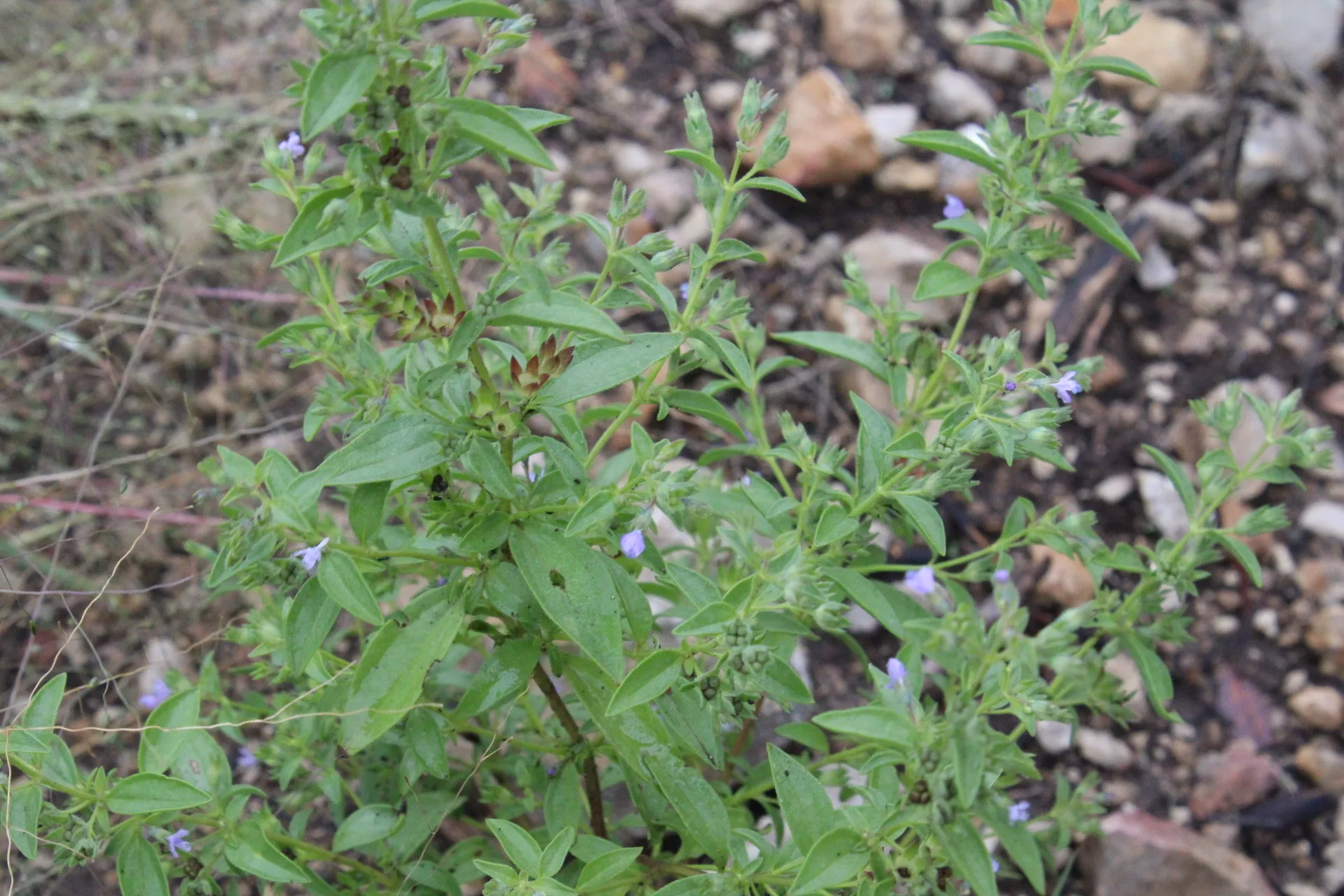
Blooms July-October. Ascending to erect stems. Small, narrowly oblong leaves, densely pubescent, and somewhat aromatic. Tiny, inconspicuous, blue flowers grow from the axis of the leaf. The fruit is a nutlet. This plant has sometimes been lumped together with Trichostem dichotumum, but is considered to be a separate species.
Previous Scientific Name(s): Isanthus brachiatus, Isanthus brachiatus var. linearis, Tetraclea viscida
Material Treatment Method Collection References
Seed No Treatment Spring, sow seeds directly outdoors. You can also start them indoors 4-6 weeks before the last frost date in your region. Choose a sunny spot with well-draining soil. For indoor sowing, use seed trays with a good seed-starting mix. Scatter the seeds thinly on the surface and lightly cover them with soil. Keep the soil consistently moist but not soggy. Blue Curls seeds typically germinate within 7-21 days at temperatures between 65-75 degrees Fahrenheit. Once seedlings have a few true leaves, thin them out to ensure adequate space for healthy growth. https://propagate.one/how-to-propagate-trichostema-brachiatum/
Stem Cutting Propagation via stem cuttings is best done in early summer when the plant is actively growing. Choose healthy, young stems with no signs of disease or pests. Cut them just below a node (the point where a leaf grows). Dip the base of the cutting in rooting hormone, which encourages root development. Use a well-draining potting mix. Insert the cuttings into moist soil, leaving 1-2 leaves above the soil line. Cover the cuttings with a clear plastic dome or bag to maintain high humidity and encourage rooting. Place them in a bright, indirect light location. Rooting can take anywhere from 4 to 6 weeks. Monitor the cuttings and ensure the soil remains moist. Once roots have formed, transplant the cuttings into individual pots or directly into the garden. https://propagate.one/how-to-propagate-trichostema-brachiatum/

About the Region

2026 Fall Symposium Logo

This low-elevations region of Texas extends inland from the barrier islands, about 60 or so miles, and stretches from Brownsville to Louisiana. In total, it covers about 9.5 million acres, with a high point of 150 feet in elevation. More than 1000 species of plants can be found in this region. On the southern end, species more common in Mexico (such as Sabal mexicana) and Central America occur.

The barrier islands provide us with dune systems, and clay flats to the inland side, which have species found in these areas alone. Many plants here, such as Ipomoea pes-caprae (beach morning glory), can be found throughout tropical regions of the globe. I’ve encountered the same species on the beaches of Guam.

Once inland, vast marshes and wet prairies occur. Occasionally, oak (Quercus fusiformis) groves can be found. Common grasses include species of Bothriochloa, Paspalum, and Sporobolus; eastern gamagrass (Tripsacum dactyloides); and switchgrass (Panicum species). Many rivers and creeks cut through the Gulf Prairies, and along these riparian areas various species of trees, Sabal minor, and other plants adapted to clay soils can be found. Due to overgrazing, farming, and fire suppression, woody species such as mesquite (Prosopis glandulosa) and huisache (Acacia farnesiana), and invasive species such as chinaberry (Melia azedarach), Brazilian pepper (Schinus terebinthifolius), and Chinese tallow (Sapium sebiferum) have increased and displaced our native flora.

Source: Wildflowers of Texas by Michael Eason