
Woolly Ironweed

Vernonia lindheimeri

Other common name(s):

Family:

Asteraceae (Aster Family)

Plant Ecoregion Distribution Map

This map uses data from the US EPA. EPA  servers have been offline frequently so maps may not display. We are working on a solution.

Cross Timbers, Edwards Plateau
Eastern Cross Timbers, Grand Prairie, Limestone Cut Plain, Western Cross Timbers
Balcones Canyonlands, Edwards Plateau Woodland, Llano Uplift, Semiarid Edwards Plateau

Plant Characteristics

Growth Form

Herbaceous

Height

1
to
3
ft.

Spread

1
to
3
ft.

Leaf Retention

Deciduous

Lifespan

Perennial

Habitat and Care Requirements

Soil Type(s)

Caliche, Dry, Loam, Sand

Light Requirement

Sun

Water Requirement

Low

Native Habitat

Grassland

Bloom and Attraction

Bloom Color

Purple

Bloom Season

Summer, Fall

Seasonal Interest

Nectar, Pollen

Wildlife Benefit

Bees, Butterflies, Nectar Insects

Maintenance

Tough, drought tolerant. Not as prone to colonize like others in this genus. Leave stems until spring to provide nesting habitat for tunnel-nesting bees. Needs well-drained conditions. Few seeds are fertile, so sow thickly when soil temperature is warm. Native habitat: open hillsides, roadsides, fields.

Description

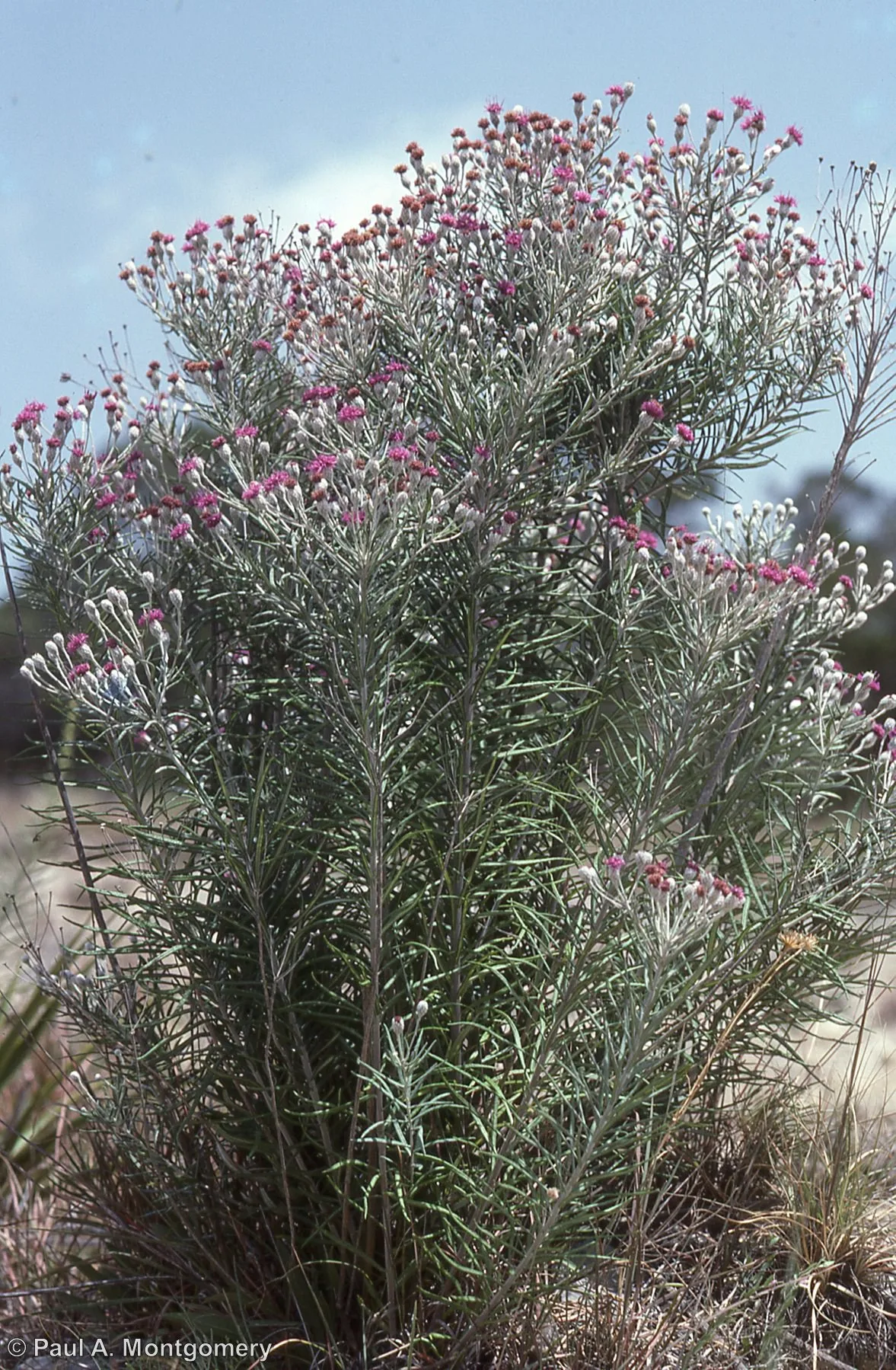
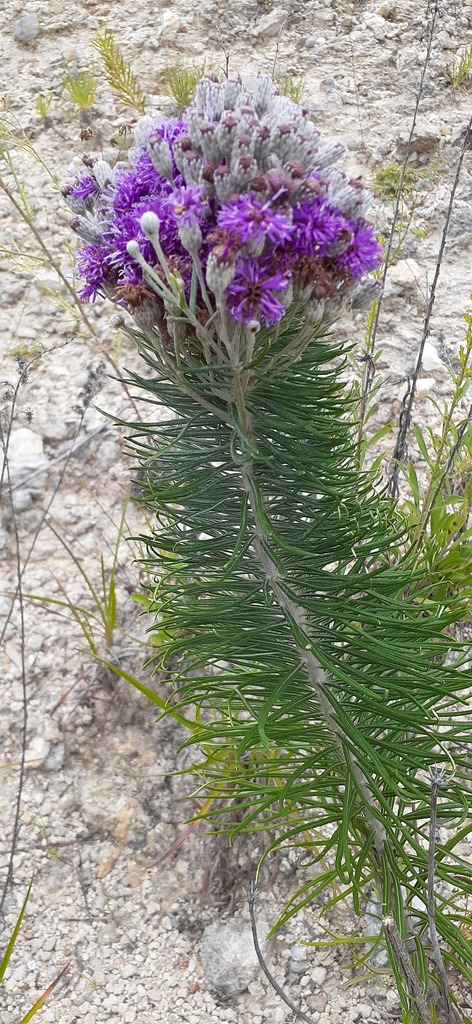
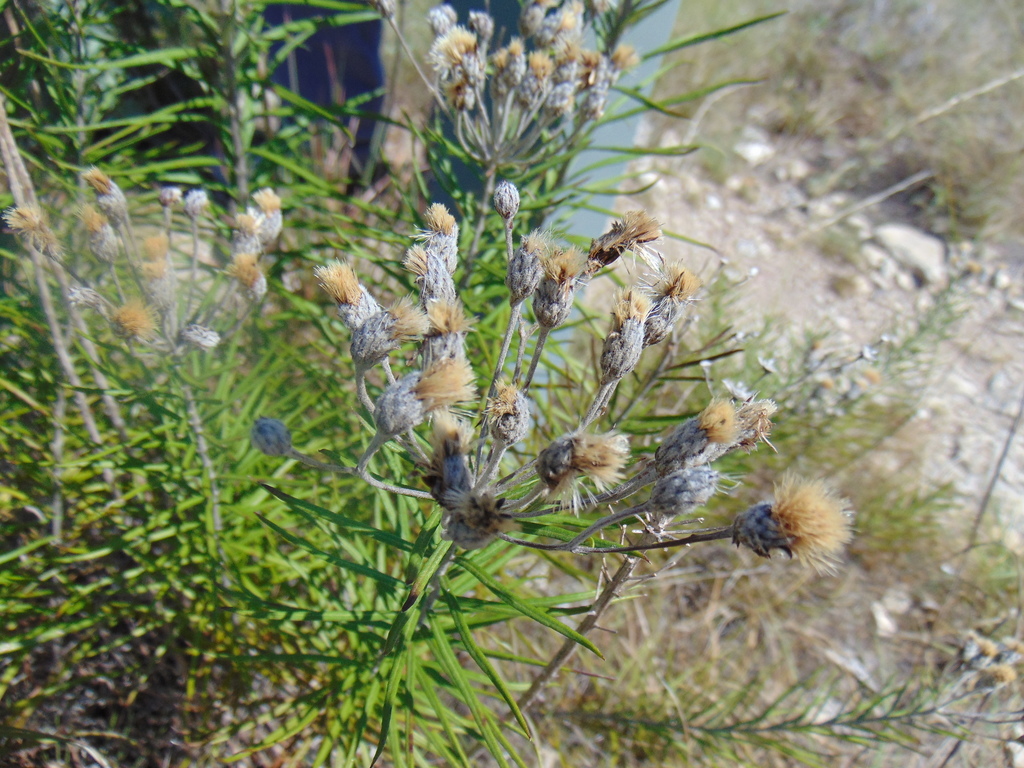
Blooms June-September. Woolly Ironweed is an upright herb with clusters of colorful, showy lavender to purple disc flowers at the end of stems. The undersides of the linear leaves are hairy, hence the name “woolly ironweed”. The fruit is a cypsela: a dry, one-seeded fruit, usually topped by pappus.
Material Treatment Method Collection References
Seed No Treatment The best time to propagate woolly ironweed is in early spring. During this period, temperatures and light conditions are favorable for seed germination. Sowing seeds in spring ensures they benefit from the increasing sunlight and warmth, which promotes healthy growth. This season also allows the plants to establish themselves before the harsher summer conditions. Prepare a well-draining seed starting mix. Fill seed trays or pots with this mix, ensuring it is lightly moistened but not waterlogged. Sow the woolly ironweed seeds on the surface of the soil. Lightly press the seeds into the soil but do not cover them with soil as they require light for germination. Mist the soil lightly to keep it moist. Cover the seed trays with a clear plastic lid or plastic wrap to increase humidity, but ensure there is some ventilation to prevent mold growth. Place trays in a warm location with indirect sunlight. Once seedlings are large enough to handle and have developed true leaves, transplant them into individual pots or directly into the garden, maintaining a spacing of about 12-18 inches apart. Collect seeds from mature woolly ironweed plants. Ensure the seeds are dry and free of any moisture to prevent mold or rot during storage or sowing. 1) https://www.picturethisai.com/care/propagate/Vernonia_lindheimeri.html 2) https://www.picturethisai.com/care/propagate/Vernonia_lindheimeri.html 3) https://propagate.one/how-to-propagate-vernonia-lindheimeri/?print=print
Clump Division Separate the clumps: Using a sharp knife or garden trowel, divide the root ball into smaller clumps, each with at least a few healthy stems. Plant the divisions: Replant the divisions in a sunny spot with well-draining soil. Water them thoroughly. Plant the divisions: Replant the divisions in a sunny spot with well-draining soil. Water them thoroughly. Carefully dig up the plant, making sure to preserve as much of the root system as possible.
Stem Cutting Remove lower leaves: Strip off the leaves below the soil line. Dip in rooting hormone: Optional, but beneficial, dip the cut end in rooting hormone. Plant in rooting medium: Fill a pot with a rooting mix and insert the cutting, ensuring it’s firmly in place. Keep it moist: Maintain a consistently moist environment and place the pot in a bright, indirect light spot. Wait patiently: Depending on conditions, cuttings might take weeks or months to root. Select a healthy stem that’s not flowering, ideally with some new growth. Use a sharp knife or scissors to make a clean cut at a 45-degree angle just below a leaf node. https://propagate.one/how-to-propagate-vernonia-lindheimeri/?print=print

About the Region

2026 Fall Symposium Logo

This low-elevations region of Texas extends inland from the barrier islands, about 60 or so miles, and stretches from Brownsville to Louisiana. In total, it covers about 9.5 million acres, with a high point of 150 feet in elevation. More than 1000 species of plants can be found in this region. On the southern end, species more common in Mexico (such as Sabal mexicana) and Central America occur.

The barrier islands provide us with dune systems, and clay flats to the inland side, which have species found in these areas alone. Many plants here, such as Ipomoea pes-caprae (beach morning glory), can be found throughout tropical regions of the globe. I’ve encountered the same species on the beaches of Guam.

Once inland, vast marshes and wet prairies occur. Occasionally, oak (Quercus fusiformis) groves can be found. Common grasses include species of Bothriochloa, Paspalum, and Sporobolus; eastern gamagrass (Tripsacum dactyloides); and switchgrass (Panicum species). Many rivers and creeks cut through the Gulf Prairies, and along these riparian areas various species of trees, Sabal minor, and other plants adapted to clay soils can be found. Due to overgrazing, farming, and fire suppression, woody species such as mesquite (Prosopis glandulosa) and huisache (Acacia farnesiana), and invasive species such as chinaberry (Melia azedarach), Brazilian pepper (Schinus terebinthifolius), and Chinese tallow (Sapium sebiferum) have increased and displaced our native flora.

Source: Wildflowers of Texas by Michael Eason