
Missouri ironweed

Vernonia missurica

Other common name(s):

Family:

Asteraceae (Aster Family)

Plant Ecoregion Distribution Map

This map uses data from the US EPA. EPA  servers have been offline frequently so maps may not display. We are working on a solution.

Gulf Coast Prairies and Marshes, Texas Blackland Prairies, Western Gulf Coastal Plain
Northern Humid Gulf Coastal Prairies
Southern Blackland Prairie
Flatwoods, Floodplains and Low Terraces3, Pleistocene Fluvial Terraces, Red River Bottomlands, Southern Tertiary Uplands, Tertiary Uplands

Plant Characteristics

Growth Form

Herbaceous

Height

2
to
6
ft.

Spread

1
to
2
ft.

Leaf Retention

Deciduous

Lifespan

Perennial

Habitat and Care Requirements

Soil Type(s)

Clay, Loam, Moist, Poor Drainage, Sand

Light Requirement

Sun

Water Requirement

Medium, High

Native Habitat

Disturbed Areas, Grassland, Woodland

Bloom and Attraction

Bloom Color

Purple

Bloom Season

Summer, Fall

Seasonal Interest

Nectar, Pollen, Seeds

Wildlife Benefit

Bees, Birds, Butterflies

Maintenance

Easy to grow. Spreads primarily from its fibrous rhizomatous roots, but also produces seeds that are generally wind-dispersed. Tolerates periodic flooding. Great for pollinator gardens. Native habitat: moist, open ground along streams, wooded swamps, low meadows, prairies, fields and waste places.

Description

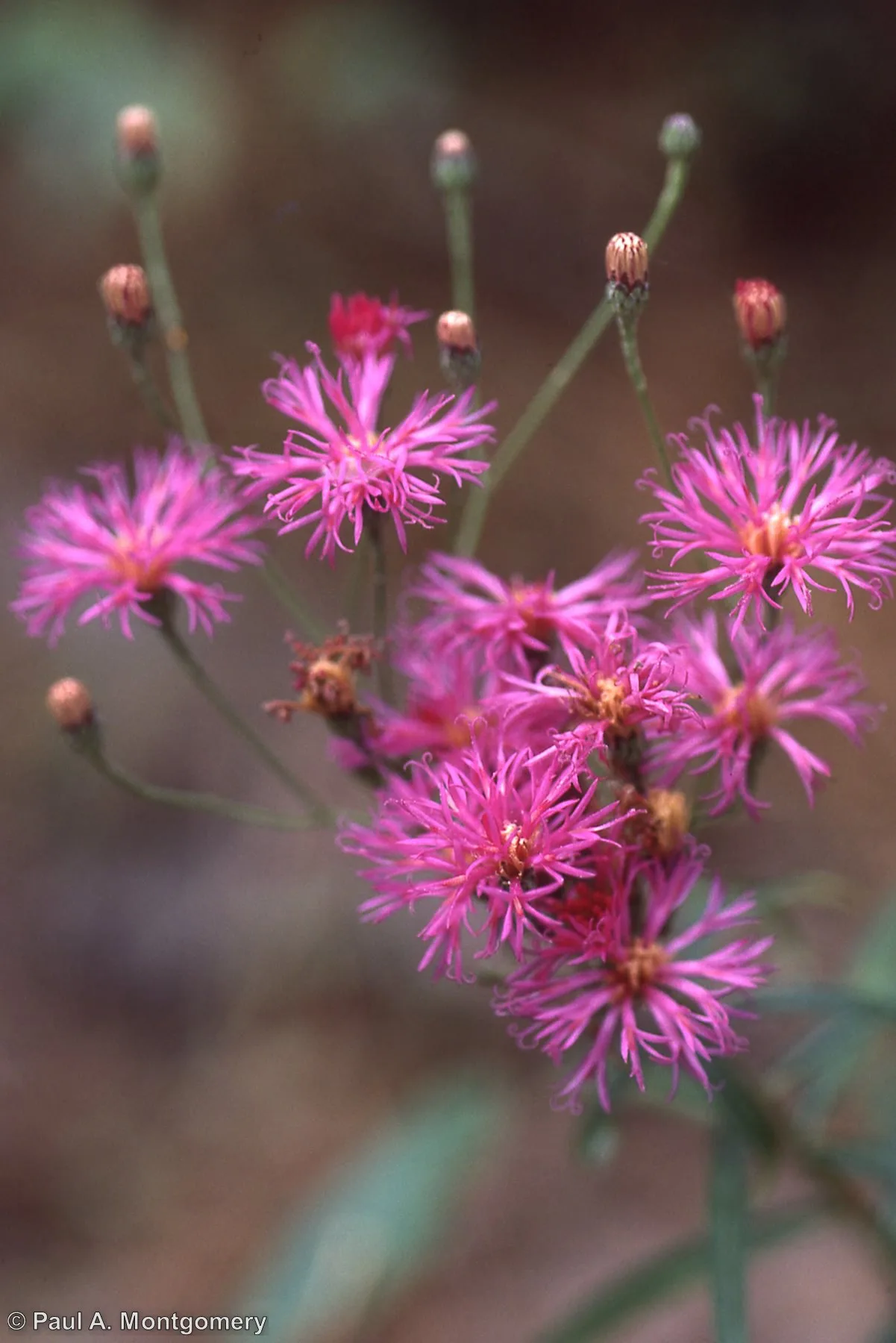
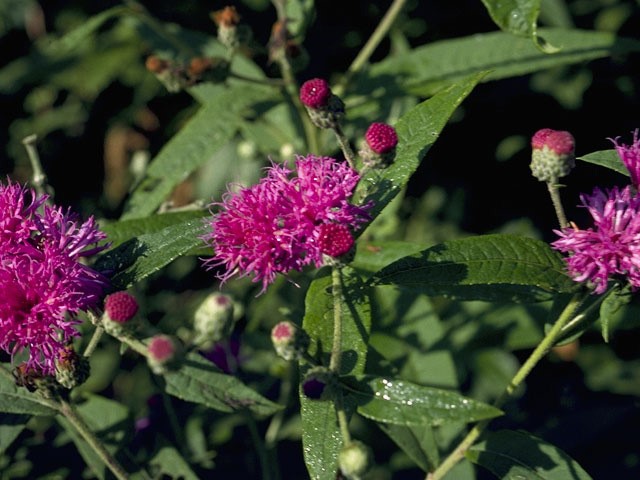
Blooms July-September. Stems and leaves are hairy. Leave are narrow, lance-shaped to oval. Clusters of purple flowers bloom at the top of stems. Lacks the ray flowers typical of plants in this family; they are made up of disc flowers only. Tends to hybridize with other native ironweeds. The fruit is a cypsela: a dry, one-seeded fruit, usually topped by pappus.
Previous Scientific Name(s): Vernonia aborigina
Material Treatment Method Collection References
Seed No Treatment Sow seeds in a well-draining seed starting mix in early spring. Keep the soil moist and provide bright, indirect light. Once seedlings develop true leaves, transplant them into a sunny location outdoors. Space the plants 1-2 feet apart. Showy Ironweed seeds can be slow to germinate, taking several weeks or even months. Collect seeds from mature flower heads after they’ve turned brown and dry. These will have a fuzzy appearance and contain the tiny seeds. Let the seed heads dry further in a paper bag or container. https://propagate.one/how-to-propagate-vernonia-missurica/
Bud Division Carefully dig up the plant and gently separate the root ball into smaller sections, each with healthy roots and shoots. Replant each division in a well-prepared bed, ensuring they have sufficient space to grow. Be sure to water them well. Divide Vernonia missurica in early spring or fall, when the plant is dormant. https://propagate.one/how-to-propagate-vernonia-missurica/
Seed Stratification Sow just under the surface of the soil and water in. Then cover them with plastic and place in a fridge for 90 days. Be sure they stay moist. After the cold stratification they are then brought back to room temperature 20-22°C (68-72°F) for them to germinate. Germination is irregular over a long period of time, generally 60-90 days, but some can take longer. https://ferriseeds.com/products/vernonia-missurica-br-missouri-ironweed?srsltid=AfmBOoqB__U3EucQVlsxyR4YL6JO1Zx3iemFi-PiytpOYV_10ouKHV1x

About the Region

2026 Fall Symposium Logo

This low-elevations region of Texas extends inland from the barrier islands, about 60 or so miles, and stretches from Brownsville to Louisiana. In total, it covers about 9.5 million acres, with a high point of 150 feet in elevation. More than 1000 species of plants can be found in this region. On the southern end, species more common in Mexico (such as Sabal mexicana) and Central America occur.

The barrier islands provide us with dune systems, and clay flats to the inland side, which have species found in these areas alone. Many plants here, such as Ipomoea pes-caprae (beach morning glory), can be found throughout tropical regions of the globe. I’ve encountered the same species on the beaches of Guam.

Once inland, vast marshes and wet prairies occur. Occasionally, oak (Quercus fusiformis) groves can be found. Common grasses include species of Bothriochloa, Paspalum, and Sporobolus; eastern gamagrass (Tripsacum dactyloides); and switchgrass (Panicum species). Many rivers and creeks cut through the Gulf Prairies, and along these riparian areas various species of trees, Sabal minor, and other plants adapted to clay soils can be found. Due to overgrazing, farming, and fire suppression, woody species such as mesquite (Prosopis glandulosa) and huisache (Acacia farnesiana), and invasive species such as chinaberry (Melia azedarach), Brazilian pepper (Schinus terebinthifolius), and Chinese tallow (Sapium sebiferum) have increased and displaced our native flora.

Source: Wildflowers of Texas by Michael Eason