
Wild Shrimp Plant

Yeatesia platystegia

Other common name(s):

Montell Bractspike

Family:

Acanthaceae (Acanthus Family)

Plant Ecoregion Distribution Map

This map uses data from the US EPA. EPA  servers have been offline frequently so maps may not display. We are working on a solution.

Southern Texas Plains
Semiarid Edwards Plateau
Northern Nueces Alluvial Plains, Rio Grande Floodplain and Terraces, Semiarid Edwards Bajada, Texas-Tamaulipan Thornscrub

Plant Characteristics

Growth Form

Herbaceous

Height

1
to
2
ft.

Spread

.25
to
.5
ft.

Leaf Retention

Deciduous

Lifespan

Perennial

Habitat and Care Requirements

Soil Type(s)

Moist, Well Drained

Light Requirement

Part Shade

Water Requirement

Medium

Native Habitat

Desert, Shrubland, Woodland

Bloom and Attraction

Bloom Color

Purple, White

Bloom Season

Summer

Seasonal Interest

Nectar

Wildlife Benefit

Nectar Insects

Maintenance

A South Texas plant that can winter further north in a protected area of the garden or through milder winters. Rare in the wild, but is propagated commercially. May need extra care if grown outside of its native range. Native habitat: semiarid scrublands, canyon woodlands, desert,

Description

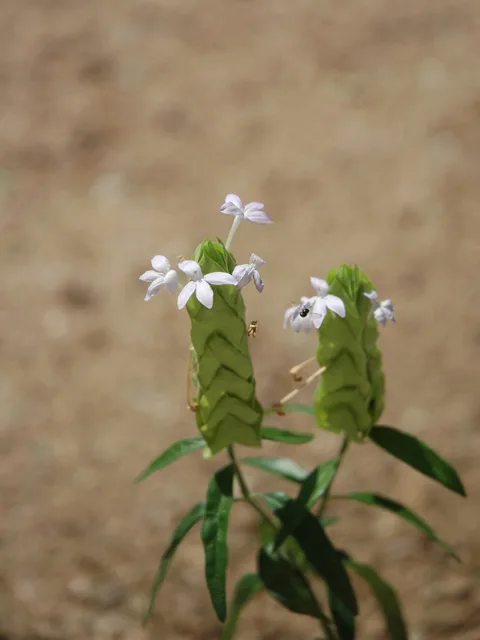
Blooms June-August. Wild shrimp plant has bracts that resemble a shrimp’s abdomen and open over a long period. They are pale lavender fading to near white. Leaves are lance-shaped. The fruit is a capsule.
Previous Scientific Name(s): Tetramerium platystegium
Material Treatment Method Collection References
Seed No Treatment The best time to propagate montell bractspike is in the spring, utilizing sowing methods. Spring provides optimal conditions with mild temperatures and increasing daylight, which support seed germination and growth. These factors align to ensure robust development during the early stages, making spring ideal for propagating montell bractspike. Choose a well-draining potting mix specific for seeds. Fill seed trays or small pots with the mix. Water the soil thoroughly to ensure it is evenly moist. Sow the seeds evenly on the soil surface. Lightly cover the seeds with a thin layer of the potting mix, about 1/4 inch deep. Firm the soil gently to ensure good seed-to-soil contact. Place the seed trays or pots in a warm, bright location with indirect light. Maintain a consistent moisture level by misting the soil surface as needed. Germination typically occurs within 2-3 weeks. Once seedlings have emerged and developed at least two sets of true leaves, transplant them into individual pots or a prepared garden bed with well-draining soil. Gradually acclimate the young plants to outdoor conditions before planting them in their final location. Maintain consistent watering, ensuring the soil remains moist but not waterlogged. Provide bright, indirect light and protect from strong, direct sunlight to prevent leaf burn. Gather seeds from mature montell bractspike plants. Ensure the seeds are fully developed and dry by waiting until the seed heads have turned brown and started to split.Clean the seeds by removing any debris and other plant material. Soak the seeds in water overnight to enhance germination. https://www.picturethisai.com/care/propagate/Yeatesia_platystegia.html

About the Region

2026 Fall Symposium Logo

This low-elevations region of Texas extends inland from the barrier islands, about 60 or so miles, and stretches from Brownsville to Louisiana. In total, it covers about 9.5 million acres, with a high point of 150 feet in elevation. More than 1000 species of plants can be found in this region. On the southern end, species more common in Mexico (such as Sabal mexicana) and Central America occur.

The barrier islands provide us with dune systems, and clay flats to the inland side, which have species found in these areas alone. Many plants here, such as Ipomoea pes-caprae (beach morning glory), can be found throughout tropical regions of the globe. I’ve encountered the same species on the beaches of Guam.

Once inland, vast marshes and wet prairies occur. Occasionally, oak (Quercus fusiformis) groves can be found. Common grasses include species of Bothriochloa, Paspalum, and Sporobolus; eastern gamagrass (Tripsacum dactyloides); and switchgrass (Panicum species). Many rivers and creeks cut through the Gulf Prairies, and along these riparian areas various species of trees, Sabal minor, and other plants adapted to clay soils can be found. Due to overgrazing, farming, and fire suppression, woody species such as mesquite (Prosopis glandulosa) and huisache (Acacia farnesiana), and invasive species such as chinaberry (Melia azedarach), Brazilian pepper (Schinus terebinthifolius), and Chinese tallow (Sapium sebiferum) have increased and displaced our native flora.

Source: Wildflowers of Texas by Michael Eason