No-Freeze Trees

Are your trees ready for winter? While most established native trees have developed natural mechanisms to tolerate cold, young and newly-planted trees may need some protection, according to Mac Martin, a Texas A&M Forest Service Urban Forester. Here are some tips to help your trees survive the cold this season:

WATER

If a hard freeze is forecast and soil moisture is low, water young trees early in the day, before the drop in nighttime temperatures.

MULCH

Spread a 2- to 3-inch layer of mulch around the base of the tree to help prevent cold air from penetrating the root zone. Keep the mulch about two inches away from the tree trunk.

PRUNE

If live tissue needs to be removed, it’s best to wait to prune until mid- to late winter. For more information about tree care, visit texastrees.org.

Cedar snowball ( Juniperus ashei ), Photo by Janice Hipsher.
Trees in winter landcsape
Forest in Winter, Photo by Marilyn Sallee.
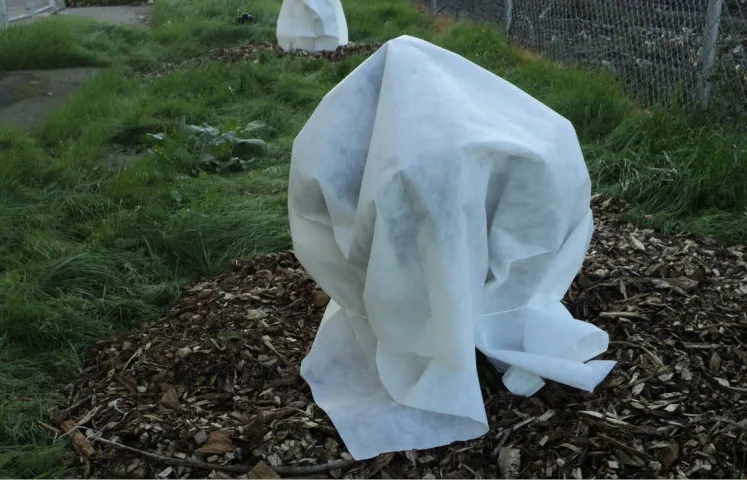
An easy way to protect a tender tree is to cover it with trash bags, tarps, or towels to provide a layer of insulation from freezing temps. Photo by Texas Trees Foundation.

Did you like this article? It’s from our Winter 2024 Texas Native Plants magazine. Read more here
About the Region

2026 Fall Symposium Logo

This low-elevations region of Texas extends inland from the barrier islands, about 60 or so miles, and stretches from Brownsville to Louisiana. In total, it covers about 9.5 million acres, with a high point of 150 feet in elevation. More than 1000 species of plants can be found in this region. On the southern end, species more common in Mexico (such as Sabal mexicana) and Central America occur.

The barrier islands provide us with dune systems, and clay flats to the inland side, which have species found in these areas alone. Many plants here, such as Ipomoea pes-caprae (beach morning glory), can be found throughout tropical regions of the globe. I’ve encountered the same species on the beaches of Guam.

Once inland, vast marshes and wet prairies occur. Occasionally, oak (Quercus fusiformis) groves can be found. Common grasses include species of Bothriochloa, Paspalum, and Sporobolus; eastern gamagrass (Tripsacum dactyloides); and switchgrass (Panicum species). Many rivers and creeks cut through the Gulf Prairies, and along these riparian areas various species of trees, Sabal minor, and other plants adapted to clay soils can be found. Due to overgrazing, farming, and fire suppression, woody species such as mesquite (Prosopis glandulosa) and huisache (Acacia farnesiana), and invasive species such as chinaberry (Melia azedarach), Brazilian pepper (Schinus terebinthifolius), and Chinese tallow (Sapium sebiferum) have increased and displaced our native flora.

Source: Wildflowers of Texas by Michael Eason
