
Organization: Fredericksburg

Fredericksburg Announces its new Board of Directors for 2025

The Fredericksburg chapter of NPSOT is pleased to announce the election of its new Board of Directors for 2025. It includes a mix of continuing and new leadership, with Jonathan Watt stepping into the role of President.

Watt has been deeply involved with plants, from botanic garden-sponsored expeditions in Central and South America collecting and studying Aroids (houseplants like philodendrons and pothos), to taxonomy, landscape design, installation and maintenance, plant collection and propagation.

Blog

Anacacho Orchid – a N.I.C.E. small native tree for the winter season

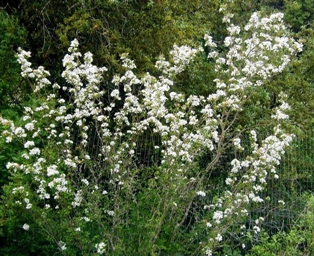
You may have seen this lovely small tree (single- or multi-trunked) around town when it is in full bloom and wished you knew its  name. This winter season, which begins on December 21st, the  Kerrville and Fredericksburg NPSOT chapters are promoting the Anacacho Orchid (Bauhinia lunarioides) at local nurseries as part  of the N.I.C.E. Native Plant Partner program.

About

25 Native Plant Lessons from 25 Years of Experience

“There are hundreds of wonderful Texas natives in Texas, but trying to figure out which ones do the best in your particular area of Gillespie County, can take time,” noted Matt Kolodzie, owner of Friendly Natives Nursery. “I’m going to share with you what I’ve learned in the last 25 years so you can shorten your learning curve, be more successful faster, and save money.”

N.I.C.E. for the season

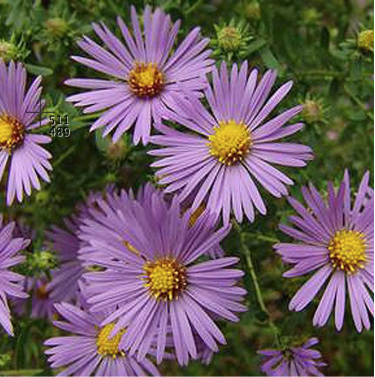
Fall Aster – a well-behaved NICE plant for your “fall” flower garden

Also called the Hill Country Aster, Aster oblongifolius is a well-behaved perennial native plant that is surprisingly easy to grow. It is hardy all the way from the Texas Hill Country which can get down to 10-15 degrees in the winter – up through the Texas panhandle with temperatures which can drop to -5 degrees Fahrenheit. In fact his plant is happy over most of the Northeastern & central U.S.

Jordy Bennet photo
Chapter Meeting

View: No More Monoculture Lawns

on Fredericksburg Texas Native Gardening Handout: NO MORE MONOCULTURE GRASS LAWN OR WHY TO USE GROUNDCOVERS!Kathy Saucier The how’s, why’s, and what’s to plant your “lawn.” With the Local Drought

Community Outreach

Hi,  Please join our conversation and our monthly meeting. Our vision is restoring and protecting the native plant heritage of our Texas landscape. Do you have ideas or questions about

Activity

View: Land Stewardship for Birds

Nearly 50 years of data tells us that bird populations are declining at an alarming rate. Author Rufus Stephens, co-author of the book, Land Stewardship for Birds: A Guide for Central Texas, will speak about conserving and enhancing local habitats to produce the cover, food, and water needed for thriving bird populations.

Chapter

View: Creating a Pollinator’s Garden

If you want to create a pollinator garden, but don’t know where to start, Holly Simonette, this month’s speaker at Native Plant Society of Texas (NPSOT) Fredericksburg Chapter, will share tips and resources for going from blank slate to recognized pollinator garden

Chapter

$2000 Bill Lindemann Scholarship Awarded to Mercedes Burks

The Fredericksburg Chapter of the Native Plant Society of Texas (NPSOT) has awarded its $2,000 “Bill Lindemann Scholarship” to Mercedes Burks, a student at Texas A & M University.

“Our chapter board was impressed with Ms. Burks’ commitment to improve Texas ecosystems,” noted Deborah Simmons, President of the Fredericksburg chapter of NPSOT.

About the Region

Fall Symposium 2025 Logo - Teach for the Future

Salado, the location of our Fall 2025 Symposium, lies at the intersection of two ecoregions: the Edwards Plateau (Limestone Cut Plain) and Blackland Prairie (Northern Blackland Prairie).

The Edwards Plateau area is also called the Hill Country; however, this general term covers a much larger area extending farther north. Spring-fed creeks are found throughout the region; deep limestone canyons, rivers, and lakes (reservoirs) are common. Ashe juniper is perhaps the most common woody species found throughout the region. Additional woody species include various species of oak, with live oak (Quercus fusiformis) being the most common. Sycamores (Platanus occidentalis) and bald cypress (Taxodium distichum) border waterways. This area is well known for its spring wildflower displays, though they may be viewed in spring, late summer, and fall, as well. According to Texas Parks and Wildlife, average annual rainfall in the Edwards Plateau ranges from 15 to 34 inches.

The Blackland Prairie extends from the Red River south to San Antonio, bordered on the west by the Edwards Plateau and the Cross Timbers, and on the east by the Post Oak Savannah. Annual rainfall averages 30 to 40 inches, with higher averages to the east. This region is dominated by prairie species. The most common grass species include little bluestem (Schizachyrium scoparium) and Indian grass (Sorghastrum nutans) in the uplands and switchgrass (Panicum virgatum) in the riparian areas and drainages. Common herbaceous flowering plants include salvias, penstemons, and silphiums. This area has suffered greatly from overgrazing and agricultural use. Few intact areas remain, though many of the plants can be found along county roadsides throughout the region.

Our fall Symposium host chapter, the Tonkawa Chapter, includes both of these ecoregions.

Source: Wildflowers of Texas by Michael Eason