
Organization: New Braunfels

Uncategorized

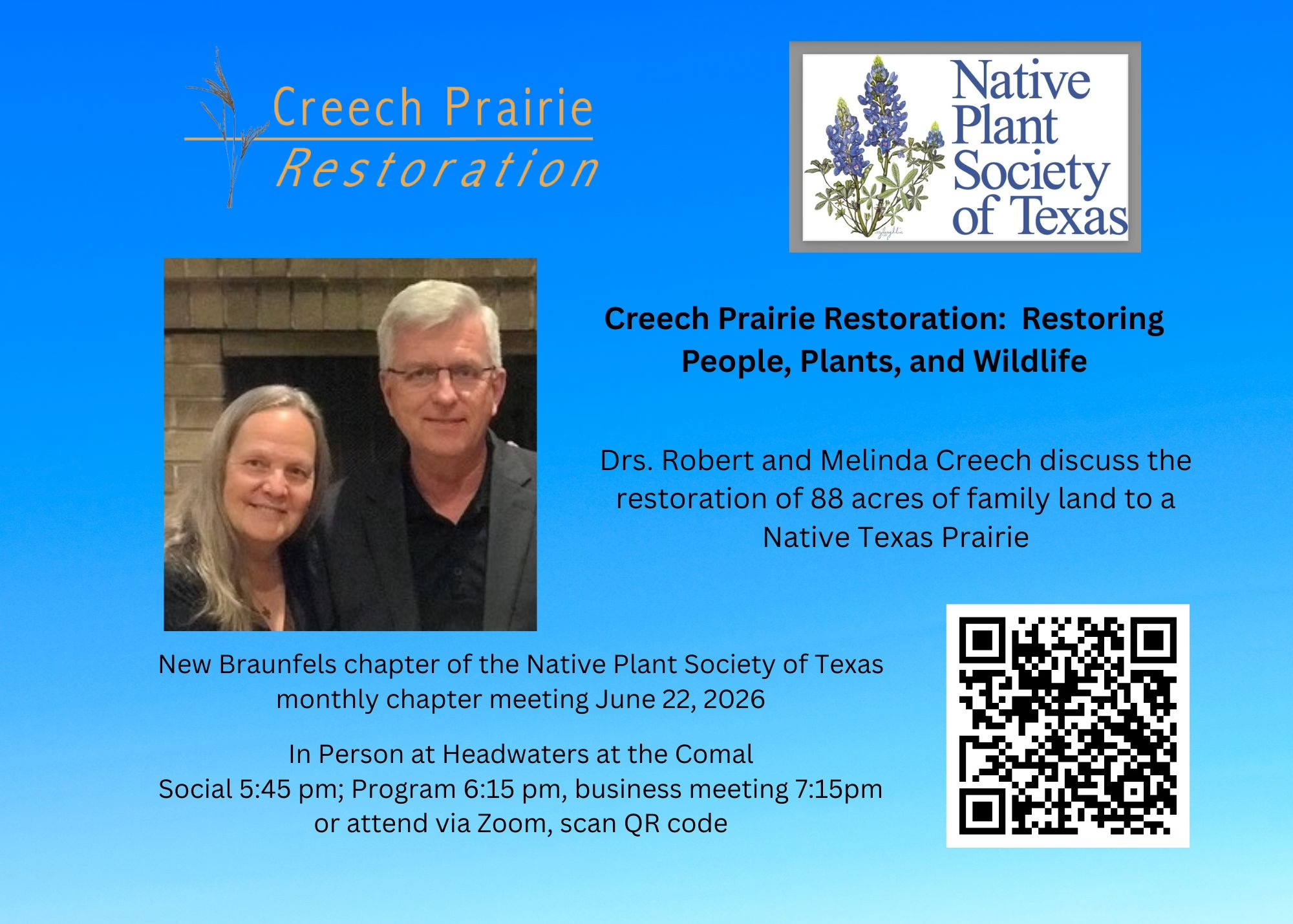
Creech Prairie Restoration

Drs. Robert and Melinda Creech discuss the restoration of 88 acres of family land to a Native Texas Prairie.

Uncategorized

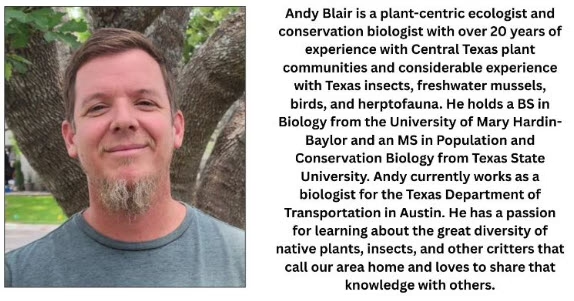
For the Love of Flies – Praise for the forgotten pollinators and unsung allies

Andy Blair is a plant-centric ecologist and conservation biologist with 20 years of experience with central Texas plant communities and considerable experience with Texas insects, freshwater mussels, birds and herpetofauna. He has a passion for learning about the great diversity of native plants, insects, and other critters that call our area home and loves to share that knowledge with others.

Uncategorized

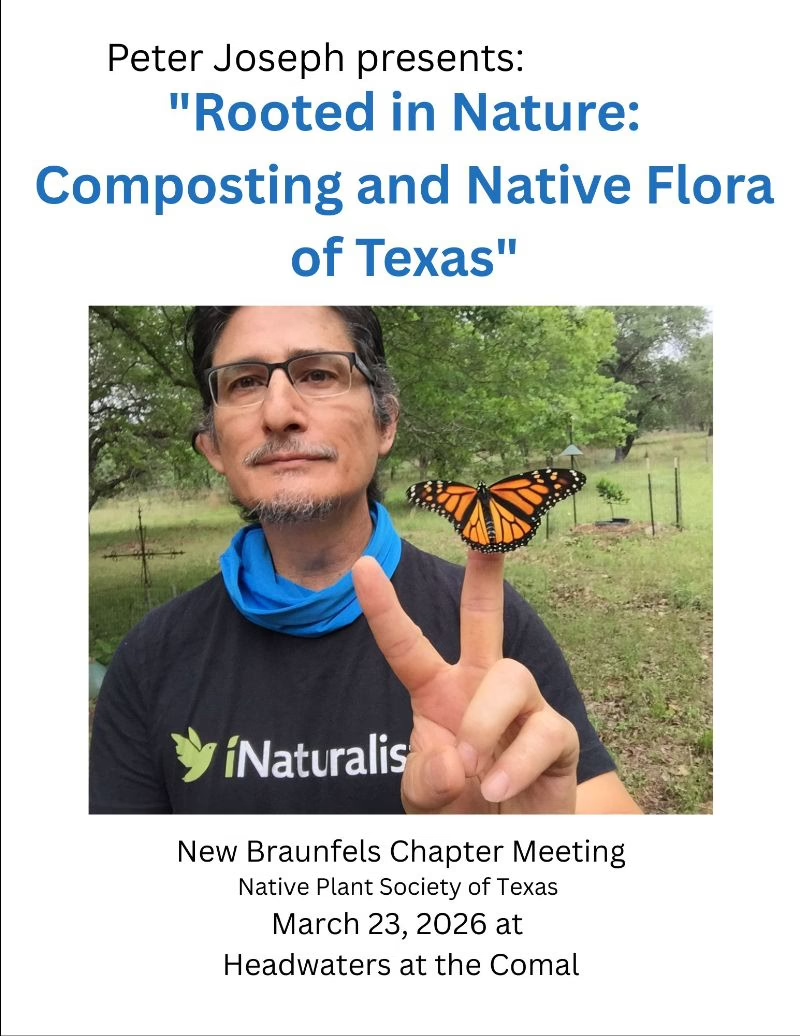
Rooted in Nature: Composting and Native Flora of Texas

Peter is a Guadalupe County Master Gardener and Master Composter with the State of Texas Alliance of Recycling. He focuses on Earth-Kind practices which help plants thrive while conserving water and caring for the environment. Peter is actively engaged in environmental stewardship and conservation efforts with multiple groups in the greater San Antonio area. He has served on the board of the San Antonio Chapter of NPSOT, is an Alamo Area Master Naturalist, a member of the Audubon Society, and serves on the Environmental Advisory Committee for the San Antonio River Authority among other roles.

Uncategorized

The Texas Native PLant Primer by Andrea DeLong-Amaya

Horticulture Educator, Lady Bird Johnson Wildflower Center

For over three decades, Andrea DeLong-Amaya has been living her life’s mission to honor the natural world through presenting and teaching
classes about the horticulture, ecology, and importance of native plants in planned landscapes. Her regionally best-selling book, the Texas Native Plant Primer (Timber Press), was released in March of 2025.

Uncategorized

Land and Plant Restoration at the Weston Ranch

The Weston Ranch Foundation is a suburban sanctuary where prairie and wildlife thrive through habitat conservation and sustainable agriculture to benefit our community in Central Texas. The foundation was formed in 2003 to foster relationships with higher education institutions, non-profits, inspirational groups, and the community. We are currently working together with Texas Lutheran University, The University of Texas at San Antonio, and Texas State University to better understand our natural capital and to support the teaching missions of the universities.

Uncategorized

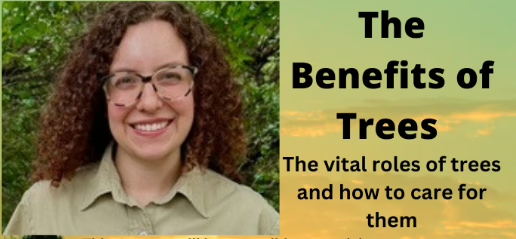
The vital role of Trees

Rachel Sarlls is the regional urban ecologist with the Texas A&M Forest Service for the San Antonio region. She graduated from Sam Houston State University with a bachelor’s degree in plant and soil sciences. She is an ISA Certified arborist with specialized qualifications in tree risk assessment and Oak Wilt management. She has worked as an arborist in the Houston region, managing work from tree removals and pruning to fertilization and planting. Rachel has a passion for empowering communities through education and outreach to help people understand the vital role trees play in urban environment and how to effectively care for them.

Uncategorized

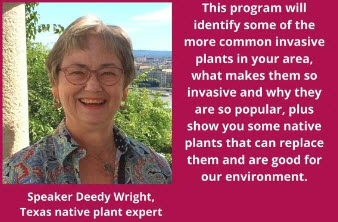
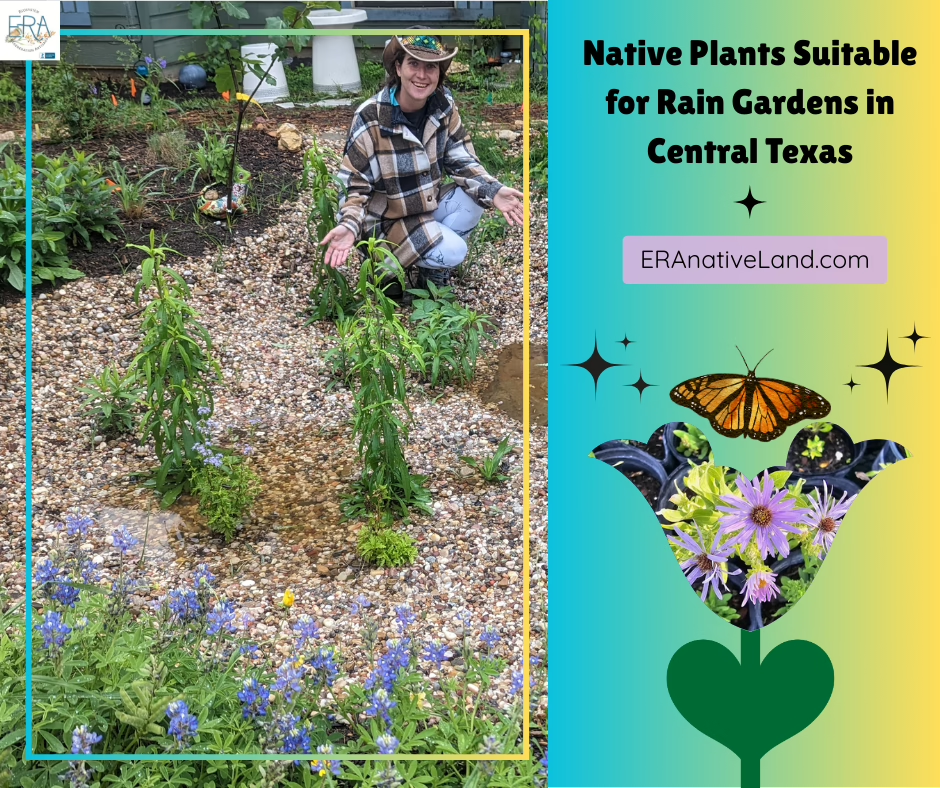
Native Plants Suitable for Rain Gardens in Central Texas

“From red and gold hues in the Fall to bright swaths of wildflower color in the Spring, Texas seasons manifest most vibrantly through the growth of our native flora. Utilizing native plant species in Texas landscapes encourages more biodiversity, healthier soil, and holds immense value to our native fauna, including pollinators. In this presentation, ERA highlights the benefits of some of our most breathtaking and instrumental native plants that are suitable for a range of conditions from soggy to crispy, revealing how these plants are used in rain gardens, and other landscapes, in Central Texas. Bring diversity home by growing native!”

Uncategorized

Photographing Biodiversity

Matt Buckingham is a naturalist, photographer, and protected species biologist based out of Lufkin. Matt received a bachelors in wildlife management from Stephen F. Austin State University (SFA) in 2007. In 2011 Matt graduated from SFA with a masters in biology with an emphasis on ecology and evolutionary biology. For his thesis, Matt studied the bird communities of Iguazu National Park, Argentina. Matt has a long history of working as a biologist with various species including American alligators, Neotropical migrant songbirds, Snowy Plovers in the Texas panhandle, and secretive marshbirds in the Chesapeake Bay. Matt previously worked as a conservation biologist for Bayou Land Conservancy, a land trust in the Houston area and as a biologist Texas Department of Transportation, where he worked on endangered species conservation, road ecology research, finding innovate ways to reduce impacts to wildlife from road construction activities, and developing solutions for wildlife/vehicle conflicts. Matt also worked as a biologist for the U.S. Fish and WIldlife Service with federally listed, proposed, and review species. Matt currently works for Ecosystem Planning and Restoration, LLC, where he works on research, conservation, and mitigation projects. Matt also works as a freelance photographer and author, and his images and articles have been published in a variety of magazines. Matt lives in Lufkin with his wife and son and spends as much time as possible exploring the Pineywoods around their home and beyond.

About the Region

2026 Fall Symposium Logo

This low-elevations region of Texas extends inland from the barrier islands, about 60 or so miles, and stretches from Brownsville to Louisiana. In total, it covers about 9.5 million acres, with a high point of 150 feet in elevation. More than 1000 species of plants can be found in this region. On the southern end, species more common in Mexico (such as Sabal mexicana) and Central America occur.

The barrier islands provide us with dune systems, and clay flats to the inland side, which have species found in these areas alone. Many plants here, such as Ipomoea pes-caprae (beach morning glory), can be found throughout tropical regions of the globe. I’ve encountered the same species on the beaches of Guam.

Once inland, vast marshes and wet prairies occur. Occasionally, oak (Quercus fusiformis) groves can be found. Common grasses include species of Bothriochloa, Paspalum, and Sporobolus; eastern gamagrass (Tripsacum dactyloides); and switchgrass (Panicum species). Many rivers and creeks cut through the Gulf Prairies, and along these riparian areas various species of trees, Sabal minor, and other plants adapted to clay soils can be found. Due to overgrazing, farming, and fire suppression, woody species such as mesquite (Prosopis glandulosa) and huisache (Acacia farnesiana), and invasive species such as chinaberry (Melia azedarach), Brazilian pepper (Schinus terebinthifolius), and Chinese tallow (Sapium sebiferum) have increased and displaced our native flora.

Source: Wildflowers of Texas by Michael Eason