When I lived in Dallas many years ago, there was a large Texas Star Hibiscus that grew near our front door. We loved it because of the beautiful big red flowers and also because it usually bloomed on my wife’s birthday in late July.
Now that I live out west I haven’t tried to grow Texas Star Hibiscus because it’s so dry here. However we picked up one at a native plant sale in the spring and have been struggling to keep it alive through this dry summer heat spell.
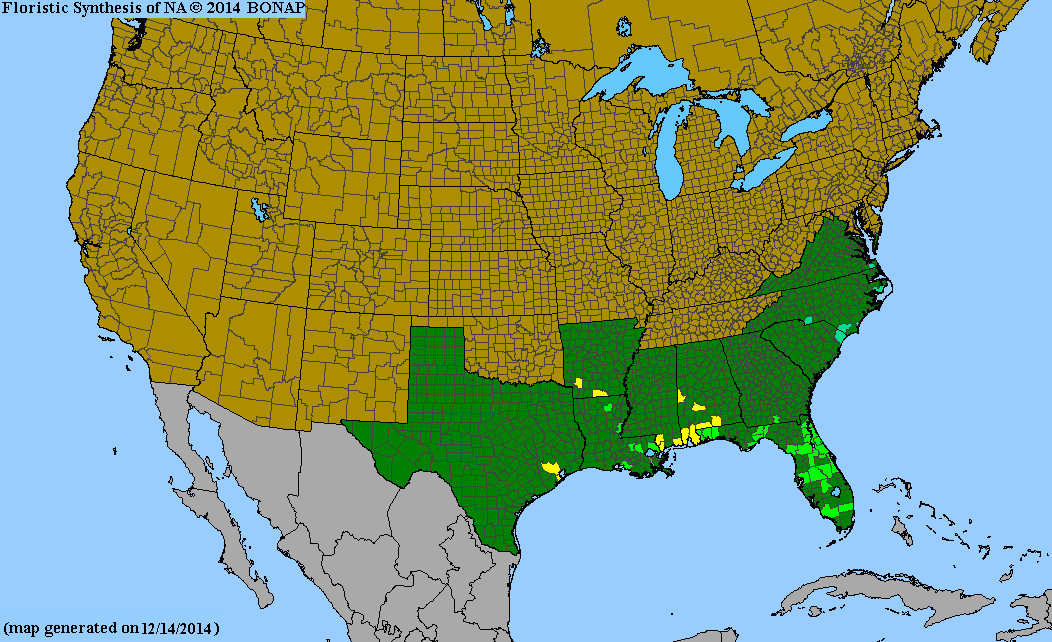
It turns out that Texas Star Hibiscus (Hibiscus coccineus) may not even be native. I could not find it listed in most of my reference books on Texas natives. The NPIN database and USDA both show it native to Arkansas and Louisiana but not Texas. However BONAP and Texas SmartScape both say it’s native, so I am going to give it the benefit of the doubt, partly for nostalgic reasons.
This is a tall perennial, three to six feet according to the literature; the one we had in Dallas was over four feet. It can get a bit leggy and most people would probably prefer it at the back of a border. The showy blossoms are at the top of the branches and are five to six inches in diameter. The flowers come on late and continue all summer. They are bright crimson red, with a five-pointed star in the middle; hence the name. It goes by other names as well, such as Crimson Hibiscus and Scarlet Rosemallow.
As you would expect, hummingbirds are attracted to the blooms, as well as several kinds of butterflies and bees.
It’s natural habitat is swamps and ditches, so obviously extra water is going to be needed. I’m putting mine next to the grey-water discharge pipe. It would probably be perfect for Houston.
**ARCHIVED POST** **ARCHIVED POST LINKS & PICTURES MAY NOT WORK** **ARCHIVED POST AUTHOR: Bill Hopkins