What Bison Did For Bees: The Story of the World’s Greatest “Weed”

By Peter Keilty, Austin Chapter
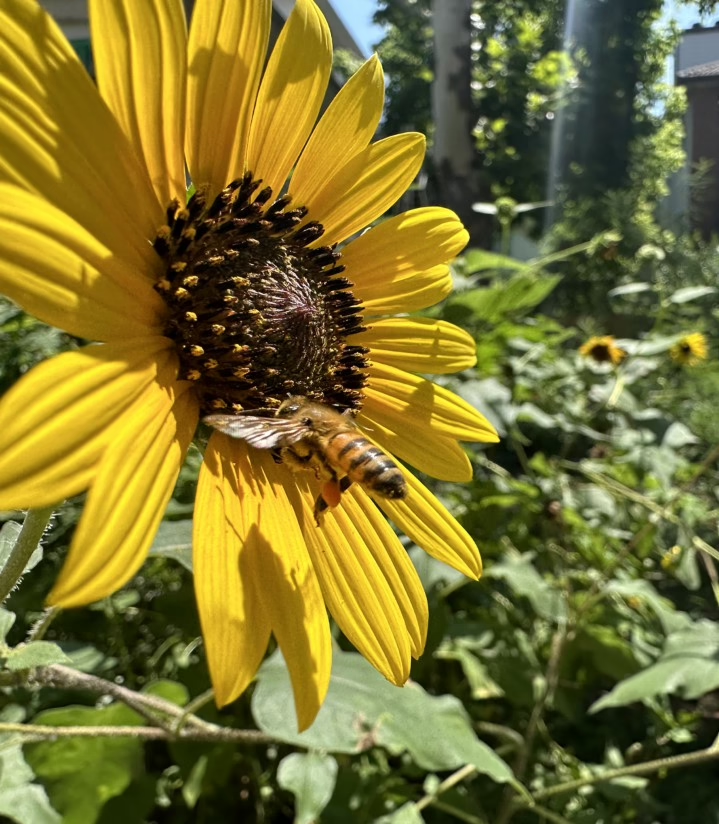
Sunflower and bee opening image

Sunflowers can feel so familiar that it is easy to overlook how extraordinary they are. In Texas, wild sunflowers are not just cheerful roadside flowers or garden volunteers. They are durable native plants that feed pollinators, shelter wildlife, and flourish in places many other species would reject.

The article traces that relationship from personal memory to prairie ecology. What begins with childhood fascination becomes a larger story about how sunflowers connect people, birds, insects, and landscapes. Their towering height may catch our attention first, but their real value is in the web of life they support.
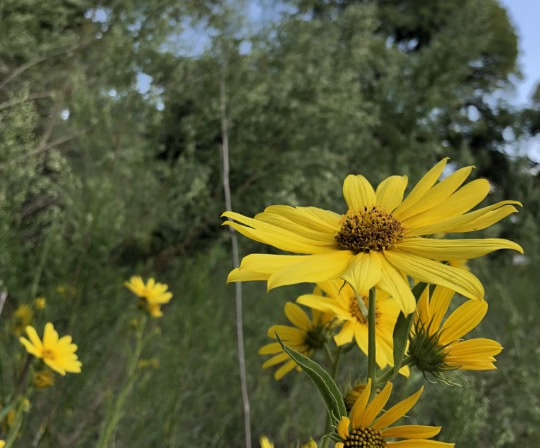
Maximilian sunflower
The Maximilan Sunflower (Helianthus maximiliani) is a perennial species which provides reliable forage for pollinators and birds, year after year.

Texas is home to a remarkable diversity of sunflowers, including the familiar common sunflower (Helianthus annuus). These species thrive in open ground, disturbed soil, and hot urban spaces, making them especially valuable in a warming climate where dependable summer forage can be hard to find.

The title’s central idea is that disturbance has always been part of the sunflower’s story. Historically, bison helped create the open, dynamic conditions these plants could exploit. Later, people spread sunflowers far beyond their original range, sometimes unintentionally, but in ways that still benefitted wildlife.

That usefulness is not limited to pollinators. Sunflower seed heads feed birds and mammals, their blooms attract native bees, and their ability to colonize hard places makes them a lifeline in vacant lots, roadsides, and neglected corners of the built environment.
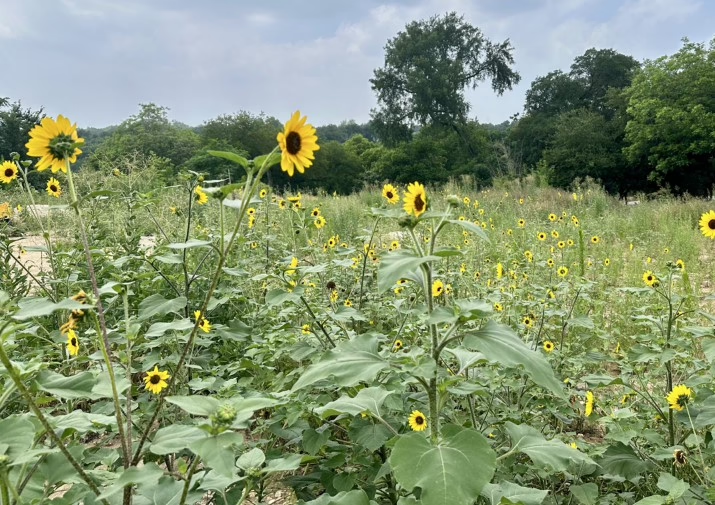
Vacant lot with common sunflower
A vacant lot awaiting development in Austin’s West Campus neighborhood, colonized by Common Sunflower. This species thrives in urban areas which seem inhospitable to life, and provides refuge for wildlife, however temporary.

Seen through that lens, calling the sunflower a “weed” misses the point. Its resilience, generosity, and ecological usefulness are exactly what make it one of Texas’ most important summer wildflowers.

Did you like this article? It’s from our Summer 2026 Texas Native Plants magazine. Read more here

Summer 2026 Texas Native Plants

About the Region

Fall Symposium 2025 Logo - Teach for the Future

Salado, the location of our Fall 2025 Symposium, lies at the intersection of two ecoregions: the Edwards Plateau (Limestone Cut Plain) and Blackland Prairie (Northern Blackland Prairie).

The Edwards Plateau area is also called the Hill Country; however, this general term covers a much larger area extending farther north. Spring-fed creeks are found throughout the region; deep limestone canyons, rivers, and lakes (reservoirs) are common. Ashe juniper is perhaps the most common woody species found throughout the region. Additional woody species include various species of oak, with live oak (Quercus fusiformis) being the most common. Sycamores (Platanus occidentalis) and bald cypress (Taxodium distichum) border waterways. This area is well known for its spring wildflower displays, though they may be viewed in spring, late summer, and fall, as well. According to Texas Parks and Wildlife, average annual rainfall in the Edwards Plateau ranges from 15 to 34 inches.

The Blackland Prairie extends from the Red River south to San Antonio, bordered on the west by the Edwards Plateau and the Cross Timbers, and on the east by the Post Oak Savannah. Annual rainfall averages 30 to 40 inches, with higher averages to the east. This region is dominated by prairie species. The most common grass species include little bluestem (Schizachyrium scoparium) and Indian grass (Sorghastrum nutans) in the uplands and switchgrass (Panicum virgatum) in the riparian areas and drainages. Common herbaceous flowering plants include salvias, penstemons, and silphiums. This area has suffered greatly from overgrazing and agricultural use. Few intact areas remain, though many of the plants can be found along county roadsides throughout the region.

Our fall Symposium host chapter, the Tonkawa Chapter, includes both of these ecoregions.

Source: Wildflowers of Texas by Michael Eason