What’s Growing Isn’t Always What’s Best

By Leah Fenley, Hill Country Chapter

Golden bamboo and nandina opening image

Spring growth in Texas can be thrilling, but vigor alone is not a sign that a plant belongs. This article offers a clear framework for understanding the difference between native, introduced, aggressive, and invasive species, and why those distinctions matter for everyone from gardeners to land stewards.

Native plants evolved alongside local soils, insects, and wildlife. Introduced plants arrived from elsewhere, sometimes harmlessly and sometimes not. Aggressive plants spread quickly, but invasive plants are the ones that cause measurable ecological harm by displacing native species, altering habitat, and increasing long-term management costs.
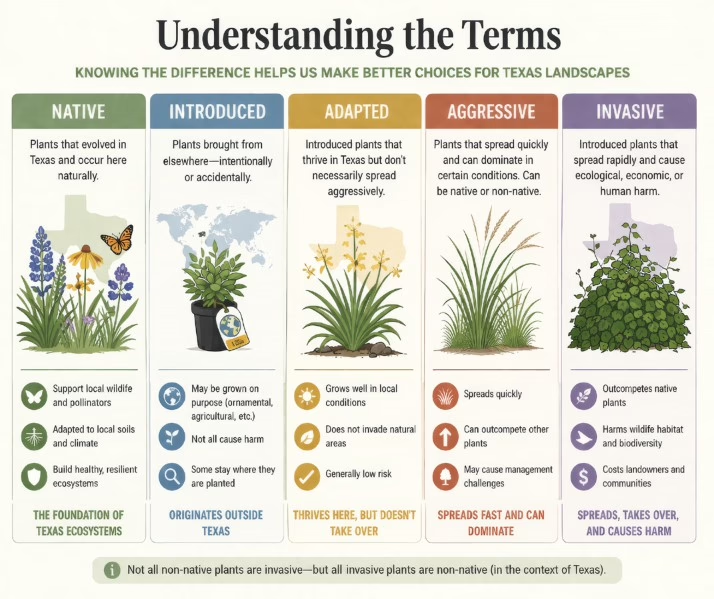
Understanding the terms graphic
Graphic by Leah Fenley

Across Texas, invasive plants can reduce biodiversity, alter fire behavior, destabilize waterways, and crowd out the species that support birds, pollinators, and other wildlife. Problem species such as golden bamboo, nandina, and Chinese tallow may look familiar in the landscape, but familiarity is not the same thing as ecological compatibility.
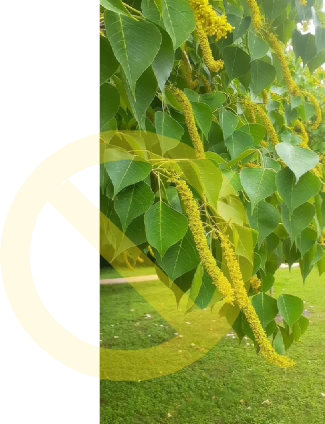
Chinese tallow catkins
Chinese Tallow catkins (Triadica sebifera). Photo by Claire Sorenson.

One of the article’s most useful contributions is its introduction to the NPSOT Invasive Plant Database, a practical tool for identifying invasive species in Texas, understanding their impacts, and exploring management strategies and native alternatives.
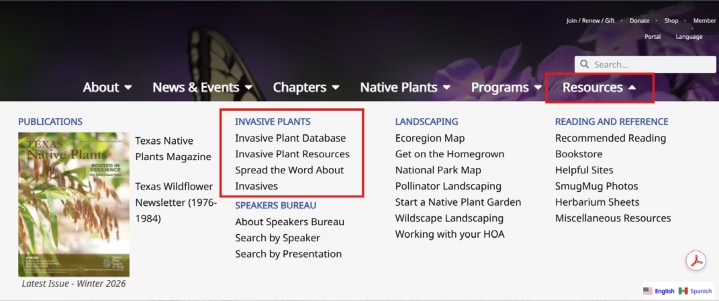
Invasive Plant Database screenshot

The article closes with an encouraging reminder: meaningful action does not have to start at a massive scale. Learning a few problem species, removing small populations early, avoiding known invasives in home landscapes, and replacing them with regionally appropriate natives can all contribute to healthier Texas ecosystems.

Did you like this article? It’s from our Summer 2026 Texas Native Plants magazine. Read more here
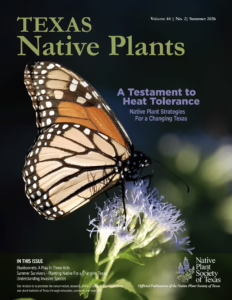

Summer 2026 Texas Native Plants

About the Region

2026 Fall Symposium Logo

This low-elevations region of Texas extends inland from the barrier islands, about 60 or so miles, and stretches from Brownsville to Louisiana. In total, it covers about 9.5 million acres, with a high point of 150 feet in elevation. More than 1000 species of plants can be found in this region. On the southern end, species more common in Mexico (such as Sabal mexicana) and Central America occur.

The barrier islands provide us with dune systems, and clay flats to the inland side, which have species found in these areas alone. Many plants here, such as Ipomoea pes-caprae (beach morning glory), can be found throughout tropical regions of the globe. I’ve encountered the same species on the beaches of Guam.

Once inland, vast marshes and wet prairies occur. Occasionally, oak (Quercus fusiformis) groves can be found. Common grasses include species of Bothriochloa, Paspalum, and Sporobolus; eastern gamagrass (Tripsacum dactyloides); and switchgrass (Panicum species). Many rivers and creeks cut through the Gulf Prairies, and along these riparian areas various species of trees, Sabal minor, and other plants adapted to clay soils can be found. Due to overgrazing, farming, and fire suppression, woody species such as mesquite (Prosopis glandulosa) and huisache (Acacia farnesiana), and invasive species such as chinaberry (Melia azedarach), Brazilian pepper (Schinus terebinthifolius), and Chinese tallow (Sapium sebiferum) have increased and displaced our native flora.

Source: Wildflowers of Texas by Michael Eason