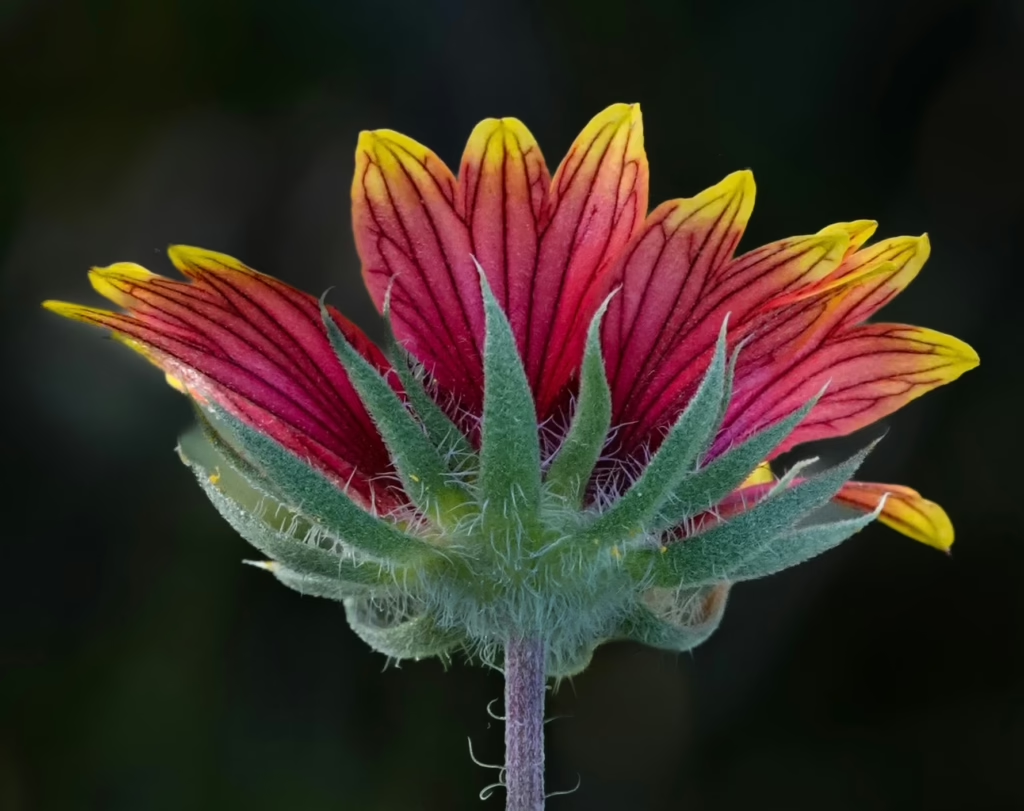
Winners announced for 2025 Contests

The Native Plant Society of Texas has announced the winners of its 2025 contests. Contests  allow members to showcase their talent and enthusiasm for native plants. Since 2020 the contests have been completely virtual. Wnners were announced and certificates presented during the banquet at the Fall Symposium held this year in Salado. 

There were three contests, all involving forms of communication – chapter newsletters, video, and photography. A panel of judges looked at each entry and awarded points using an evaluation form. Scores were added up and the resulting totals determined the winners.
Chapter Newsletter Contest

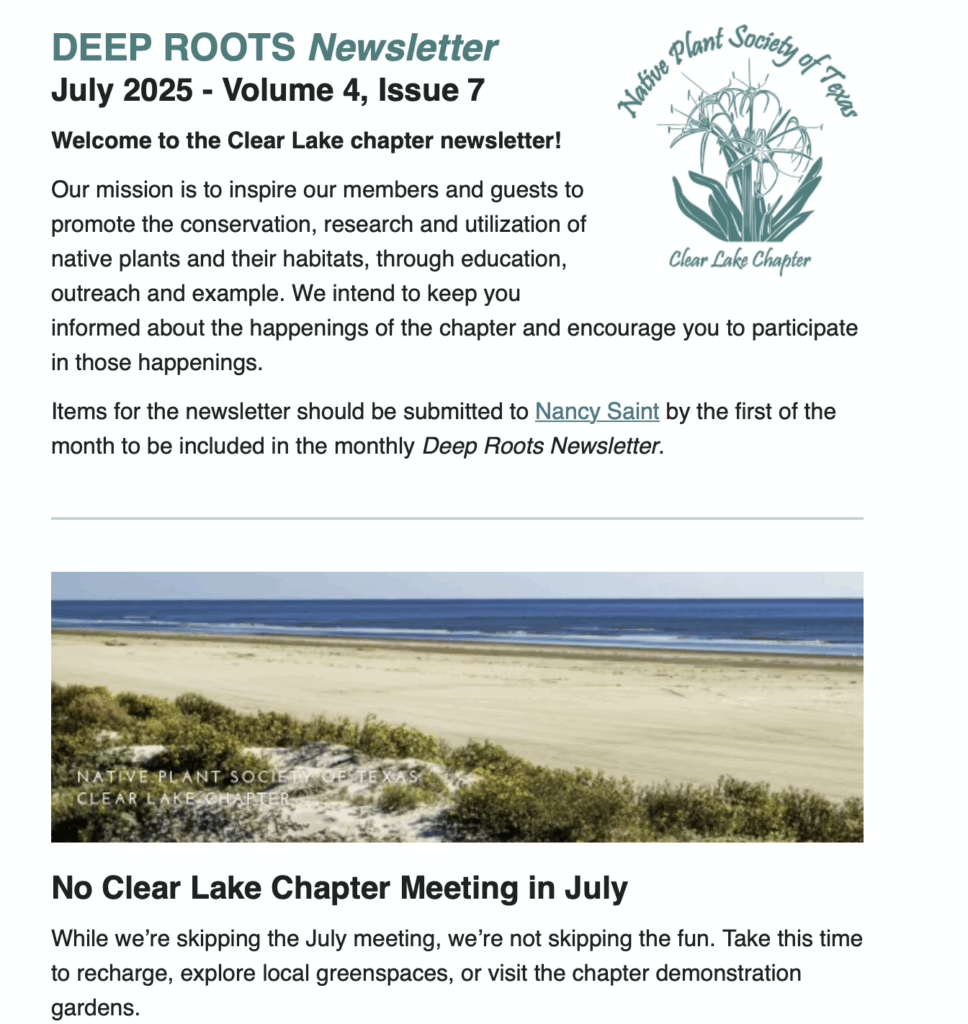
Clear Lake narrowly edged out San Antonio to win the newsletter contest. Editor Nancy Saint submitted the July 2025 edition for the contest. You can download and read the entry here.

The judges commented on the large number of members contributing to the newsletter.

Video Contest

Congratulations to Shaun McCoshum of the South Texas Chapter for his winning video entitled “Plant Native and Design Like Nature”. 

Check out all the videos entered and this year and in previous years at our YouTube Channel

Photo Contest

Linda Kuhn won best in show for her photo of Gaillardia pulchella taken in the Gulf Coast Prairies and Marshes ecoregion. 

The judges also selected a winning photo for each ecoregion in Texas for which there were sufficient entries.

Chihuahuan Deserts – Austin Kelly
Cross Timbers  – Jeff Harshefield (tie)
Cross Timbers  – Meghan James (tie)
East Central Texas Plains – Kristen Meaders
Edwards Plateau – Byron Augustin
Southern Texas Plains – Jamie Hart
Texas Blackland Prairies – Tom Lebsack
Western Gulf Coastal Plain  – Tom Lebsack 
 
You can see all  entries for 2025 and previous years at this link

The Judges

This contest could not have been possible without the many volunteer hours of our judges – Mary Beach, Robert Benson, Amy Birdwell, ​Vicki Blachman, Tracy Brown, Debbie Bush, Leah Fenley, ​Michel Fissell, and Jan Rogers​


About the Region

2026 Fall Symposium Logo

This low-elevations region of Texas extends inland from the barrier islands, about 60 or so miles, and stretches from Brownsville to Louisiana. In total, it covers about 9.5 million acres, with a high point of 150 feet in elevation. More than 1000 species of plants can be found in this region. On the southern end, species more common in Mexico (such as Sabal mexicana) and Central America occur.

The barrier islands provide us with dune systems, and clay flats to the inland side, which have species found in these areas alone. Many plants here, such as Ipomoea pes-caprae (beach morning glory), can be found throughout tropical regions of the globe. I’ve encountered the same species on the beaches of Guam.

Once inland, vast marshes and wet prairies occur. Occasionally, oak (Quercus fusiformis) groves can be found. Common grasses include species of Bothriochloa, Paspalum, and Sporobolus; eastern gamagrass (Tripsacum dactyloides); and switchgrass (Panicum species). Many rivers and creeks cut through the Gulf Prairies, and along these riparian areas various species of trees, Sabal minor, and other plants adapted to clay soils can be found. Due to overgrazing, farming, and fire suppression, woody species such as mesquite (Prosopis glandulosa) and huisache (Acacia farnesiana), and invasive species such as chinaberry (Melia azedarach), Brazilian pepper (Schinus terebinthifolius), and Chinese tallow (Sapium sebiferum) have increased and displaced our native flora.

Source: Wildflowers of Texas by Michael Eason