

Woolly Rose Mallow

Hibiscus moscheutos ssp. lasiocarpos

Other common name(s):

Woolly Mallow, Rose-mallow, False Cotton

Family:

Malvaceae (Mallow Family)

Plant Ecoregion Distribution Map

This map uses data from the US EPA. EPA  servers have been offline frequently so maps may not display. We are working on a solution.

Chihuahuan Deserts, Edwards Plateau, Gulf Coast Prairies and Marshes, Southwestern Tablelands, Texas Blackland Prairies, Western Gulf Coastal Plain
Stockton Plateau
Balcones Canyonlands
Northern Humid Gulf Coastal Prairies, Texas-Louisiana Coastal Marshes
Canadian/Cimarron Breaks
Northern Blackland Prairie, Southern Blackland Prairie
Flatwoods, Floodplains and Low Terraces3, Pleistocene Fluvial Terraces, Red River Bottomlands, Southern Tertiary Uplands

Plant Characteristics

Growth Form

Wetland

Height

3
to
8
ft.

Spread

2
to
3
ft.

Leaf Retention

Deciduous

Lifespan

Perennial

Habitat and Care Requirements

Soil Type(s)

Loam, Clay, Moist

Light Requirement

Sun

Water Requirement

Medium

Native Habitat

Woodland, Wetland or Riparian

Bloom and Attraction

Bloom Color

White, Red, Pink

Bloom Season

Summer, Fall

Seasonal Interest

Seeds, Nectar, Flowers

Wildlife Benefit

Butterflies, Birds

Maintenance

Works well in moist garden soil or ponds, in shallow water. Will grow in some light shade, but full sun produces best flowering and is the best environment for resisting potential diseases. Tolerates summer heat and humidity. May prune if bushier shape is desired. Propagation: seed.

Comments

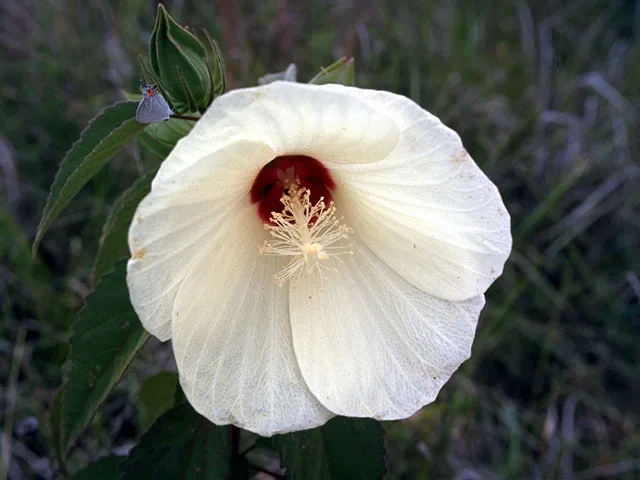
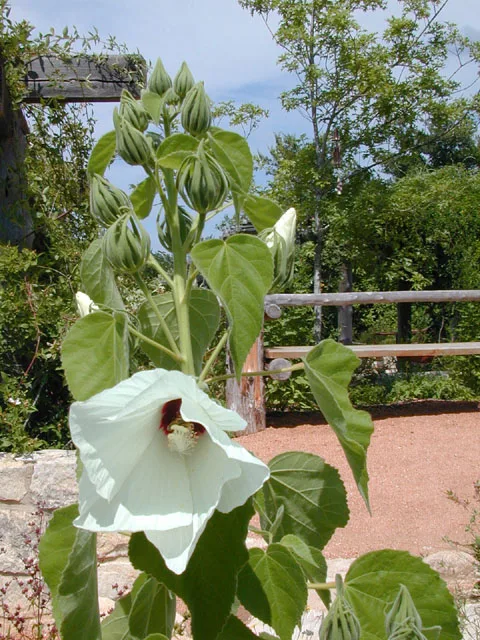
Blooms June-September. An upright, hairy perennial with toothed, triangular to heart-shaped leaves and terminal flower clusters. Stems are somewhat brittle. Produces large, white to pinkish blossoms, with a crimson eye at the center. The petals fold up at night. The blooms are followed by densely hairy fruit capsules. False Cotton is so called because its flower closely resembles the flower of a cotton plant, which is in the same family.
Previous Scientific Name(s): Hibiscus californicus, Hibiscus lasiocarpos var. occidentalis, Hibiscus leucophyllus, Hibiscus moscheutos ssp. lasiocarpos, Hibiscus moscheutos var. occidentalis, Hibiscus platanoides
Material Treatment Method Collection References
Seed No Treatment Sow seeds just beneath the soil surface as they require light for germination. To ensure success, use a well-draining soil mix and maintain consistent moisture without waterlogging. A warm environment promotes optimal growth, so consider starting indoors if temperatures fluctuate. Once seedlings are sturdy enough, transplant them to their final location, carefully handling their delicate roots. The fruit harvest time is usually in late fall, one month after blooming. At that point, its sepals are fully developed, turning dark purple before the lower leaves start falling. The fruits can be cut off from the stem base with sharp scissors after the morning dew is dry. https://www.picturethisai.com/care/Hibiscus_moscheutos_subsp._lasiocarpos.html#:~:text=Propagation%20Time:%20Mid%20spring%2C%20Late,carefully%20handling%20their%20delicate%20roots.
Stem Cutting Plant the cutting in moist soil and keep it in a warm, bright location until roots develop. The cutting should begin forming roots within five weeks. Transplant the cutting into a larger container or directly in the garden after its roots are formed. For stem cuttings, take a 6-inch cutting from a healthy plant in late spring or early summer. Remove any of the cutting's lower leaves before placing it in a container filled with 1 part peat and 3 parts sand. 1) https://earthone.io/plant/hibiscus%20moscheutos 2) https://www.weekand.com/home-garden/article/propagate-hibiscus-moscheutos-18065491.php
Seed Scarification Prepare the seeds by soaking them in warm water for one to 24 hours before planting. This breaks their dormancy, allowing the process of germination to begin. Use a sharp knife to lightly nick the seed on one edge. This allows maximum water penetration after planting. Start seeds inside about 12 weeks before the last frost, transplanting seedlings after the danger of frost has passed. Place seeds 1/4 inch deep in a container or pot filled with potting mix. Place in a sunny, warm area. Keep the soil moist. Seeds take 14 to 30 days to start sprouting.Alternately, gardeners can sow seeds directly in the garden in fall or after the danger of frost has passed in spring. When sowing seeds or planting young hibiscus moscheutos plants outdoors, select a sunny planting area with nutrient-rich, well-draining soil. Gather seeds once the flowers fade. Gardeners can pinch the seed head off and place it in a cool, dry location to dry the seeds; or, let the pods dry on the plant before breaking them open to collect the seeds. Store seeds in a cool, dry spot until you are ready to plant them. https://www.weekand.com/home-garden/article/propagate-hibiscus-moscheutos-18065491.php
Clump Division Separate the plant into three or four smaller plants by spreading the roots apart and pulling or cutting clumped areas apart. Remove any discolored or eroded roots. Plant the newly divided hibiscus moscheutos in holes that are as deep as the roots and wide, or wider than the spread of the roots. Cover with nutrient-rich soil and keep evenly moist. Dig a trench around the plant's drip line, severing roots. Use a shovel to place an angled cut down and under the plant. Repeat the angled cutting around the outer edge of the drip line until you can lift the plant up from its hole. https://www.weekand.com/home-garden/article/propagate-hibiscus-moscheutos-18065491.php

About the Region

Fall Symposium 2025 Logo - Teach for the Future

Salado, the location of our Fall 2025 Symposium, lies at the intersection of two ecoregions: the Edwards Plateau (Limestone Cut Plain) and Blackland Prairie (Northern Blackland Prairie).

The Edwards Plateau area is also called the Hill Country; however, this general term covers a much larger area extending farther north. Spring-fed creeks are found throughout the region; deep limestone canyons, rivers, and lakes (reservoirs) are common. Ashe juniper is perhaps the most common woody species found throughout the region. Additional woody species include various species of oak, with live oak (Quercus fusiformis) being the most common. Sycamores (Platanus occidentalis) and bald cypress (Taxodium distichum) border waterways. This area is well known for its spring wildflower displays, though they may be viewed in spring, late summer, and fall, as well. According to Texas Parks and Wildlife, average annual rainfall in the Edwards Plateau ranges from 15 to 34 inches.

The Blackland Prairie extends from the Red River south to San Antonio, bordered on the west by the Edwards Plateau and the Cross Timbers, and on the east by the Post Oak Savannah. Annual rainfall averages 30 to 40 inches, with higher averages to the east. This region is dominated by prairie species. The most common grass species include little bluestem (Schizachyrium scoparium) and Indian grass (Sorghastrum nutans) in the uplands and switchgrass (Panicum virgatum) in the riparian areas and drainages. Common herbaceous flowering plants include salvias, penstemons, and silphiums. This area has suffered greatly from overgrazing and agricultural use. Few intact areas remain, though many of the plants can be found along county roadsides throughout the region.

Our fall Symposium host chapter, the Tonkawa Chapter, includes both of these ecoregions.

Source: Wildflowers of Texas by Michael Eason