

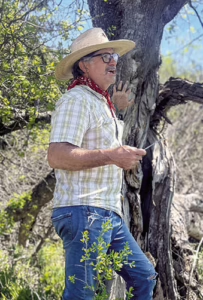
 David Touchon serves on the NPSOT Boerne chapter board as the Board Secretary. He is the Land Manager (or Land Steward) at the Cibolo Center for Conservation, where he oversees habitat restoration, woodland management, and ecological stewardship across the organization’s 160+-acre campus.
A former outdoor educator, David brings a deep passion for nature, having traveled through the U.S. Midwest and East Coast to gain experience before helping launch a large outdoor education program. At the Cibolo, he leads hands-on programs such as woodland walks, riparian restoration projects, and community science initiatives; he also maintains the trail cameras that monitor wildlife on the property. His work is central to the Cibolo’s mission to balance conservation with community engagement: for example, he regularly leads public hikes that explore ecosystem health, soil conservation, and native plant identification.
David’s articles regularly appear in The Boerne Star and Upstream, the newsletter of The Cibolo Center for Conservation. This page contains a collection of David’s published articles for the Cibolo Center for Conservation, offering a rich resource for anyone interested in land management and habitat restoration.
