Meghan Scott-Edmiston
NPSOT Member since April 2024
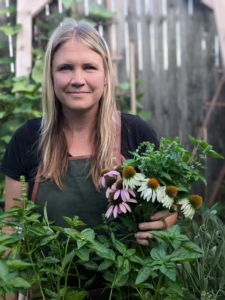 Grounded Soul Gardening is a perfect name for Meghan Scott-Edmiston’s garden consultation and design business she founded in 2023. She specializes in native landscape design and creating gardens for cut flowers and vegetables. Mostly she consults on projects but does have a couple of installation contracts. Designing beautiful landscapes of native plants and digging in the dirt is her passion and her soul speaks through her work.
Meghan’s love of the outdoors and her time spent in the swamps behind her home in Florida as a small child gave her a base for studying the landscape and making it her own. She arranged the landscape by planting seeds and moving plants, all designed to make this wild habitat her creation. Along with her four siblings, she enjoyed the very complex fort system behind the house. “That was thirteen years of my life just running barefoot through the swamp with my dog.” So the passion started early.
 After getting her degree from Texas State in San Marcos, Meghan began her career as a recreational therapist for about ten years. She worked mostly with adolescents and children that were at risk from being removed from their homes. She was part of a team of professionals that kept these kids from being institutionalized. Meghan was program director for New Hope Ranch, which was a substance abuse facility. She also holds certification for equine-assisted learning and was associated with The Herd Institute, practicing in a lot of animal therapies.
Her mental health career took her to many hospitals and respite centers that were clean and sterile. Meghan created gardens at each one. “Psych units especially were bleach and concrete; how were people supposed to heal when this was what they’re surrounded with?”
Meghan started planting vegetable gardens for clients and noticed that the gardens surrounded by pollinator plants did much better. Pollinators led to natives and then it just took over a big part of her business. “It just synched with me. I really like it and have always been an activist in one area or another. It clicked with my personality.” She also has clients where she follows up and helps maintain their gardens.
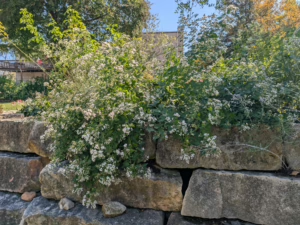
She works with HOAs by offering her services free-of-charge on their neighborhood monument if they will just pay for the cost of the plants and labor. It has been a great way to promote native landscapes, giving them a professionally-designed landmark that looks good year-round with the plants being drought-resistant. The information then flows to the homeowners who see nice plants and want them for their yard.
 Before she joined NPSOT, Meghan attended the Native Landscape Certification Program (NLCP) and became certified. She is now one of the teachers of the program that attracts people who want to design and create their own landscapes. “Landscaping isn’t cheap and I like the idea of making it available to more people. Making this knowledge and information available is extremely important.” It seems all NPSOT members love talking about the subject and it fills a need of community for Meghan. She was encouraged to join NPSOT and has enjoyed being a part of the organization.
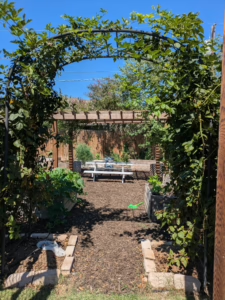 For the NPSOT members reading this, Meghan would like people to understand the knowledge of landscapes and become dedicated to bringing in native plants in their landscaping plans. She takes a “zoom in – zoom out” approach to viewing the space. “Examples could be zooming out to see the landscape as a whole, or zooming in to the caterpillar you find during your morning coffee, the butterfly your grandchild chases, or the actual early bird and worm scenario.” Her goal with each client is to create the landscape together and experience knowledge about a good eco-system and how it impacts its surroundings. She is most proud of changing people’s minds about planting more native species in their yards. Meghan uses the 30/70 rule when people request non-native plants. She ensures that 70% of the landscape is improved with native plants. Striving to improve as much of the eco-system as possible is vital.
Meghan is married and has one eight-year-old son.
Connie Clark
Content Creator/Editor/Journalist
https://conniecanwrite.com/