
Texas Mountain Laurel

Dermatophyllum secundiflorum

Other common name(s):

Mountain Laurel, Mescal Bean, Mescal Bean Sophora, Frijolillo, Frijolito

Family:

Fabaceae (Pea Family)

Plant Ecoregion Distribution Map

This map uses data from the US EPA. EPA  servers have been offline frequently so maps may not display. We are working on a solution.

Chihuahuan Deserts, Edwards Plateau, Gulf Coast Prairies and Marshes, Southern Texas Plains
Low Mountains and Bajadas, Stockton Plateau
Balcones Canyonlands, Edwards Plateau Woodland, Llano Uplift, Semiarid Edwards Plateau
Lower Rio Grande Alluvial Floodplain, Lower Rio Grande Valley, Southern Subhumid Gulf Coastal Prairies
Rio Grande Floodplain and Terraces, Texas-Tamaulipan Thornscrub

Plant Characteristics

Growth Form

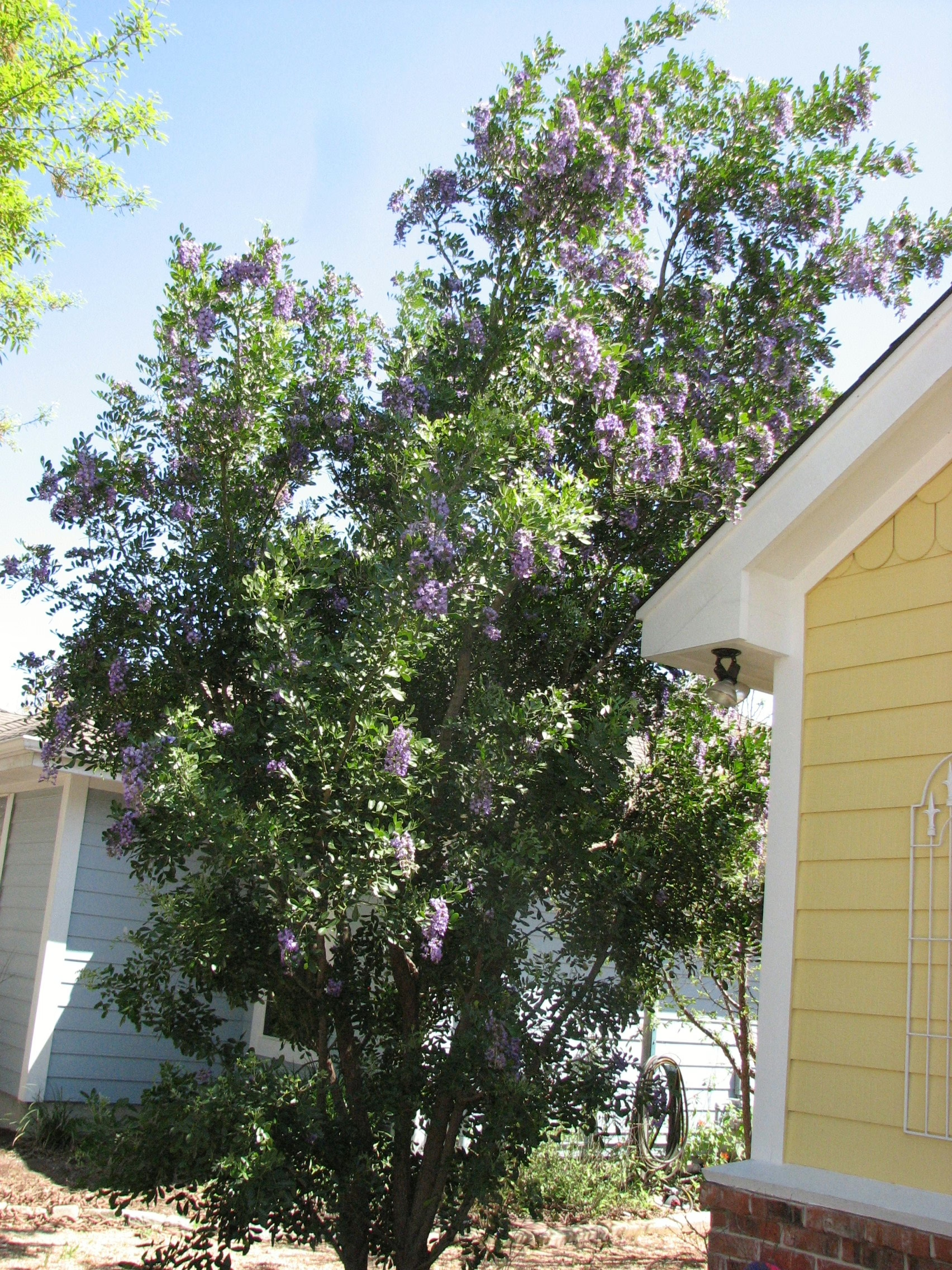
Shrub

Height

12
to
20
ft.

Spread

8
to
12
ft.

Leaf Retention

Evergreen

Lifespan

Perennial

Habitat and Care Requirements

Soil Type(s)

Rocky, Limestone, Caliche, Calcareous, Well Drained, Moist, Dry

Light Requirement

Sun

Water Requirement

Very Low, Low

Native Habitat

Woodland

Bloom and Attraction

Bloom Color

Purple

Bloom Season

Spring

Seasonal Interest

Nectar, Larval Host

Wildlife Benefit

Butterflies, Nectar Insects, Hummingbirds, Moths

Maintenance

Slow growing. Drought tolerant. Prefers rocky limestone soils, but will tolerate sand, clay, loam. Needs good drainage. Do not overwater. Makes an excellent screen or accent tree. May be pruned for shape or to raise the canopy. Appropriate for use near overhead and underground utilities. Texas mountain laurel can be attacked by the Genista caterpillar. In one day, they can defoliate a tree, so be sure to apply Bacillus thuringiensis (Bt) at the first outbreak. Most likely, you will only have to spray once, but in intense invasions, you may not need to reapply. This foliar application will disrupt the caterpillars’ digestive system and they will stop feeding and die in a few days. WARNING: all parts poisonous to humans. Propagation: seed.

Comments

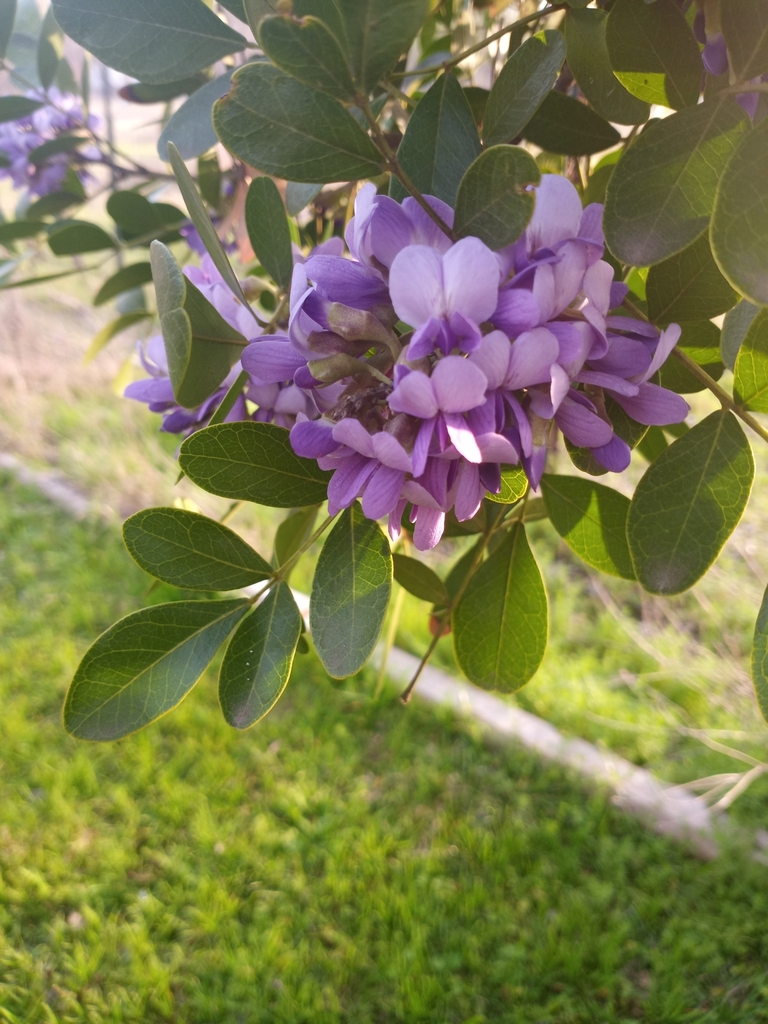
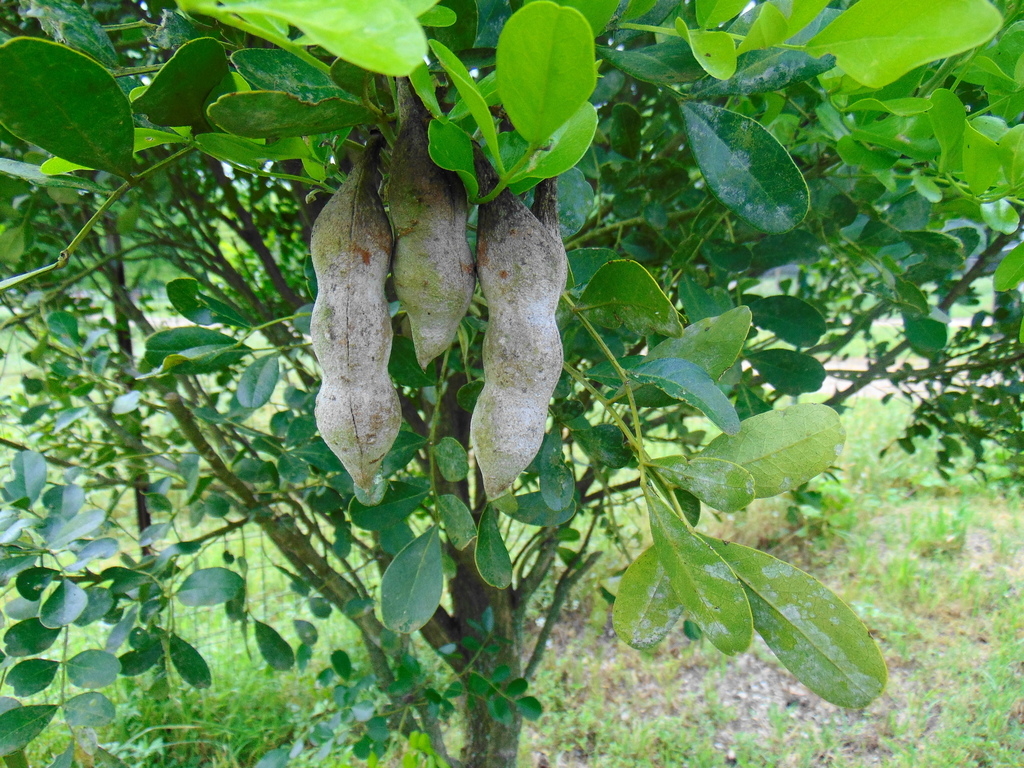
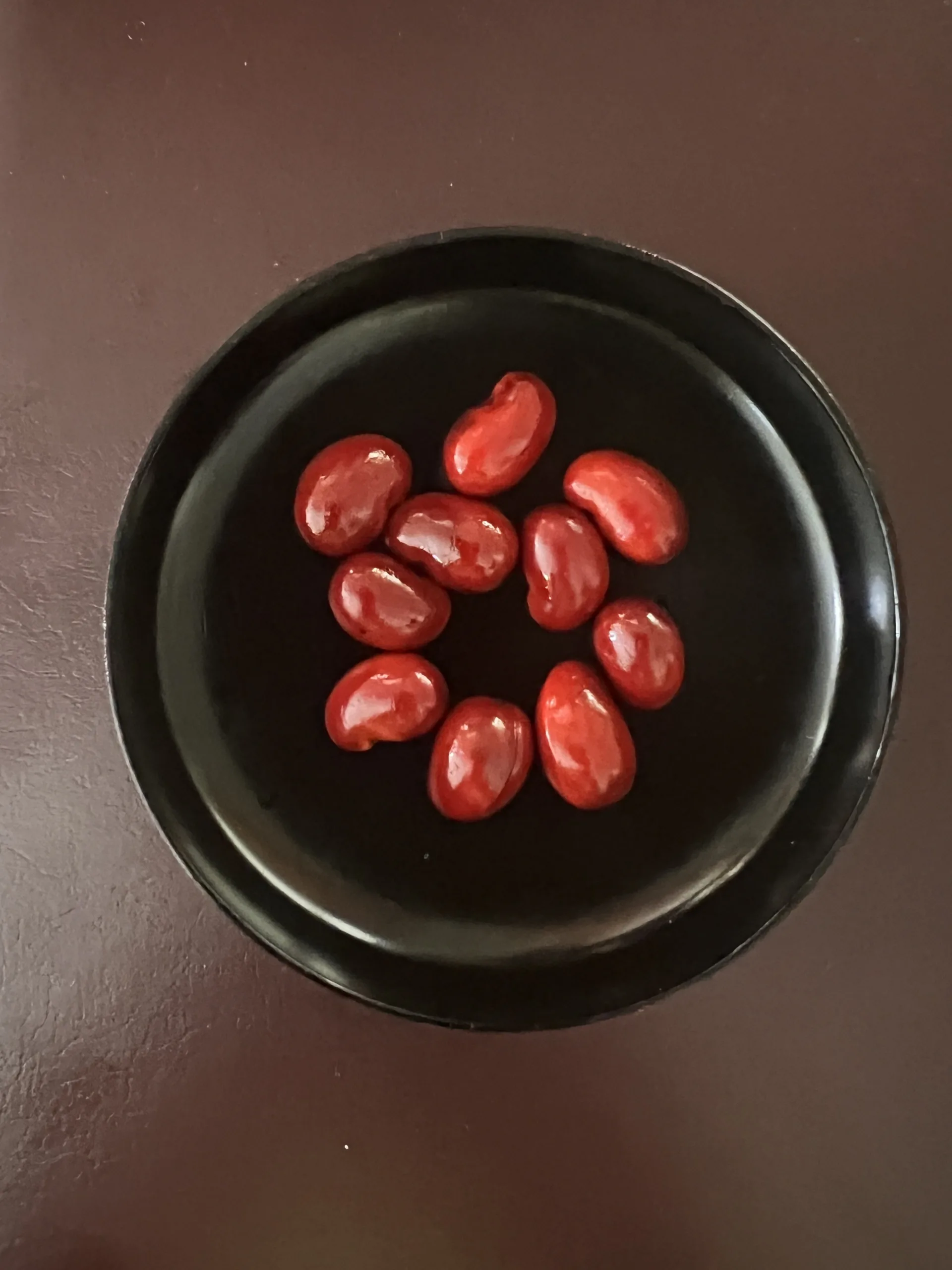
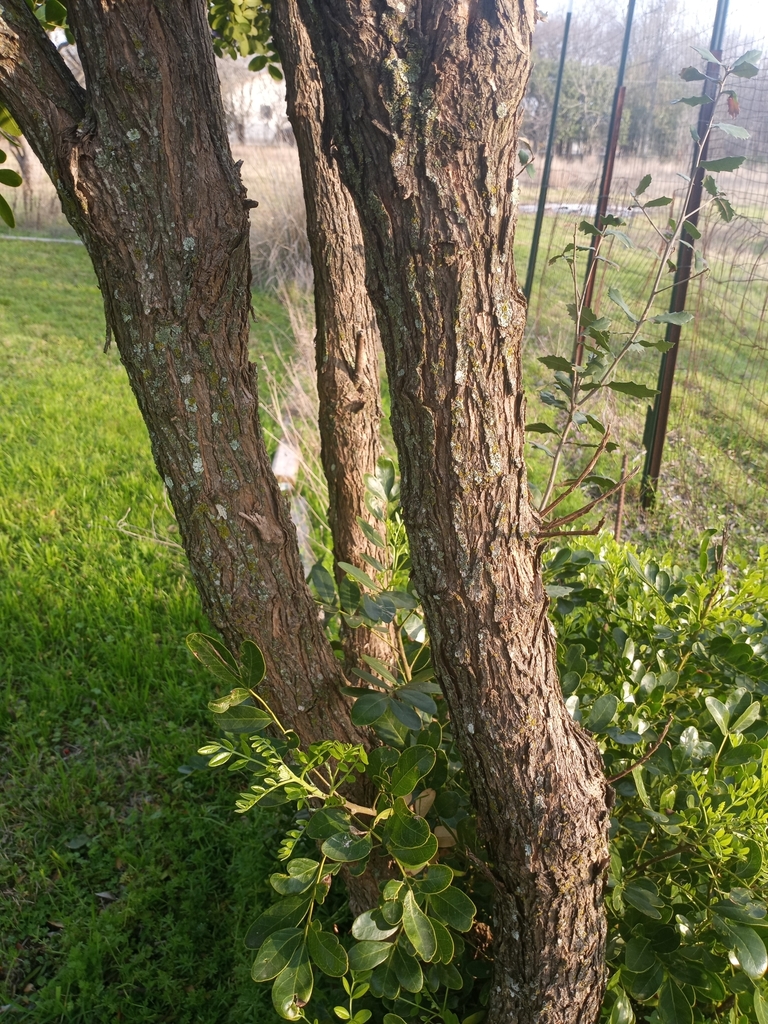
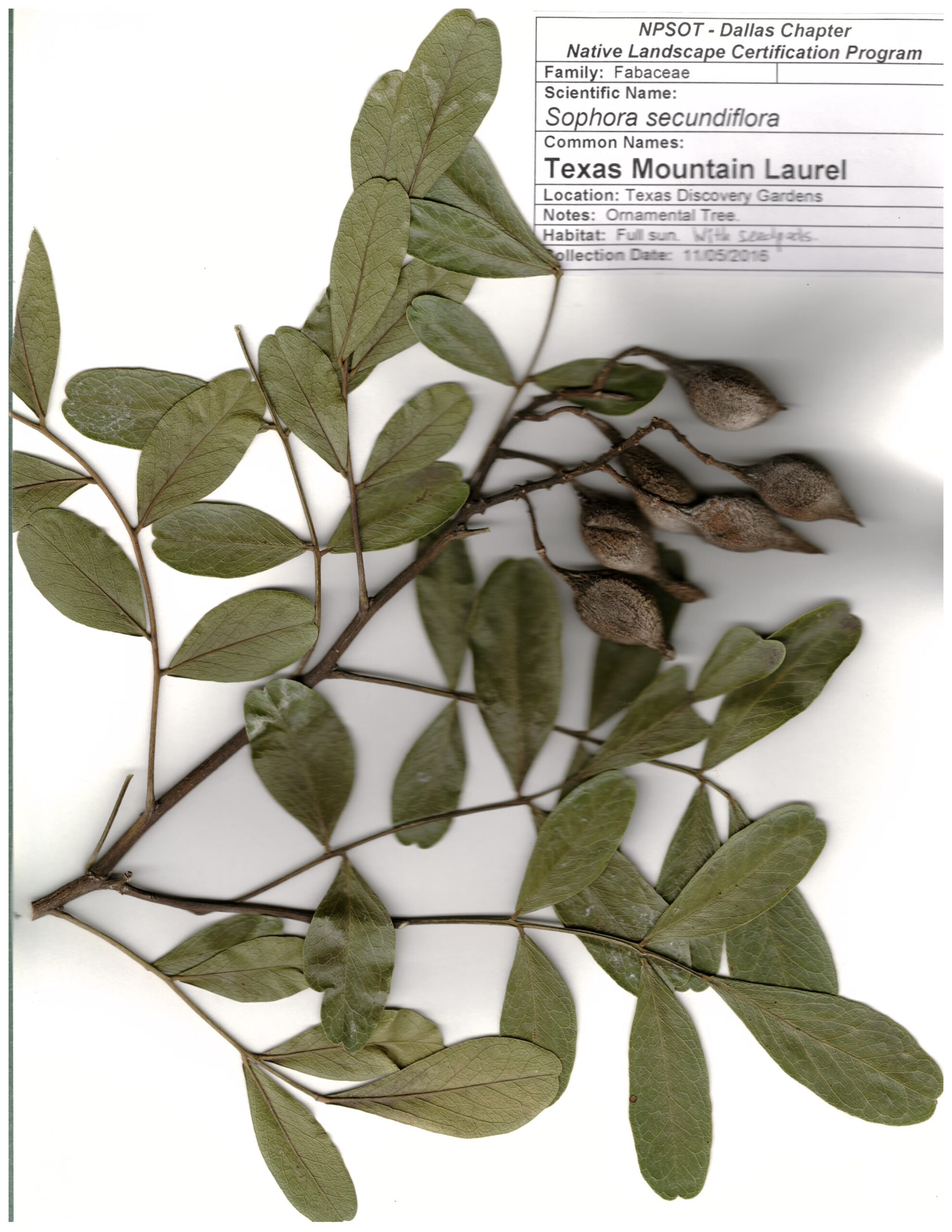
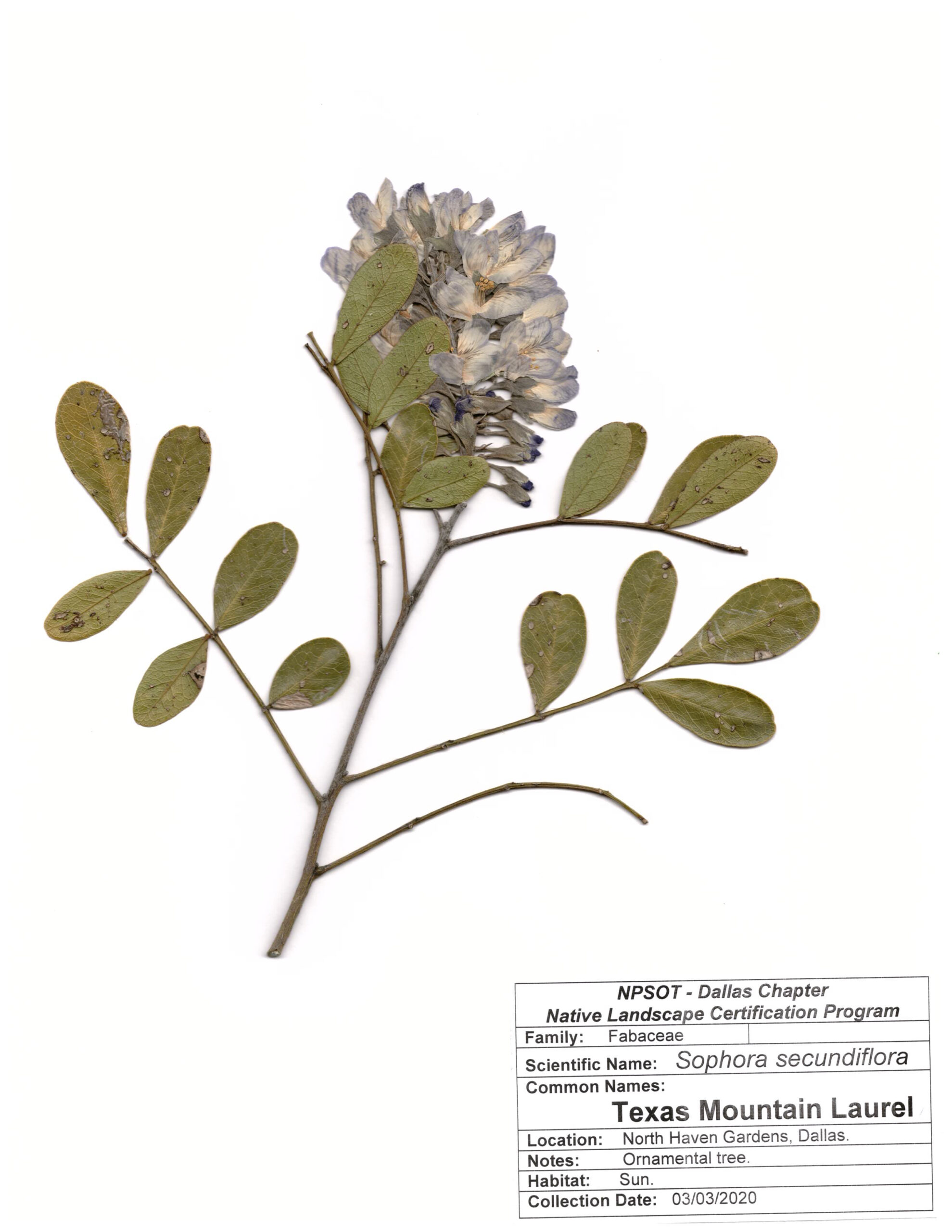
Blooms February-April. A multi-trunked shrub or small tree. Leaves are compound with 7-9 shiny, leathery leaflets that are rounded on the ends. Showy purple flowers occur in long drooping clusters, with a strong grape bubble gum fragrance. Seedpods are gray, aging to dark brown, with glossy red seeds. Larval host: Genista Broom Moth. Replaces non-natives: Ligustrum.
Previous Scientific Name(s): Sophora secundiflora, Calia secundiflora, Broussonetia secundiflora, Dermatophyllum speciosum, Virgilia secundiflora, Calia erythrosperma, Calia secundiflora ssp. albofoliolata, Sophora secundiflora f. xanthosperma
Material Treatment Method Collection References
Clump Division Plant the divisions in individual pots with well-draining soil. Water sparingly initially to allow the roots to recover. Divide the plant during its active growing season (spring or summer). Gently remove the plant from its pot and carefully separate the root ball into several sections, each with its own established root system and sufficient foliage. https://propagate.one/how-to-propagate-dermatophyllum-secundiflorum/
Semi-harwood Cutting Remove the leaves from the lower half of the cutting to prevent them from rotting. Allow the cut ends to callous over for several days in a dry, well-ventilated area. Dip the cut end of the cutting in rooting hormone. Use a well-draining rooting medium such as a succulent potting mix or mix of perlite and vermiculite. Insert the cuttings into the rooting medium, making sure that the nodes where the leaves were removed are buried. Water thoroughly and cover with a plastic bag or humidity dome. Place in a warm, bright location, but avoid direct sunlight. Avoid overwatering; allow the soil to dry completely between waterings. Use a fungicide as a preventative measure. Root development can take several weeks or even months. Dermatophyllum secundiflorum cuttings are susceptible to fungal infections if not allowed to dry properly before planting. The best time to take cuttings is in the late spring or early summer when the plant is actively growing. Choose semi-hardwood cuttings, which are new growth that has begun to harden off. The cuttings should be about 4-6 inches long and have several leaves. Avoid taking cuttings from flowering stems. 1) https://unitedsounds.org/how-to-propagate-texas-mountain-laurel-pl866 2) https://propagate.one/how-to-propagate-dermatophyllum-secundiflorum/
Stem Layering For ground layering, wound the stem by making a shallow cut or scraping off a small section of bark where it will be buried. For air layering, make a similar wound on the stem. For ground layering, bury the wounded portion of the stem in the soil and secure it with a rock or stake. For air layering, wrap the wounded area with moist sphagnum moss and secure it with plastic wrap or tape. Keep the soil or sphagnum moss consistently moist. Root development can take several weeks or months. Once the stem has developed a strong root system, it can be separated from the parent plant and transplanted into its own pot. Layering involves rooting a stem while it is still attached to the parent plant. Ground Layering involves bending a low-growing stem to the ground and burying a portion of it in soil. Choose a low-growing, flexible stem that can be easily bent to the ground. Air Layering involves wounding a stem and wrapping it with moist sphagnum moss to encourage root development. Select a healthy stem that is accessible. https://unitedsounds.org/how-to-propagate-texas-mountain-laurel-pl866
Seed Scarification The seed coat is extremely hard and needs to be scarified to allow water to penetrate and initiate germination. One method is to gently rub the seeds with sandpaper or carefully nick the seed coat with a knife. Be careful not to damage the inner seed. Another method is to hold the seed with a pliers and with a file, rub one spot on the outer coat (at the larger cotyledon end) until the thin light-colored (tan) inner coat is visible - being careful not to scratch into the inner coat itself nor into the cotyledons of the embryo. Soak the scarified seeds several hours to several days and then plant them only if swelling has occurred. Otherwise repeat the scarification and soaking. A third option is to soak the seeds in hot (not boiling) water for 24 hours to help soften the seed coat. Sow the scarified seeds about ½ inch deep in individual pots or a seed tray using a well-draining potting mix specifically formulated for seeds. Keep the soil consistently moist but not waterlogged. Maintain a warm temperature (around 70-75°F or 21-24°C) to encourage germination. A heat mat can be helpful. Germination can be slow and erratic, taking anywhere from several weeks to several months. Seeds should be gathered when the pods are still green and the seeds a pale pink color (they later turn red). Soak pods in water if they're difficult to open. Or gather seeds from mature pods in late summer or early fall. The pods will turn brown and begin to split open, revealing the bright red seeds. Carefully remove the seeds from the pods, wearing gloves to avoid skin contact with the potentially irritating seed covering. 1) https://www.thespruce.com/texas-mountain-laurel-growing-guide-5215169#toc-propagating 2) https://unitedsounds.org/how-to-propagate-texas-mountain-laurel-pl866
Seed No Treatment Plant the seeds about 1/2 inch deep in well-drained soil, watering well initially and later only sparingly. Initial growth seems to focus on creating a deep root, a shallow container thus being unsuitable. The first visible sign of germination is a slender shoot with the beginnings of the first true leaves, at which point the root is likely to have reached a depth of 6-8 inches. Mountain laurel is a slow grower, and it may be years before flowers are produced. In our hill-country environment it has taken at least 10 years for untended plants started from seed to bloom. Seeds germinate readily and with no need for scarifying if collected and planted in late spring when the seed pods begin to turn greyish/pinkish, but before the red seed shell hardens. Seeds with only a pink tint or a red blotch virtually all germinate. Several weeks after the 'pink' stage noted above the familiar deep red seed covering will harden and the seed will rapidly shrink and rattle inside the pod. At this stage the pods will be very tough, requiring a sharp knife to cut through to remove seeds. https://w3.biosci.utexas.edu/prc/DigFlora/SOSE3/MtL-propagation.html

About the Region

Fall Symposium 2025 Logo - Teach for the Future

Salado, the location of our Fall 2025 Symposium, lies at the intersection of two ecoregions: the Edwards Plateau (Limestone Cut Plain) and Blackland Prairie (Northern Blackland Prairie).

The Edwards Plateau area is also called the Hill Country; however, this general term covers a much larger area extending farther north. Spring-fed creeks are found throughout the region; deep limestone canyons, rivers, and lakes (reservoirs) are common. Ashe juniper is perhaps the most common woody species found throughout the region. Additional woody species include various species of oak, with live oak (Quercus fusiformis) being the most common. Sycamores (Platanus occidentalis) and bald cypress (Taxodium distichum) border waterways. This area is well known for its spring wildflower displays, though they may be viewed in spring, late summer, and fall, as well. According to Texas Parks and Wildlife, average annual rainfall in the Edwards Plateau ranges from 15 to 34 inches.

The Blackland Prairie extends from the Red River south to San Antonio, bordered on the west by the Edwards Plateau and the Cross Timbers, and on the east by the Post Oak Savannah. Annual rainfall averages 30 to 40 inches, with higher averages to the east. This region is dominated by prairie species. The most common grass species include little bluestem (Schizachyrium scoparium) and Indian grass (Sorghastrum nutans) in the uplands and switchgrass (Panicum virgatum) in the riparian areas and drainages. Common herbaceous flowering plants include salvias, penstemons, and silphiums. This area has suffered greatly from overgrazing and agricultural use. Few intact areas remain, though many of the plants can be found along county roadsides throughout the region.

Our fall Symposium host chapter, the Tonkawa Chapter, includes both of these ecoregions.

Source: Wildflowers of Texas by Michael Eason