Red Yucca

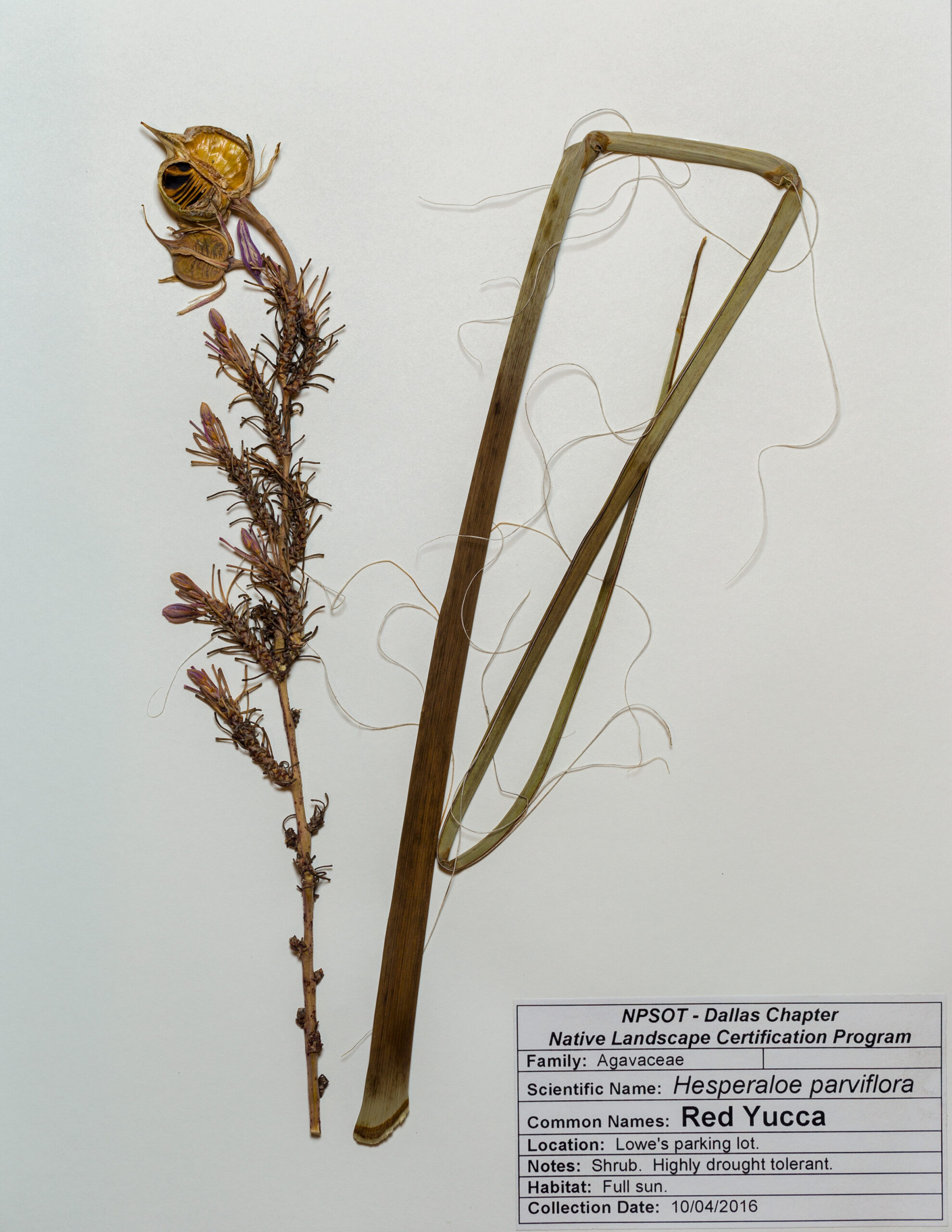
Hesperaloe parviflora

Other common name(s):

Red False Yucca

Family:

Asparagaceae (Asparagus Family)

Plant Ecoregion Distribution Map

This map uses data from the US EPA. EPA  servers have been offline frequently so maps may not display. We are working on a solution.

Cross Timbers, Edwards Plateau, Southern Texas Plains
Limestone Cut Plain
Balcones Canyonlands, Edwards Plateau Woodland
Semiarid Edwards Bajada

Plant Characteristics

Growth Form

Cactus & Succulent

Height

2
to
4
ft.

Spread

2
to
3
ft.

Leaf Retention

Evergreen

Lifespan

Perennial

Habitat and Care Requirements

Soil Type(s)

Sand, Rocky, Limestone, Calcareous, Well Drained, Dry

Light Requirement

Sun, Part Shade

Water Requirement

Very Low, Low

Native Habitat

Grassland

Bloom and Attraction

Bloom Color

Red, Pink

Bloom Season

Spring, Summer

Seasonal Interest

Fruit, Nectar, Pollen, Flowers

Wildlife Benefit

Deer, Hummingbirds, Moths

Maintenance

Drought tolerant and adapts to many soils types. May colonize. Selectively prune leaves from the base and flowering stalks away from sidewalks or patios for safety reasons. Flowering stalks can be removed after blooming for a neater aesthetic, however, consider leaving for wildlife habitat. Rare in the wild, but propagated commercially. Can be grown in container gardens. Propagation: offshoots can be transplanted, seed.

Comments

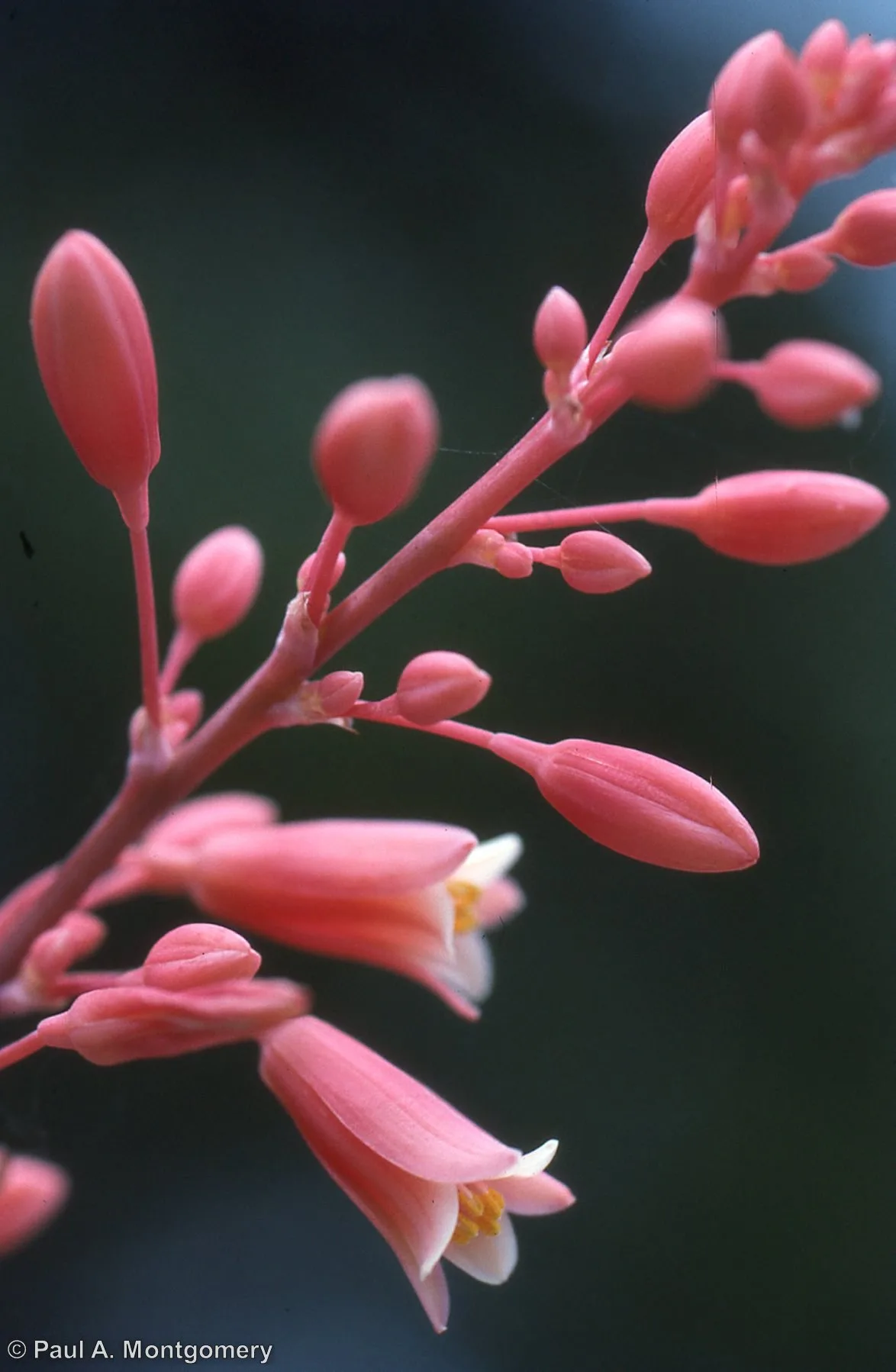
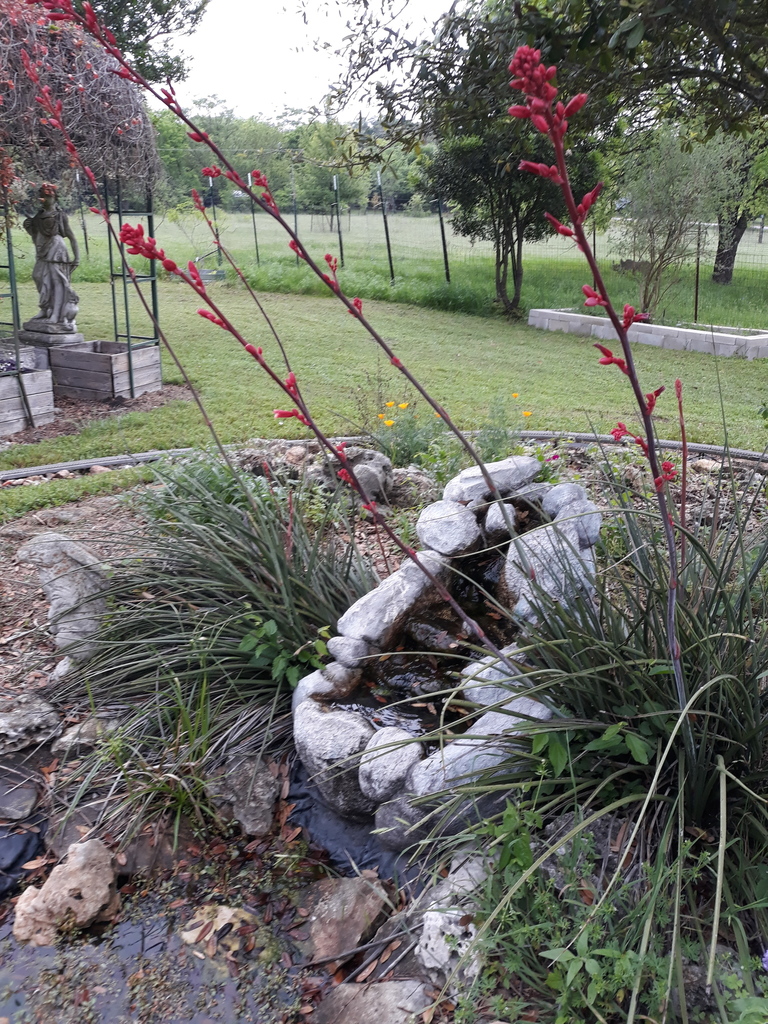
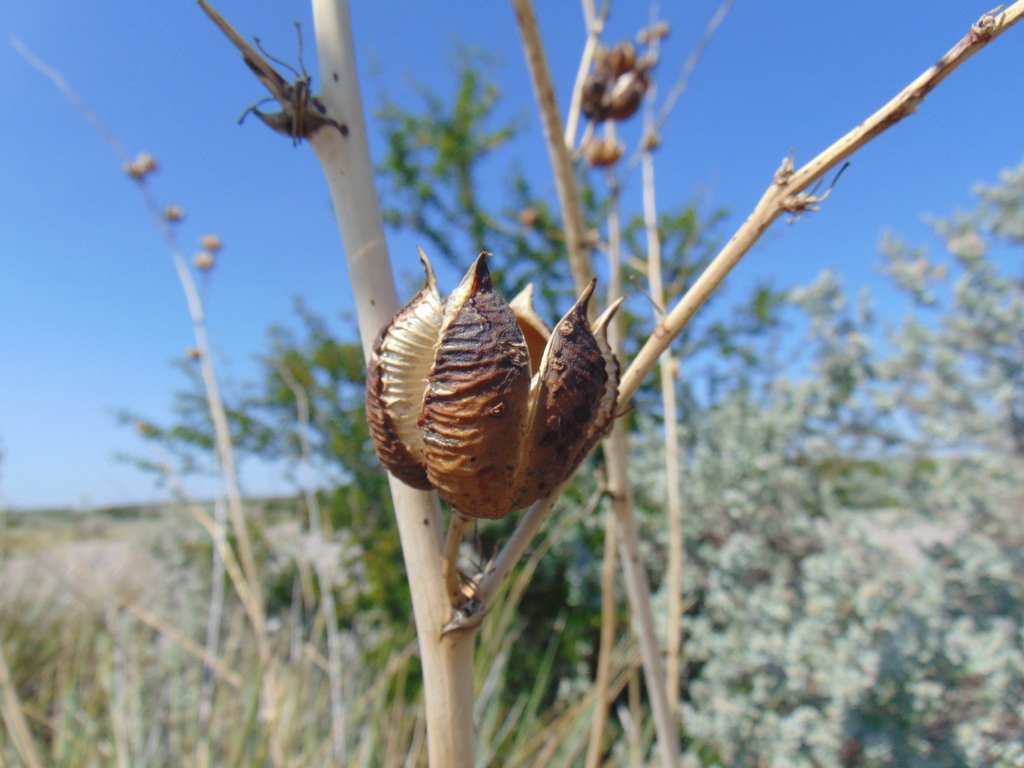
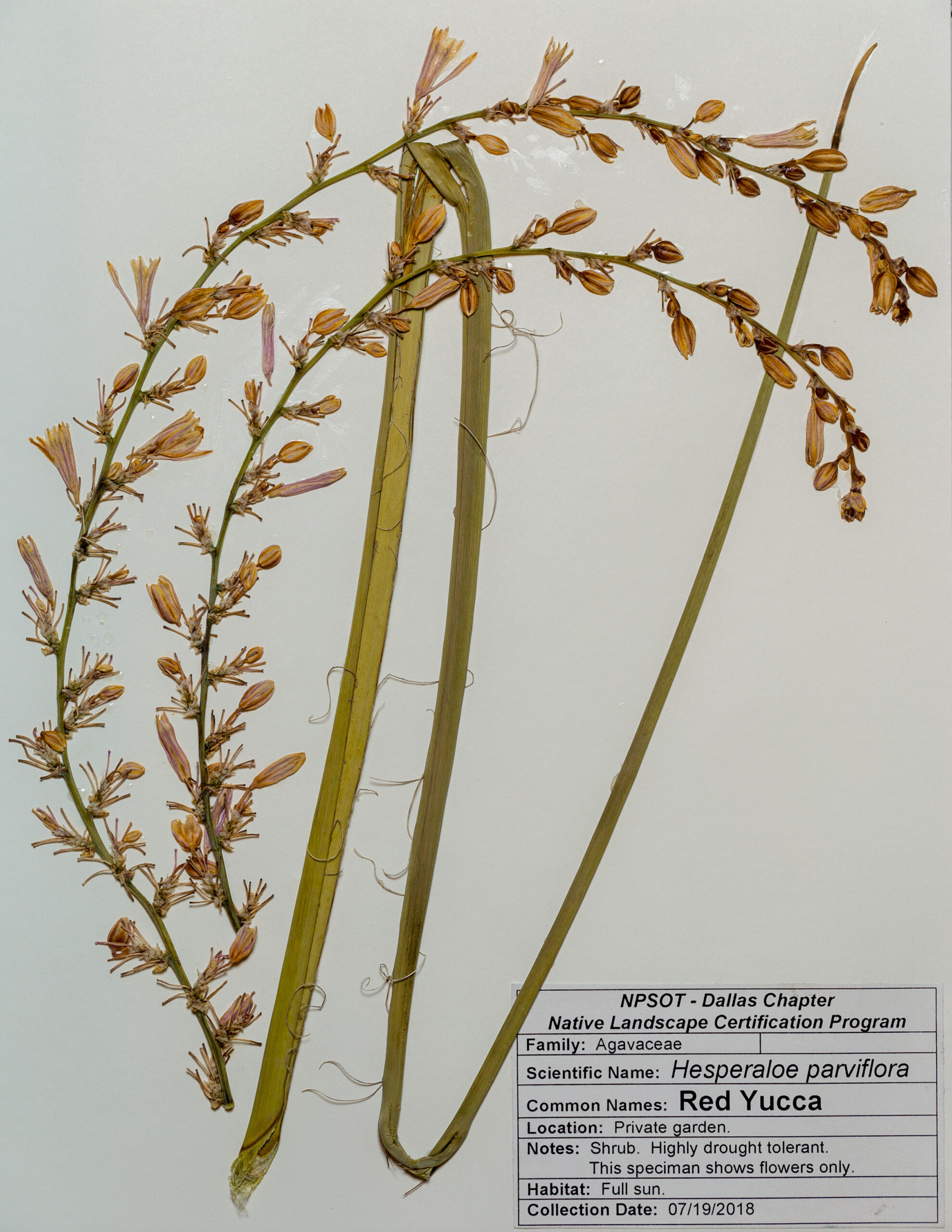
Blooms February-July. Produces stiff, yucca-like, evergreen leaves, growing from the base. Coral-colored, tubular flowers occur at the end of long arching stems. The fruit is a round, woody seed capsule that contains flat, black seeds. Although in the same family as Yucca, the common name is misleading. Hesperaloe, false yucca, are in their own genus. Deer will eat blooms but not the foliage. Although still listed by some in the Agavaceae Family, the majority of botanical organizations now list it in the Asparagaceae Family.
Material Treatment Method Collection References
Offshoots Transplant Select a location with full sun and well-drained soil. Space harvested “pups,” at least 2-3 feet apart to allow for mature growth; young plants may be small, but they will spread relatively quickly. Established plants will eventually develop offsets or “pups” that grow to the side of the plant. To propagate, dig up the offsets and replant them. https://dallascountymastergardeners.org/red-yucca-hesperaloe-parviflora/#:~:text=Propagation%20&%20Planting:,they%20will%20spread%20relatively%20quickly.
Seed Scarification Presoak seeds overnight before planting 2 seeds per cell or plant. Once seedlings sprout, ensure they receive plenty of light by placing them on a sunny windowsill or positioning them 3-4 inches below fluorescent plant lights that are switched on for 16 hours daily and off for 8 hours at night. Adjust the lights as the plants grow taller. Avoid using incandescent bulbs as they generate excessive heat. Remember, most plants need a period of darkness to thrive, so do not keep the lights on for 24 hours. Transplant into garden when temperatures are consistently warm. Before transplanting seedlings into the garden, it's essential to "harden them off". This involves acclimating young plants to outdoor conditions by placing them in a sheltered outdoor area for about a week. Initially, shield them from strong winds and direct sunlight. If there's a risk of frost overnight, either cover the plants or bring them indoors, then return them outside in the morning. This hardening off method helps strengthen the plant's cell structure, minimizing transplant shock and sun damage. Space plants 48 - 60 inches apart in garden. https://www.outsidepride.com/resources/planting/redyucca-planting/#:~:text=Presoak%20seeds%20overnight%20before%20planting,for%208%20hours%20at%20night.

About the Region

Fall Symposium 2025 Logo - Teach for the Future

Salado, the location of our Fall 2025 Symposium, lies at the intersection of two ecoregions: the Edwards Plateau (Limestone Cut Plain) and Blackland Prairie (Northern Blackland Prairie).

The Edwards Plateau area is also called the Hill Country; however, this general term covers a much larger area extending farther north. Spring-fed creeks are found throughout the region; deep limestone canyons, rivers, and lakes (reservoirs) are common. Ashe juniper is perhaps the most common woody species found throughout the region. Additional woody species include various species of oak, with live oak (Quercus fusiformis) being the most common. Sycamores (Platanus occidentalis) and bald cypress (Taxodium distichum) border waterways. This area is well known for its spring wildflower displays, though they may be viewed in spring, late summer, and fall, as well. According to Texas Parks and Wildlife, average annual rainfall in the Edwards Plateau ranges from 15 to 34 inches.

The Blackland Prairie extends from the Red River south to San Antonio, bordered on the west by the Edwards Plateau and the Cross Timbers, and on the east by the Post Oak Savannah. Annual rainfall averages 30 to 40 inches, with higher averages to the east. This region is dominated by prairie species. The most common grass species include little bluestem (Schizachyrium scoparium) and Indian grass (Sorghastrum nutans) in the uplands and switchgrass (Panicum virgatum) in the riparian areas and drainages. Common herbaceous flowering plants include salvias, penstemons, and silphiums. This area has suffered greatly from overgrazing and agricultural use. Few intact areas remain, though many of the plants can be found along county roadsides throughout the region.

Our fall Symposium host chapter, the Tonkawa Chapter, includes both of these ecoregions.

Source: Wildflowers of Texas by Michael Eason