Anacacho Orchid Tree

Bauhinia lunarioides

Other common name(s):

Anacacho Bauhinia, Orchid Tree, Texas Plume

Family:

Fabaceae (Pea Family)

Plant Ecoregion Distribution Map

This map uses data from the US EPA. EPA  servers have been offline frequently so maps may not display. We are working on a solution.

Edwards Plateau, Southern Texas Plains
Edwards Plateau Woodland
Rio Grande Floodplain and Terraces, Semiarid Edwards Bajada, Texas-Tamaulipan Thornscrub

Plant Characteristics

Growth Form

Tree

Height

6
to
12
ft.

Spread

6
to
12
ft.

Leaf Retention

Deciduous

Lifespan

Perennial

Habitat and Care Requirements

Soil Type(s)

Sand, Loam, Limestone, Well Drained, Dry

Light Requirement

Part Shade

Water Requirement

Low

Native Habitat

Woodland

Bloom and Attraction

Bloom Color

White

Bloom Season

Spring

Seasonal Interest

Seeds, Nectar, Pollen

Wildlife Benefit

Butterflies, Birds, Nectar Insects, Hummingbirds, Bees

Maintenance

Fast growth rate in the first year, Native only to a few canyons in western central Texas and in adjacent northeastern Mexico, but available in nurseries. It may need some extra care if grown outside of its native range. Unique foliage and showy flowers make it a beautiful specimen plant. If only a single trunk is wanted, prune judiciously early on. Protect from north winter winds. Propagation: Seed, Cutting.

Comments

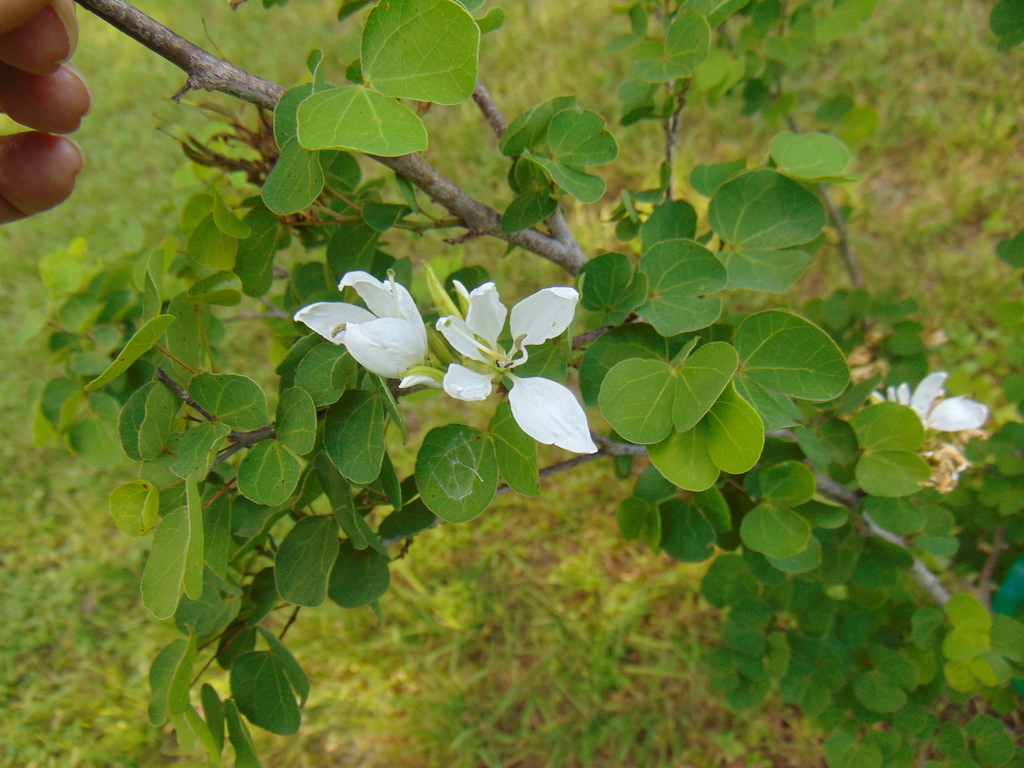
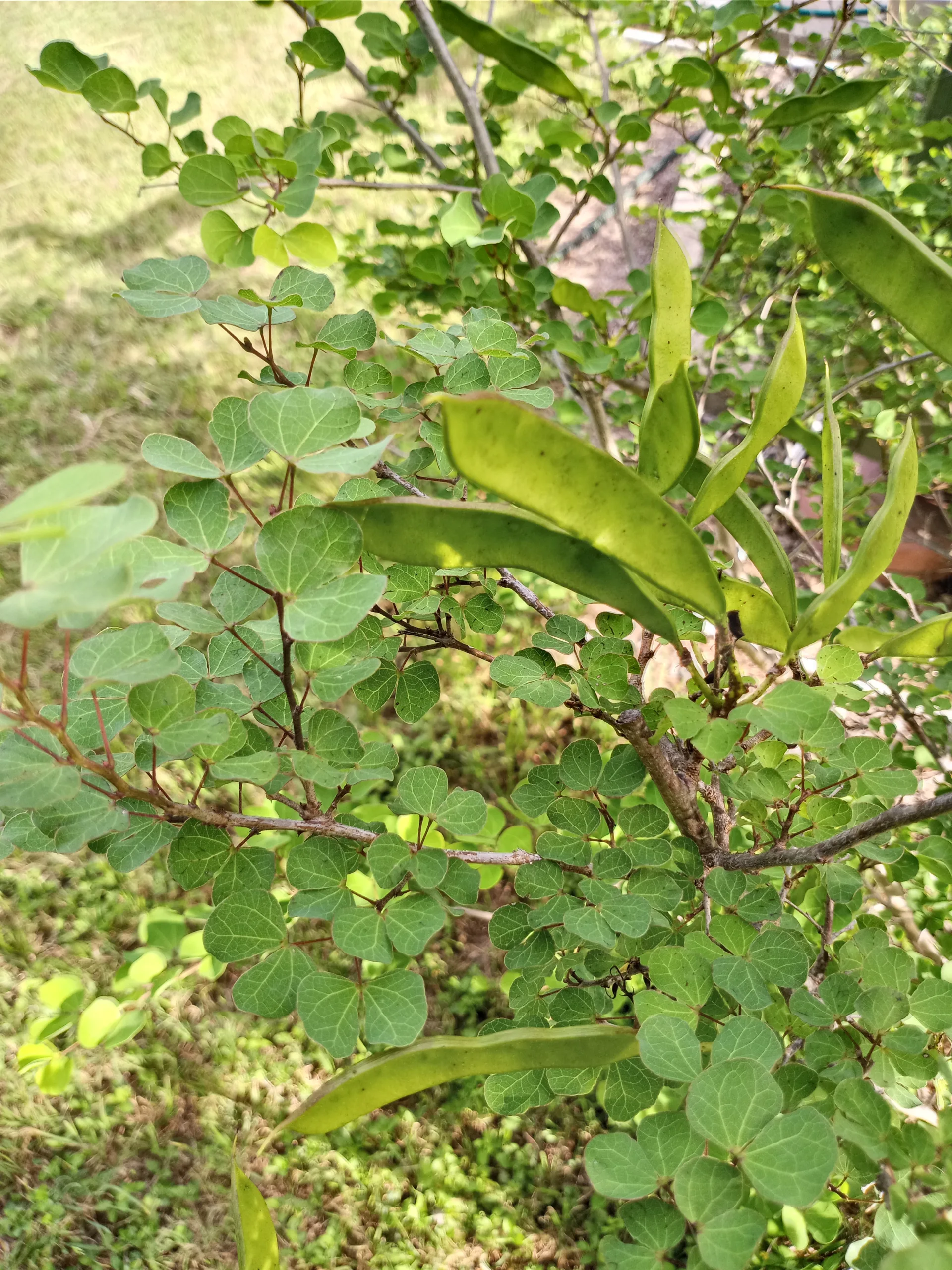
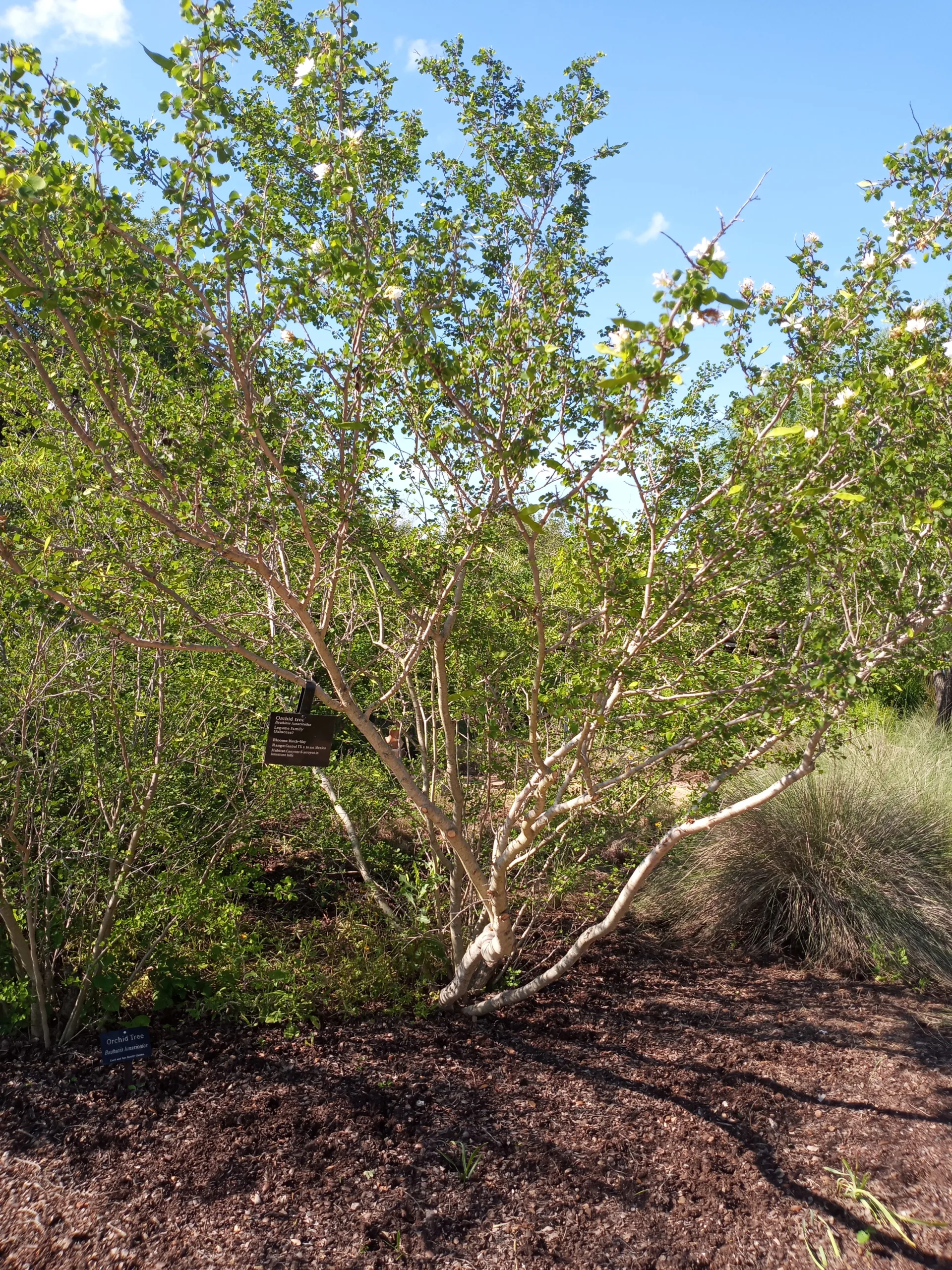
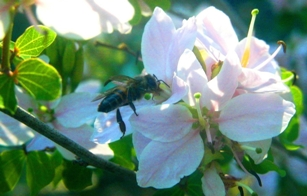
Blooms March-May. A multitrunked, shrub or understory tree with silvery gray bark. Leaves are deeply cleft with a unique appearance. Fragrant, white flowers resemble orchids. The fruit is a flat, legume pod.
Previous Scientific Name(s): Bauhinia congesta, Bauhinia jermyana, Casparea congesta, Casparea jermyana

References

1) Griffith, Bryce, Omernick & Rodgers (2007). Ecoregions of Texas. 2) https://www.wildflower.org/plants/result.php?id_plant=BALU. 3) http://bonap.net/TDC/Image/Map?taxonType=Species&taxonId=10744&locationType=County&mapType=Normal. 4) Miller, George O., Landscaping with Native Plants of Texas 2nd Ed., 2013, pg 48. 5) Wasowski and Wasowski, Native Texas Plants Landscaping Region by Region, 1991, pg. 280. 6) https://www.itis.gov/servlet/SingleRpt/SingleRpt?search_topic=TSN&search_value=26492#null, 7) Native and Adapted Landscape Plants, City of Austin and Texas A&M, 2014., 8) https://gardenoracle.com/images/bauhinia-lunarioides.html#:~:text=Prune:%20After%20flowering%2C%20only%20prune,Uses:%20Ornamental.
Material Treatment Method Collection References
Seed No Treatment Plant immediately in small pots filled with moistened potting soil. If you sow the seeds in fall, you must protect them in a cold frame. Otherwise, you can sow directly in the soil come spring. Continue to keep the soil moist and place the pots on a window with bright direct light. Move seedlings outdoors the following spring. Collect the seeds in August, when they pods have turned brown. Dry them out in paper bags for a couple days. To store seeds over the winter, make sure they are sealed tight and it's recommended to be vigilant of any infestations. 1) https://coryames.com/anacacho-orchid-tree-bauhinia-lunarioides-2/ 2) https://www.yahoo.com/lifestyle/grow-care-anacacho-orchid-tree-181705633.html?guccounter=1&guce_referrer=aHR0cHM6Ly93d3cuZ29vZ2xlLmNvbS8&guce_referrer_sig=AQAAAC0WJJx0N9X4UOV4E6zKTx6YX-td8aLOsVVsdXzen-NiRaFHDmMK3IsnRnqLifE1-L0z23Pe6b375KSE6l9ZPAHRB4YYCaavEzKOZlBZhb3xrc_W9DPIsj4JC9b2LKXGlJZI5qjYt1wzISn3idUqb_47r_oFo0xjjH618sSbTRuw
Stem Cutting Dip the cut end in rooting hormone. Plant the cutting in a pot with well-draining soil. Cover the cutting with a plastic bag to create humidity and keep the soil consistently moist. Place the pot in a location with bright, indirect light. Use a heat mat if needed to provide warmth on cool nights. Choose a green stem that is healthy and blemish-free and cut it with clean pruning shears. Remove lower leaves. https://www.southernliving.com/orchid-tree-7486707
Seed Scarification Remove seeds from the pods and soak seeds in warm water for 24 hours before planting. Add well-draining, sandy soil to a small pot and sow the seeds 1/2-inch deep. Water the seeds and cover with plastic to create a greenhouse environment. Place the pot in a sunny location and keep the soil moist. Germination can take weeks to months. Remove the plastic when seedlings appear. Plant seedlings in a sunny, well-drained location. Collect seed pods during fall when they have turned brown and dried out. https://www.southernliving.com/orchid-tree-7486707

About the Region

Fall Symposium 2025 Logo - Teach for the Future

Salado, the location of our Fall 2025 Symposium, lies at the intersection of two ecoregions: the Edwards Plateau (Limestone Cut Plain) and Blackland Prairie (Northern Blackland Prairie).

The Edwards Plateau area is also called the Hill Country; however, this general term covers a much larger area extending farther north. Spring-fed creeks are found throughout the region; deep limestone canyons, rivers, and lakes (reservoirs) are common. Ashe juniper is perhaps the most common woody species found throughout the region. Additional woody species include various species of oak, with live oak (Quercus fusiformis) being the most common. Sycamores (Platanus occidentalis) and bald cypress (Taxodium distichum) border waterways. This area is well known for its spring wildflower displays, though they may be viewed in spring, late summer, and fall, as well. According to Texas Parks and Wildlife, average annual rainfall in the Edwards Plateau ranges from 15 to 34 inches.

The Blackland Prairie extends from the Red River south to San Antonio, bordered on the west by the Edwards Plateau and the Cross Timbers, and on the east by the Post Oak Savannah. Annual rainfall averages 30 to 40 inches, with higher averages to the east. This region is dominated by prairie species. The most common grass species include little bluestem (Schizachyrium scoparium) and Indian grass (Sorghastrum nutans) in the uplands and switchgrass (Panicum virgatum) in the riparian areas and drainages. Common herbaceous flowering plants include salvias, penstemons, and silphiums. This area has suffered greatly from overgrazing and agricultural use. Few intact areas remain, though many of the plants can be found along county roadsides throughout the region.

Our fall Symposium host chapter, the Tonkawa Chapter, includes both of these ecoregions.

Source: Wildflowers of Texas by Michael Eason