

NICE! Plant of the Month
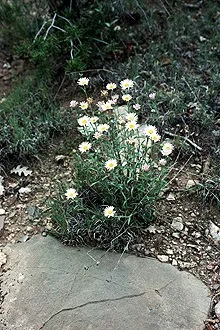
(Melampodium leucanthum)
Family: Asteraceae
Other Common Names: Rock daisy, Plains blackfoot
Type: Perennial
Growth: Low growing 6 to 18 inches tall, normally wider than tall.
Deer Resistance: Yes
Wildlife: Nectar for bees, butterflies and insects. Seed for birds
Light Tolerance: Full sun to part sun
Flowers: ¾ to 1 ¼ inches wide with 8-10 white daisy-like ray flowers surrounding yellow disk flowers. Blooms March to November. Honey-scented fragrance
Leaves: Gray-green, ¾ to 1 ¾ inches linear-oblong, with short rough hairs
Water Requirements: Low. Do not plant under sprinkler irrigation.
Soil Requirements: Well-drained sand, caliche, limestone, and rocky gravelly soils
Planting Instructions: Space plants 1 foot apart. Dig a hole at least two times wider than, but the same depth as the root ball in the nursery container. Sides of the hole should be irregular, not smooth. Remove plant from container, taking care to support the root ball. Loosen exterior roots gently with your fingers. If the plant is root-bound and cannot be loosened by hand, the outer roots may be cut in several places. Lift the plant by the root ball and place into the hole. Backfill hole, using soil that was dug out. Do not add any soil to the top of the root ball. Gently firm the soil with your hands, but do not tamp it down. Place 2 inches of mulch over the bare soil around, but not touching the base of the plant.
Watering Instructions: Water deeply after planting to settle soil around roots. Then every 7-10 days, as needed, during the first growing season. Before watering, check for soil moisture at a depth of an inch or two at the edge of the root ball. Skip a watering after a rainfall of ½ to 1 inch. Maintain this watering schedule until the first fall. Reduce watering during the cool fall and winter months. In a “normal” year, no watering may be necessary during the fall and winter, but during a dry period, monthly watering may be needed. Second Spring and thereafter: Water monthly only during periods of drought. Once established, natives will survive with little supplemental irrigation.
NICE! Tip: Good for rock gardens. Use instead of hybrid coreopsis or annuals such as zinnias, petunias and exotic perennials. Remove dead blooms to encourage more flowers. Cut back by ½ before spring to encourage compact fullness.
Look for the NICE! Plant of the Month signs and information sheets on your next visit to a participating Boerne nursery. And thank you for supporting native plants by using them in your landscapes.
