

NICE! Plant of the Month
(Carya illinoinensis)
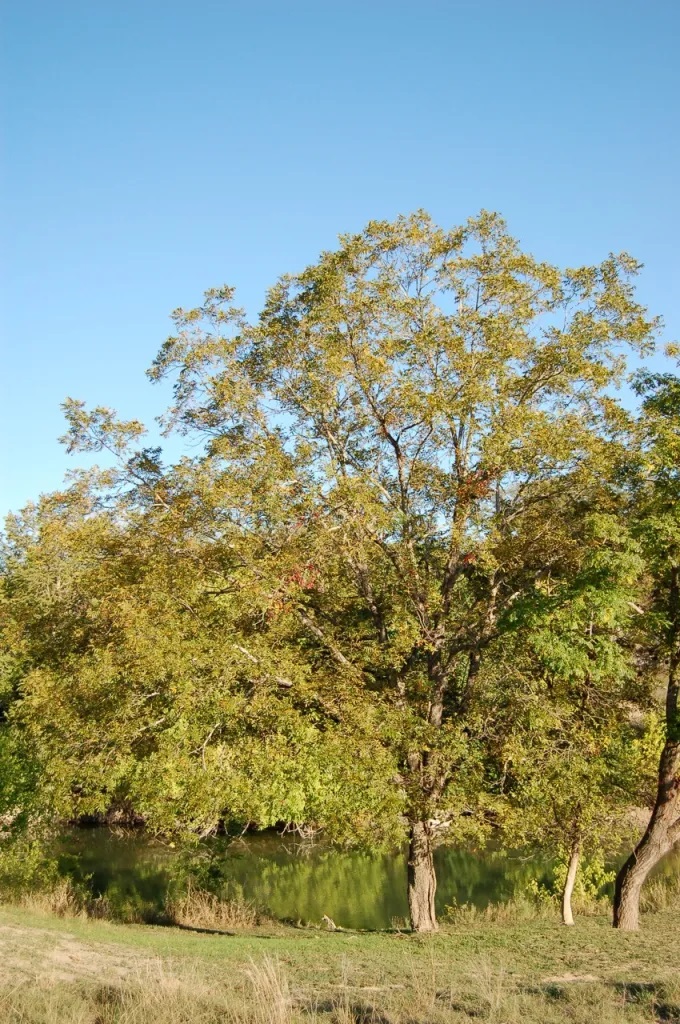
Family: Juglandaceae (Walnut Family)
Type: Tall tree 50-60 feet tall and broad crown. Can grow up to 100 feet tall in deep, fertile soil.
Natural Habitat: Deep, rich, moist wetlands and bottomlands near rivers and streams in South-central U.S and Mexico. In Texas, it is most commonly found in Blackland Prairies.
Growth: Slow growing, long-lived, deep rooted.
Deer Resistance: Tree bark needs protection from rubbing for first 10 years.
Wildlife: High energy and protein food for deer, turkeys, blue jays, squirrels and small mammals. Host plant for hairstreak butterflies and cecropia moth.
Light Tolerance: Full sun.
Flowers: Spring; catkins 5-6 inches long; unisexual – male and female on the same tree.
Fruit: Edible, 1-3 inch oblong drupe (usually called a nut) covered by green husk that splits when mature; often in clusters of 2-3 nuts that mature in October-November. Native species has small, hard shell but considered the most delicious. Cultivars can be thin-shelled up to 3 inches long.
Leaves: Deciduous, alternate, pinnately compound, up to 12 inches long with 9-17 opposite leaflets; smooth asymmetrical leaflets with small teeth, often curving, aromatic.
Water Requirements: Drought tolerant and can withstand short durations of flooding.
Soil Requirements: Deep, fertile, well-drained sand, loam, clay, caliche.
Planting Instructions: Space plants 30-50 feet apart depending on desired final appearance. Dig a hole at least two times wider than, but the same depth as the root ball in the nursery container. Sides of the hole should be irregular, not smooth. Remove plant from container, taking care to support the root ball. Loosen exterior roots gently with your fingers. If the plant is root-bound and cannot be loosened by hand, the outer roots may be cut in several places. Lift the plant by the root ball and place into the hole. Backfill hole, using soil that was dug out.. Do not add any soil to the top of the root ball. Gently firm the soil with your hands, but do not tamp it down. Place 3-4 inches of mulch over the bare soil around, but not touching the base of the plant.
Watering Instructions: Water deeply after planting to settle soil around roots. Then every 7-10 days, as needed, during the first growing season. Before watering, check for soil moisture at a depth of an inch or two at the edge of the root ball. Skip a watering after a rainfall of ½ to 1 inch. Maintain this watering schedule until the first fall. Reduce watering during the cool fall and winter months. In a “normal” year, no watering may be necessary during the fall and winter, but during a dry period, monthly watering may be needed. Second Spring and thereafter: Water monthly only during periods of drought. Once established, natives will survive with little supplemental irrigation.
NICE! Tip: State tree of Texas and prized shade tree. The nuts are a valuable food source and cash crop. A mature tree can produce 500-1,000 pounds of delicious nuts per year that are also healthy: low in saturated fat, antioxidant, and high in protein. Shells of nuts often used as mulch. Pecan wood is among the hardest and strongest.
Look for the NICE! Plant of the Month signs and information sheets on your next visit to a participating Boerne nursery. And thank you for supporting native plants by using them in your landscapes.
