During a Thursday morning hike last week, I saw three plants I never expected to get to see in the wild. I would have felt lucky to see just one of these plants in its native habitat, but all three in the same area was – as young people say – awesome! These plants are growing in the valley of the Devils River just upstream of Dolan Falls.
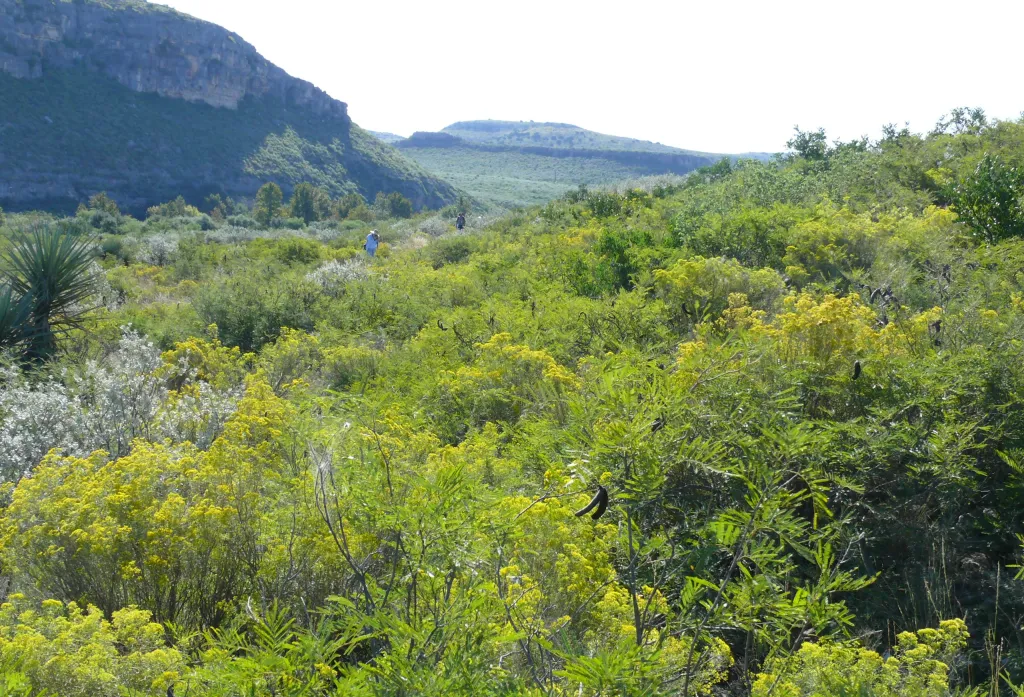
Kathy and I were very fortunate to be among a group invited to visit The Texas Nature Conservancy’s Dolan Falls Preserve in Val Verde County last week. Our host was Bill Carr, the state botanist for The Nature Conservancy of Texas. He is working on an updated documentation of the flora in that 4,800-acre preserve in the Devils River basin.
The three plants we were grateful to see on that morning walk are Anacacho orchid-tree (Bauhinia lunarioides), Texas snowbell (Styrax platanifolius subsp. texanus), and red yucca (Hesperaloe parviflora).
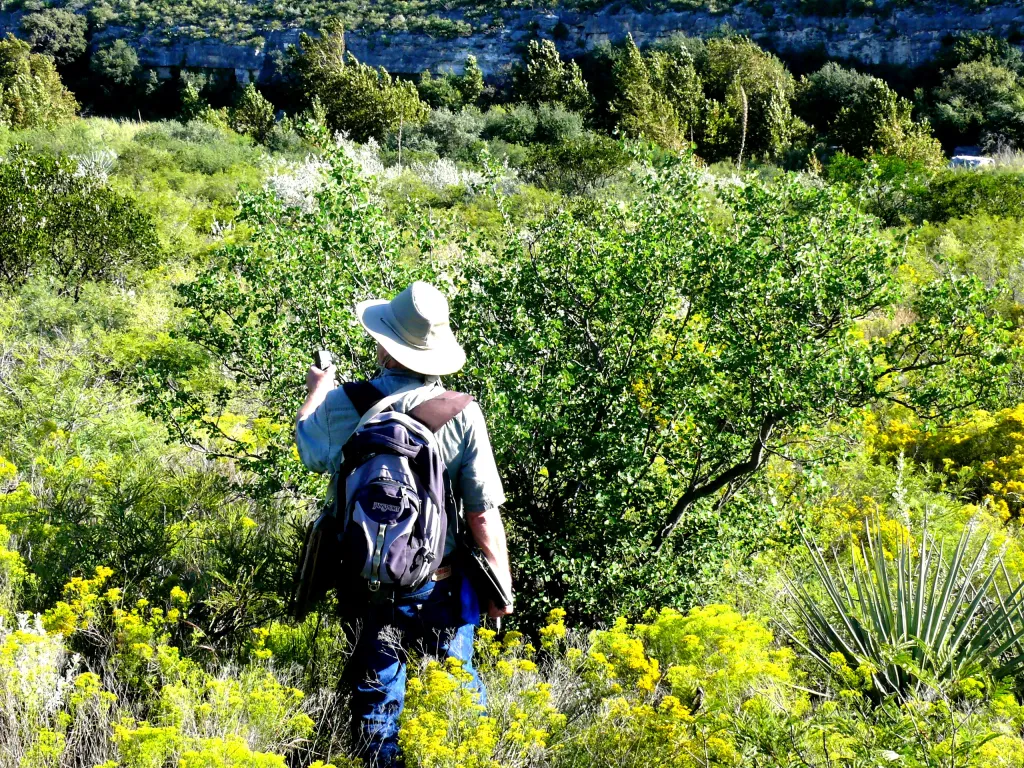
The general setting where these plants grow is on the western side of the Devils River on a broad east-facing rocky slope partly covered by colluvium eroded off the limestone ridges on the west. Across the river, the valley wall is a high steep cliff of Lower Cretaceous limestone. And it is brush country.
The brush here is cenizo, guajillo, mountain laurel, broom weed, shrubby blue sage, prickly pear cactus, and Spanish dagger yucca. Last week the broom weed was in full bloom and covered with Theona checkerspot butterflies.
In one area of this brushy slope there were a few dozen Anacacho orchid-trees of various sizes up to about 8 or 10 feet high. I wonder if these bauhinia bushes represent a self-sustaining population, because there are small seedlings which seem to be surviving any deer browsing. Perhaps as the brush vegetation gets thicker, the Anacacho orchid-tree seedlings are more protected.
In Texas, the Anacacho bauhinia is found only in a few spots in Val Verde, Kenney, and Maverick Counties along the Mexican border. It is available in the nursery trade and is a good landscape shrub in the Boerne area.
In this same setting on the Dolan Falls Preserve a few red yuccas are surviving, mostly hidden under guajillo or cenizo bushes. Apparently the red yucca population is kept in check by browsing ungulates.
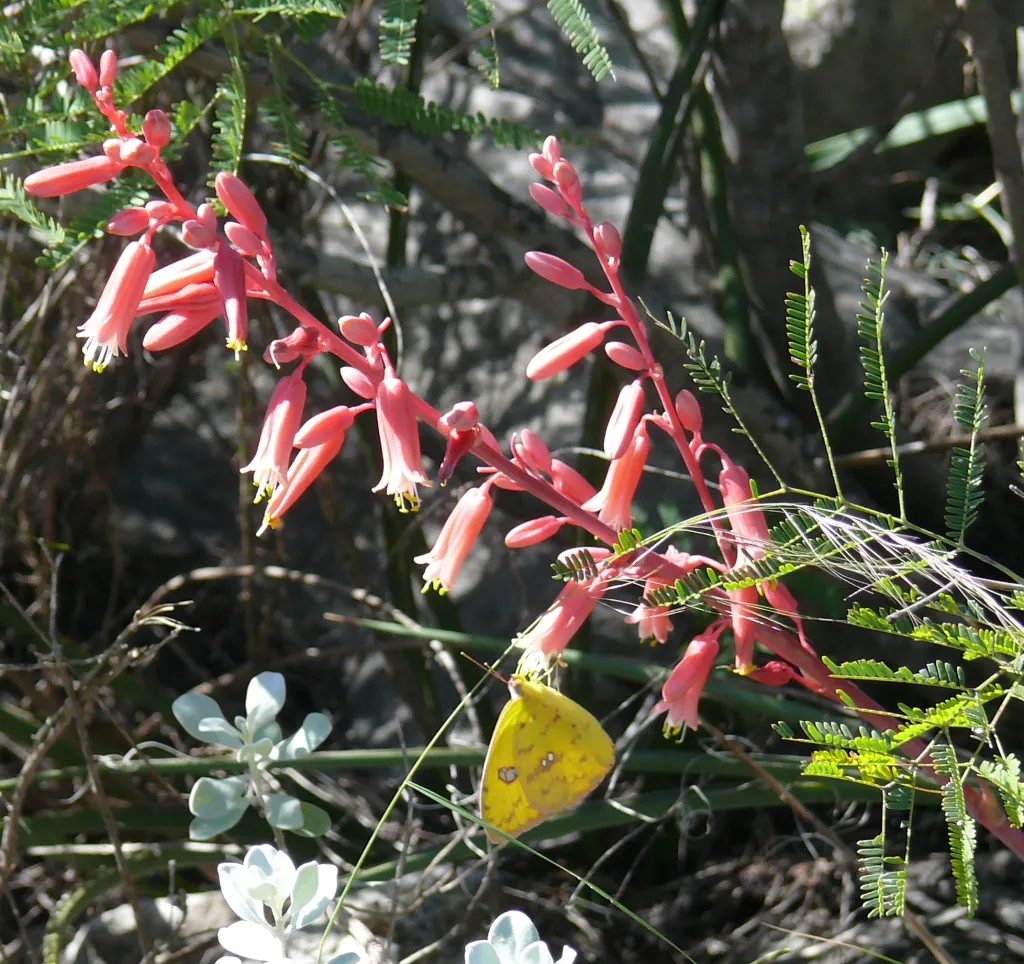
Red yucca, also called red false-yucca, can be purchased in most nurseries. It is a very popular garden plant. However, red yucca grows wild only in Val Verde County.
I have heard that red yucca was driven almost to extinction in the wild because of excessive plant collecting for the nursery trade. However, its apparent dependence on the protection of bushes in the Devils River valley suggests the scarcity of this plant in the wild could be attributed to cattle and deer browsing.
The Texas snowbells we saw are growing near the base of a low limestone cliff at the edge of a rock terrace a couple of hundred feet from the river. Here the snowbells are intergrown with mountain laurel, elbow bush, guajillo, Ashe juniper, and red bud. This population of Texas snowbell is monitored by Jackie Poole of Texas Parks and Wildlife.
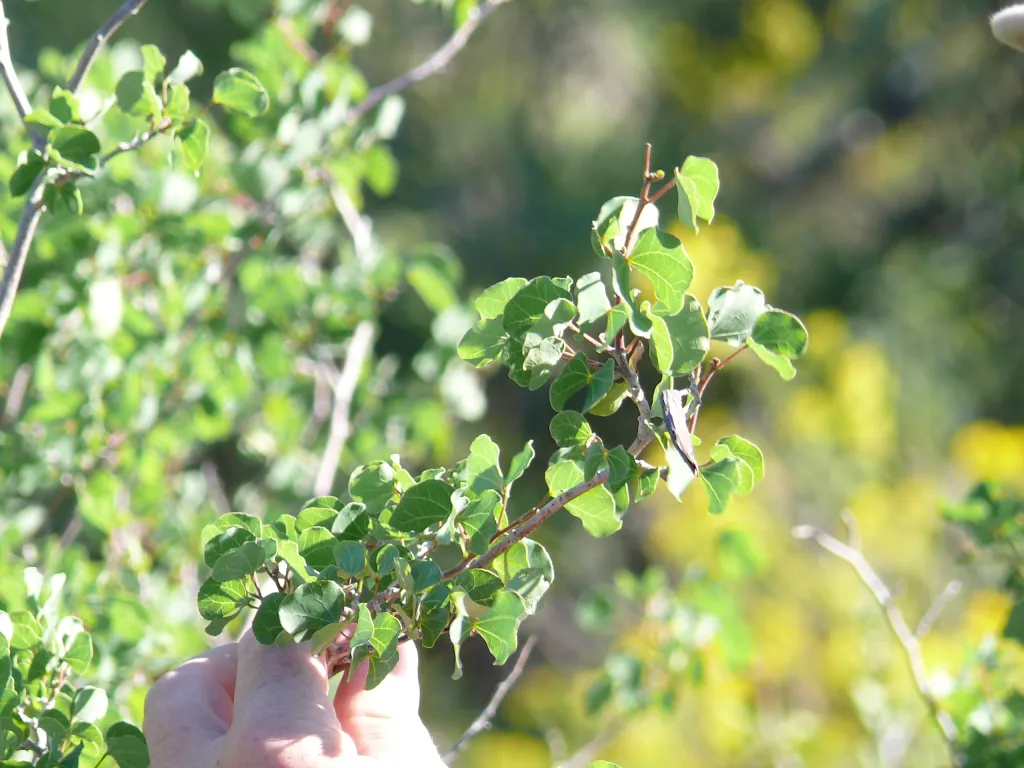
Texas snowbell has been found in a few places in Val Verde, Kinney, Edwards, and Real Counties. It is unlawful to sell this snowbell because it is federally and state listed as endangered. It is a rare plant.
Another “lifer” for us was the Mexican white oak (Quercus polymorpha), which occurs in only one place on this side of the border, namely the Devils River area of Val Verde County. When we visited the grove of large Mexican white oaks in the late afternoon, hundreds of migrating monarchs were coming in to rest among the oak leaves.
What a treat it was to visit to the Devils River! And what a contrast that area will be to the Big Thicket, where we’ll be in a few days for the annual meeting of the Native Plant Society of Texas!