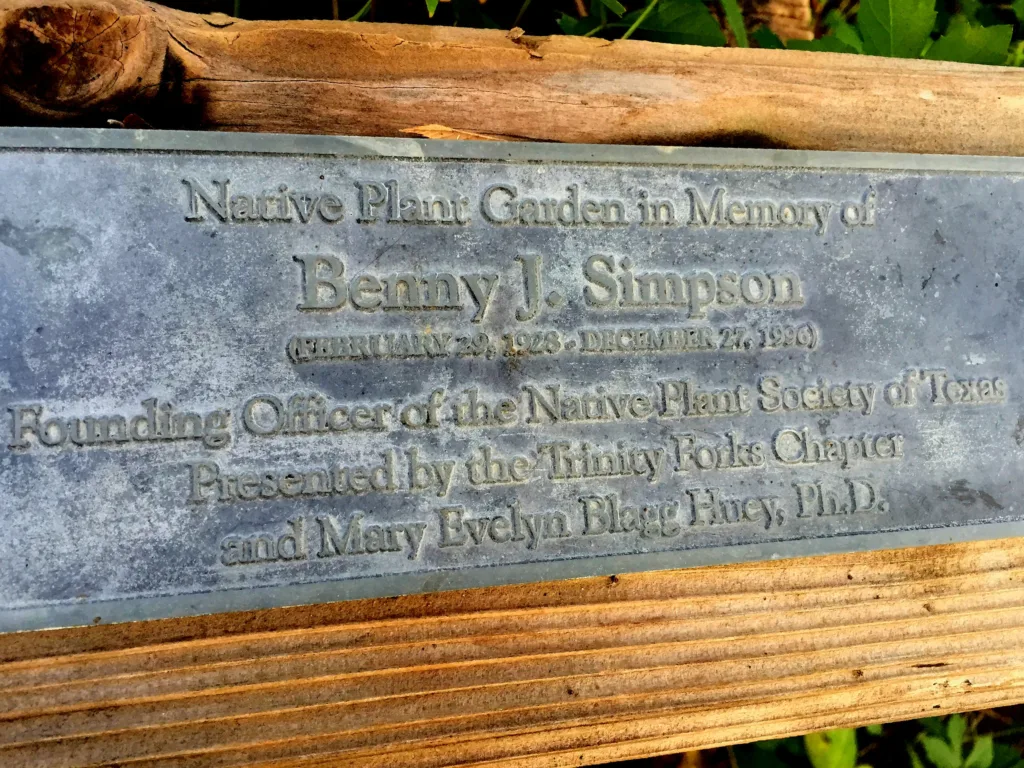
The year 1990 was the year of official recognition of Trinity Forks Chapter, although many members were very active in the North Texas area even before that. The formation of the new chapter was announced in the society’s newsletter, Native Plant Society of Texas News, Volume VIII/Number 3 of May/June 1990 by Doug Williams, NPSOT President: ‘We have more new chapters forming every month. The folks located in and around Denton have coalesced into the Trinity Forks Chapter of the Native Plant Society of Texas.’ Two other chapters were announced at the same time, Permian Basin Chapter of Midland-Odessa and Trans-Pecos Chapter of Big Bend area and Fort Stockton. Williams ended his announcement with: ‘Congratulations are in order for these already active groups of native plant enthusiasts and also thanks for your support of the Native Plant Society of Texas.’
See our Historian, Dr. Camelia Maier, provide an overview of the history of Native Plant Society of Texas chapter on our YouTube channel at Early History of Native Plant Society of Texas. .
Off to a Good Start
That first year, Trinity Forks:
- · Began publishing its newsletter
- · Hosted numerous field trips
- · Hosted numerous programs
- · Provided educational booths and speakers for local events
- · Held our very first plant sale
Through all these various activities, the chapter was well on its way educating the local communities in
understanding, appreciating, and using their regional flora. From the very beginning, Trinity Forks have pursued their mission with enthusiasm and dedication. Their commitment to the mission of NPSOT was commendable from the very first year of existence and we, current members, are forever grateful for their work and follow their example.
Trinity Forks provides resources for getting more plants in the ground:
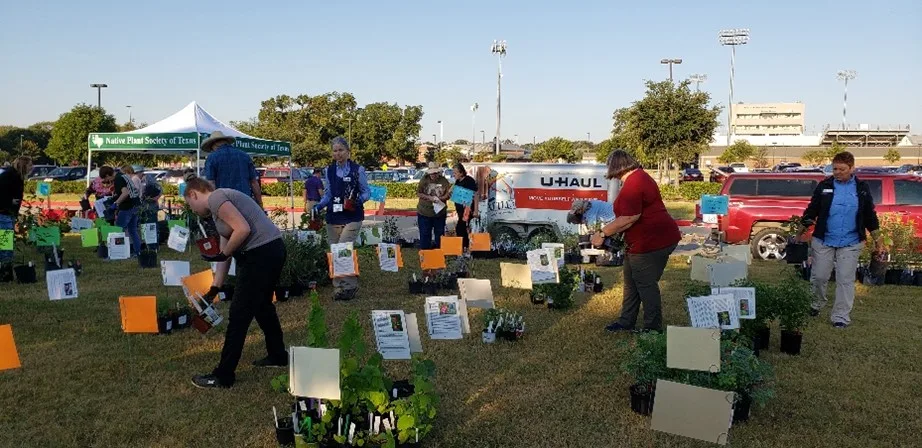
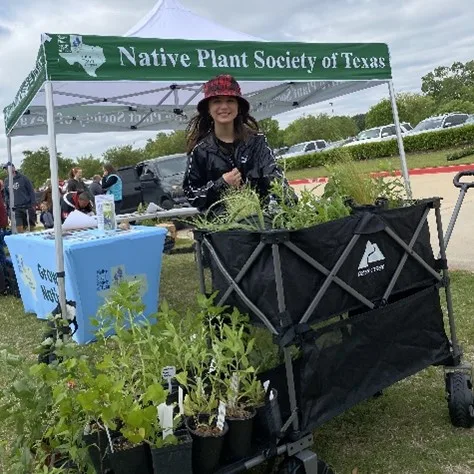
Trinity Forks has hosted Texas native plant sales almost every year since its founding. Some years there was both a
spring and a fall sale. Sales have been held in conjunction with the Upper Trinity Regional Water District, Keep
Denton Beautiful and the City of Denton’s Redbud Days, and since 2013 with Keep Flower Mound Beautiful’s Spring Trash Bash and Environmental Fair.
Plant sales are one of our best educational outreach opportunities as we handle many species not generally
available at nurseries, and our members have made wonderful information sheets for each one. These are available for buyers to read before buying or to take with them. We generally sell around 1500 plants in the three-hour sale and now have a solid following waiting anxiously for the opening bell each year.
Additionally, we have been implementors of the NICE (Natives Improve and Conserve the Environment) Native Plant Partners program supporting local nurseries who carry native plants.