If you’ve been gardening for any amount of time, you have probably discovered practical gardening practices that work for you here in Central Texas. We’d love for you to share them with us! In coming newsletters, we’ll select and share one or two submissions. Please help us make this new monthly feature a success by sending your submissions to sanantonio@npsot.org. Be sure to include your name, fully describe the gardening tip, and possibly include an illustrative photo.
Time To Prune Your Native Perennials
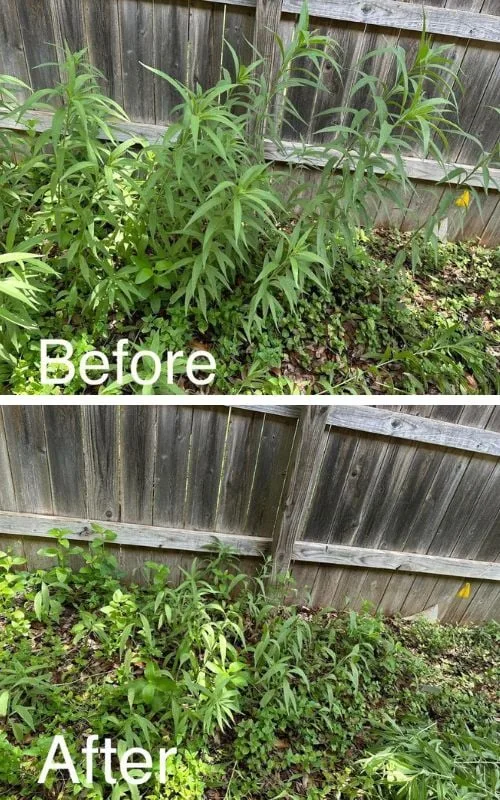
Early summer is the time to prune! So many plants are growing VERY well right now from all our rain this spring. And as much as I don’t mind things growing a bit wild, even I’m like WOWSERS. It’s time to get pruning!
Plants benefit from being trimmed, even if they have flowers. They’re just going to give you more flowers and be more bushy, healthier, and prettier.
Some plants that are fall bloomers (like Frostweed) should get a heavy prune so they aren’t too tall and become top heavy with their blooms. Here’s a list of things you should be pruning now.
- Frostweed: cut by a least 1/2 of whatever its height is currently is. (I cut mine back to 8”)
- Tall Goldenrod: Cut 1/2 way its current height.
- Turk’s Cap : Cut 1/4-1/2 its current height. (I cut back to 8”)
- Maximilian Sunflowers: Cut by 1/2.
- Autumn Sage: 1/4 trim all around
- Texas Fall Aster: Cut back 1/4 and long and leggy stems.
- Mistflowers: 1/2 their current height.
- Flame Acanthus: anything leggy (or to your desired height/width)
- ALL NON-NATIVE MILKWEED: This mimics our native milkweed going dormant for summer and will grow back with OE clean leaves/flowers for Fall migration.
(Submitted by Drake White of The Nectar Bar)