The Native Plant Society of Texas is pleased to welcome our 2026 Spring Symposium Speakers:
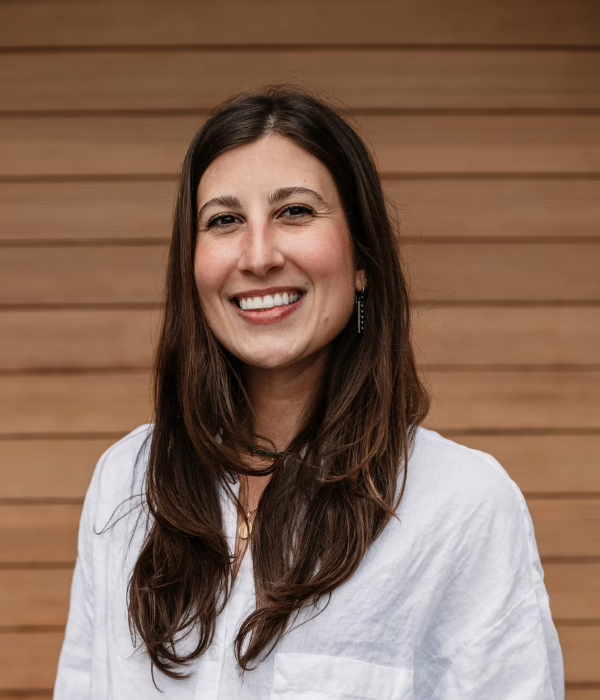
Marisa Bruno, Hill Country Alliance
In her role as Water Program Manager at the Hill Country Alliance, Marisa works with local Hill Country partners, including grassroots advocates and elected officials, to promote policies and projects that advance water supply resilience and protect groundwater and surface water flows. She got her start in Texas water as a program strategist for the Texas Water Foundation. She currently serves as an alternate for the Water Conservation Advisory Council and Region L Regional Water Planning Group.
Marisa received her Master of Environmental Management from the Yale School of the Environment, where she specialized in water resource management and policy. Her graduate research focused on Texas groundwater management and community water planning.
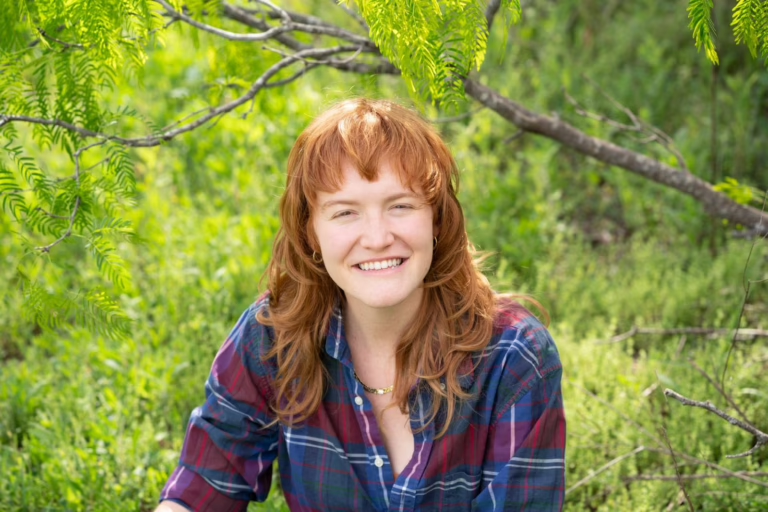
Grace Gilker, Hill Country Alliance
Grace grew up in Dallas and got to the Hill Country as fast as she could. After graduating from the University of Texas at Austin with a Bachelors of Arts in History and Plan II, she spent a decade building outreach programs in corporate, political, and nonprofit spaces.
Grace joined HCA in the spring of 2024, and manages the Communities Program which engages and serves as a resource for communities across the region, facilitates the Hill Country Leadership Institute, coordinates the Leading in the Rural Hill Country series, and connects leaders to Hill Country-specific policy resources.
Prior to HCA, she served as the Net Zero Liaison for Texas Water Trade, developing a comprehensive toolkit introducing Texas developers to onsite water reuse systems and resources. In her free time, she enjoys gardening, cooking, lichenology, and two stepping.
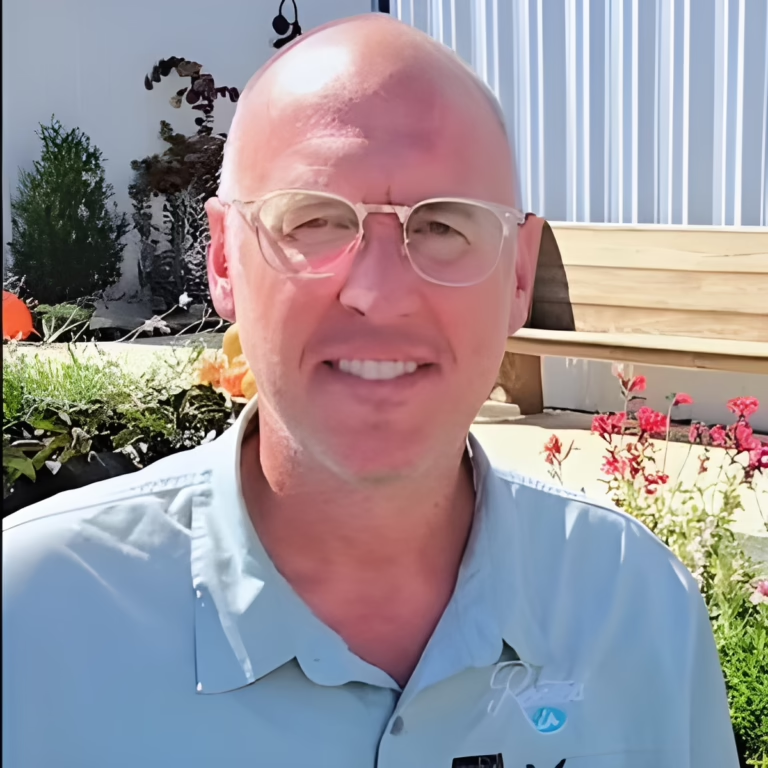
Daniel Cunningham, Rooted In
Daniel Cunningham is a Texas-based horticulturist and the owner of Rooted In, a native plant–focused nursery and garden center. He specializes in sourcing and supplying Texas native plants for resilient, water-wise landscapes. Cunningham shares his expertise with homeowners, garden clubs, and professional organizations through classes, consulting, and frequent appearances on local television and in regional publications. His work has also been featured nationally in outlets including The New York Times and Martha Stewart Living.
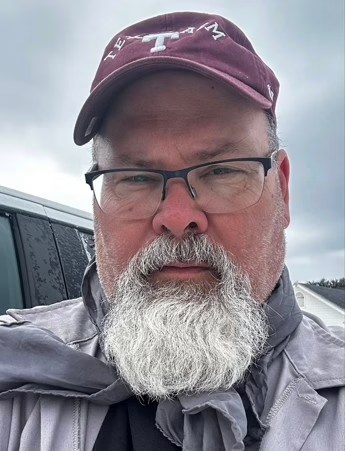
Jonathan Soukup, Southwest Perennials
Jonathan is the manager of Southwest Perennials in Dallas, Texas. Southwest Perennials is a family run wholesale plug nursery that specializes in perennials, herbs and native plants and serve nursery customers across the state. From locally owned mom and pop nurseries, to corporate nurseries with large retail accounts, seedlings from Southwest Perennials serve the Texas market as well as nurseries from coast to coast. They produce many of the seedlings for the HEB/NPSOT program as well as supply the milkweeds for the Texas region of the Monarch Watch program.
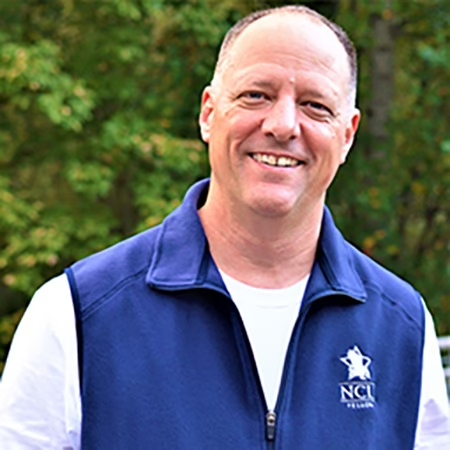
John Davis, City of Kyle PARD
I have a MS in Biology/Ecology and MCPR in Urban Planning and my career-long passion has been urban ecology. Native plants are central to this passion. I retired from Texas Parks and Wildlife Department as Wildlife Diversity Program Director after a 30 year career in the wildlife conservation field. I am now the Conservation Division Manager for Kyle Parks and Recreation Department, leading a team dedicated staff to create, enhance, and manage native landscapes and natural areas throughout the city’s parks and open spaces. A central part of this mission is moving Kyle to 100% true native landscaping.
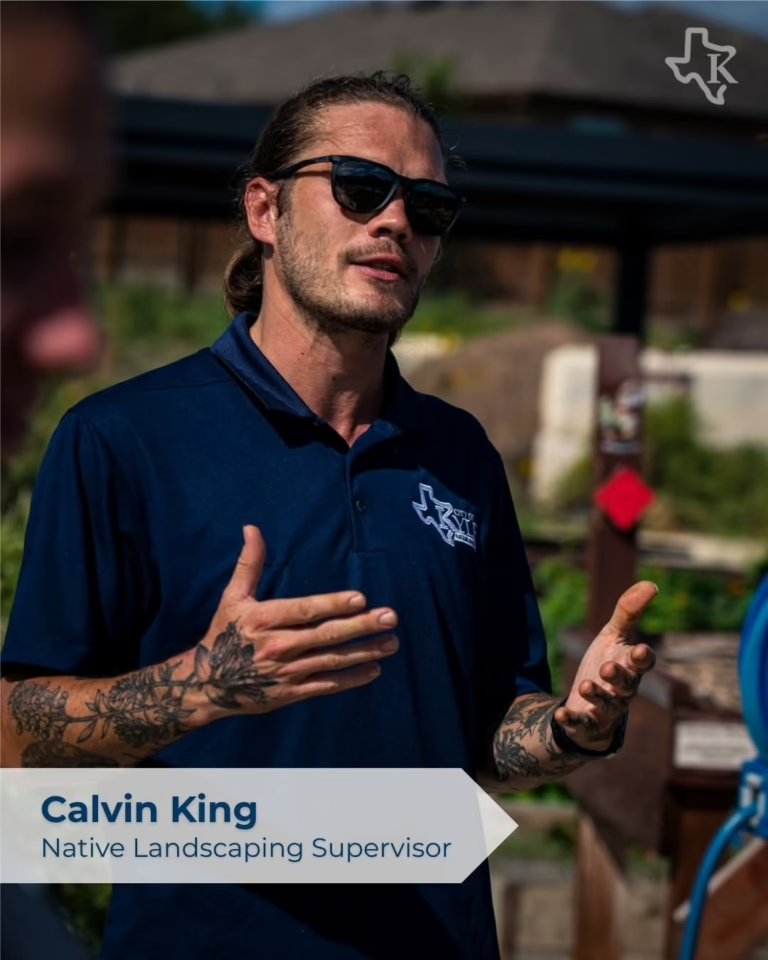
Calvin King, City of Kyle PARD
I am a horticulturist and Native Landscape Supervisor with a passion for the plants of the Blackland Prairie and Edwards Plateau. Based in Hays County, I specialize in using Texas native species to create resilient, beautiful landscapes that pay us back. I am dedicated to helping Central Texas thrive one native plant at a time.
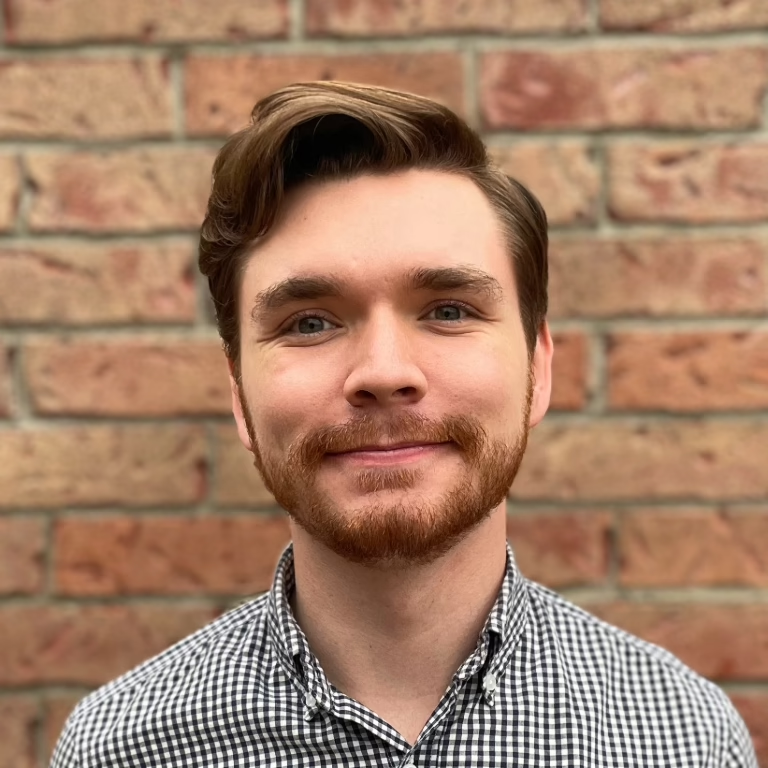
Ian Seamans, Environment TX
As the City Hall Advocate for Environment Texas, Ian works to secure clean air, clean water, well-funded parks, and a livable climate across North Texas. Ian has led campaigns to include environmental reforms in the City of Dallas’s comprehensive plan, get bird-friendly glass on the Kay Bailey Hutchison Convention Center, and streamline rooftop solar permitting in Dallas.
Outside of his professional role, Ian volunteers as a Texas Master Naturalist and on the board of the League of Women Voters of Collin County and the League of Women Voters of Texas. Ian’s work is driven by the belief that local action is critical to driving broad change for our environment.
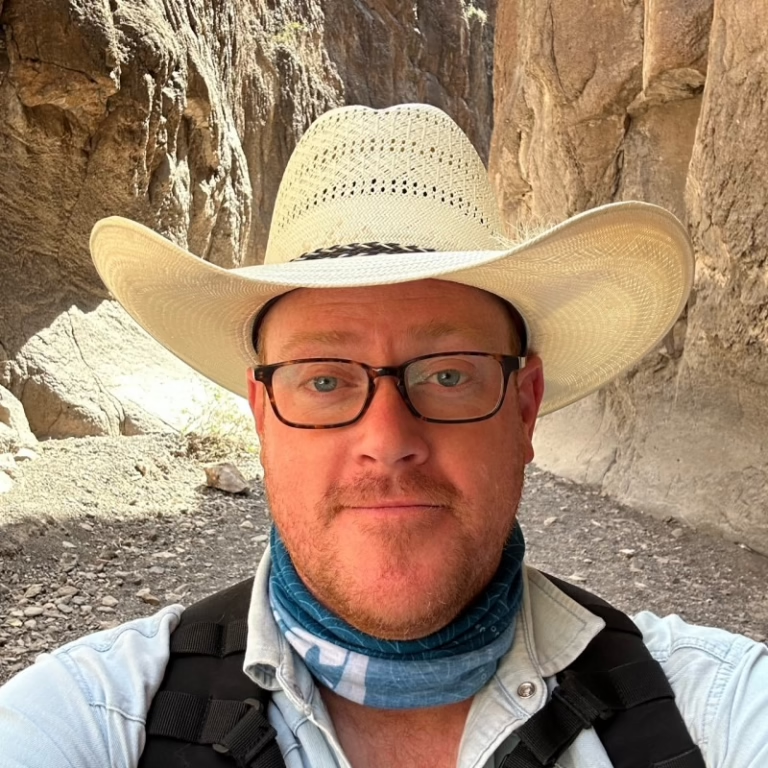
Ryan K. Spencer, Comal Conservation
Ryan Spencer graduated from Texas State University – San Marcos in December 2009 where he received his BS in Water Studies with a minor in Geology. He continued his education at Texas State University and in December of 2013 graduated with a Masters of Applied Geography in Geographic Information Systems. He is currently pursuing his PhD in Aquatic Resources and Integrative Biology at Texas State University. His research is centered on the impacts of Place-Based Education Pedagogy and Environmental Mindfulness on Informal Science Education.
Ryan currently serves as the Executive Director of Comal Conservation we’re he coordinates the efforts of an incredibly talented group of volunteers to, “Protect land, water, and wildlife in Comal County.”