Member News: Native Plant Student Art Showcased

By Liz Moyer, Trinity Forks Chapter

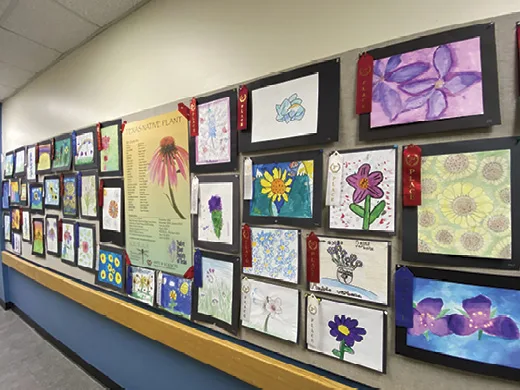
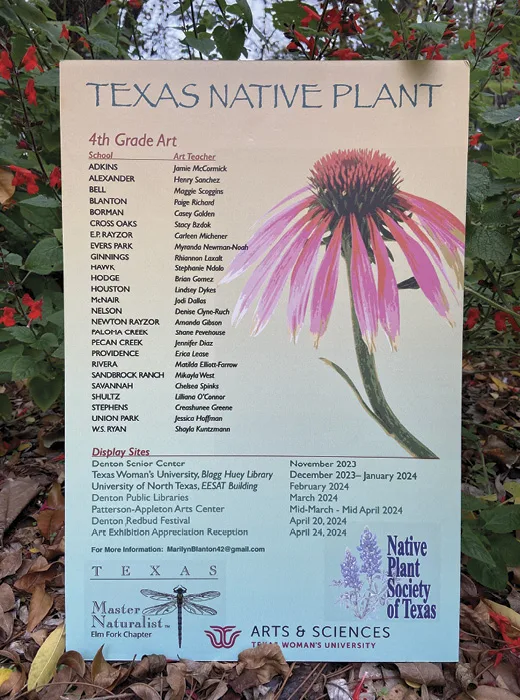
GREAT JOB & congratulations to the Trinity Forks Chapter on their 15th annual Texas Native Plant Art Exhibition of student art! The exhibition is an annual collaborative project sponsored by Trinity Forks, the Elm Fork Chapter of the Texas Master Naturalists, and Texas Woman’s University, College of Arts and Sciences. The purpose of the project is to raise awareness of the importance of native plants and educate students about the role of native plants in conservation and our natural heritage.

The exhibition began with one school in 2009 and has now expanded to 25 Denton ISD elementary schools. With Texas Native Plant Month and National Native Plant Month just around the corner in April, it’s never too early to start planning community outreach activities to help inspire and recruit new generations of native plant advocates!

For more information, contact Marilyn Blanton at marilynblanton42@gmail.com

The native plant artwork will be displayed at several more locations in Denton.
The traveling art exhibit also helps build awareness about the Society and all of its activities with young people and the general public.
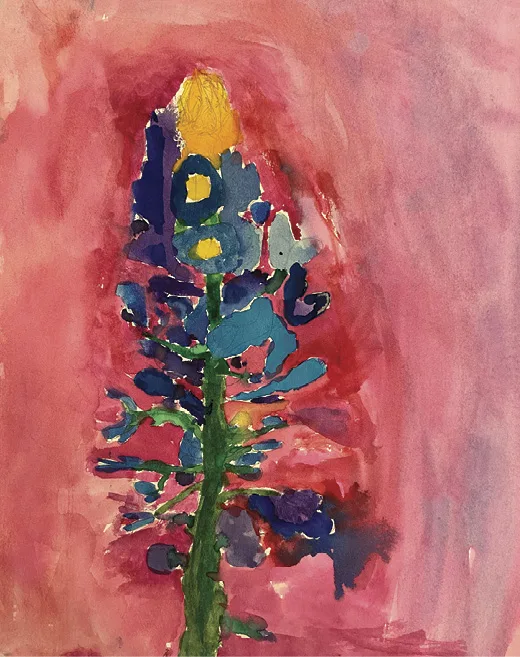
In 2023, 837 pictures of native plants were created by fourth grade students in their art classes.

Did you like this article? It’s from our Winter 2024 Texas Native Plants magazine. Read more here
About the Region

Fall Symposium 2025 Logo - Teach for the Future

Salado, the location of our Fall 2025 Symposium, lies at the intersection of two ecoregions: the Edwards Plateau (Limestone Cut Plain) and Blackland Prairie (Northern Blackland Prairie).

The Edwards Plateau area is also called the Hill Country; however, this general term covers a much larger area extending farther north. Spring-fed creeks are found throughout the region; deep limestone canyons, rivers, and lakes (reservoirs) are common. Ashe juniper is perhaps the most common woody species found throughout the region. Additional woody species include various species of oak, with live oak (Quercus fusiformis) being the most common. Sycamores (Platanus occidentalis) and bald cypress (Taxodium distichum) border waterways. This area is well known for its spring wildflower displays, though they may be viewed in spring, late summer, and fall, as well. According to Texas Parks and Wildlife, average annual rainfall in the Edwards Plateau ranges from 15 to 34 inches.

The Blackland Prairie extends from the Red River south to San Antonio, bordered on the west by the Edwards Plateau and the Cross Timbers, and on the east by the Post Oak Savannah. Annual rainfall averages 30 to 40 inches, with higher averages to the east. This region is dominated by prairie species. The most common grass species include little bluestem (Schizachyrium scoparium) and Indian grass (Sorghastrum nutans) in the uplands and switchgrass (Panicum virgatum) in the riparian areas and drainages. Common herbaceous flowering plants include salvias, penstemons, and silphiums. This area has suffered greatly from overgrazing and agricultural use. Few intact areas remain, though many of the plants can be found along county roadsides throughout the region.

Our fall Symposium host chapter, the Tonkawa Chapter, includes both of these ecoregions.

Source: Wildflowers of Texas by Michael Eason
