by Carleen Edgar
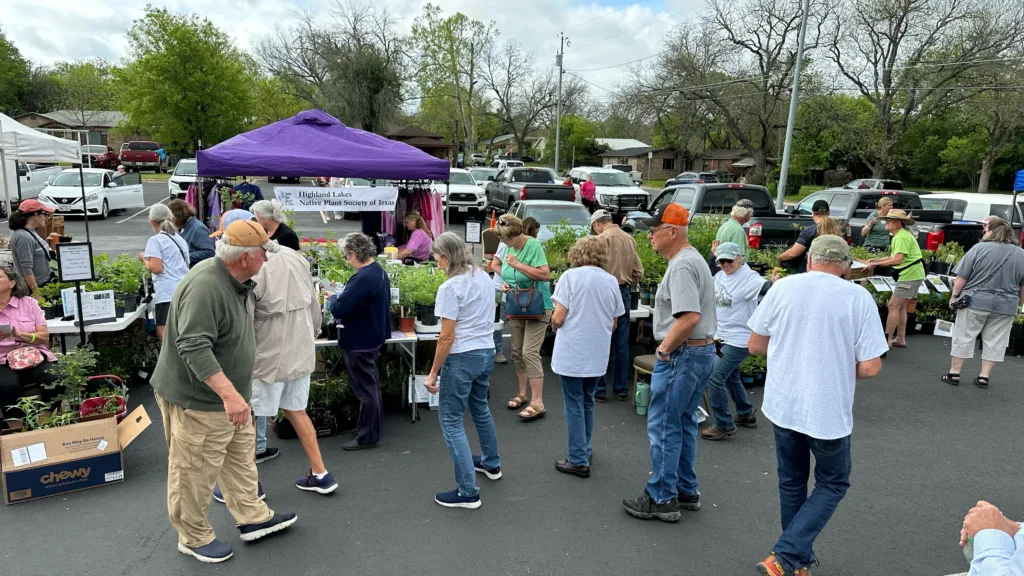
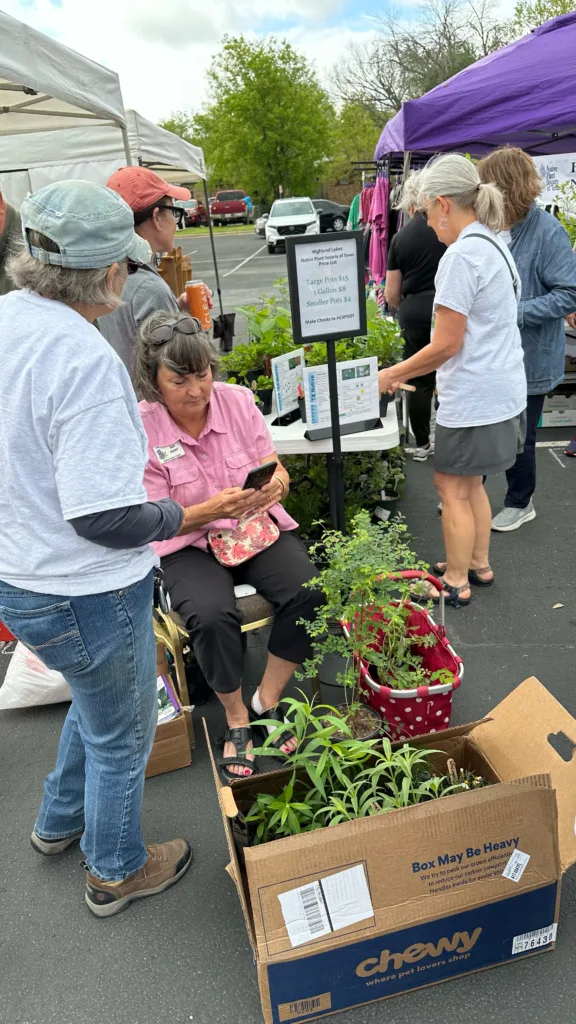
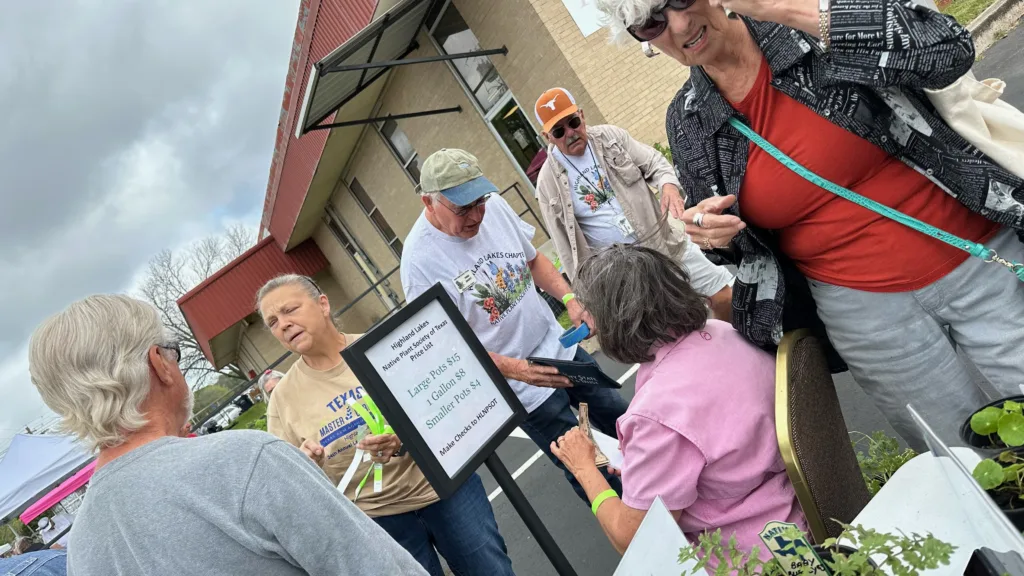
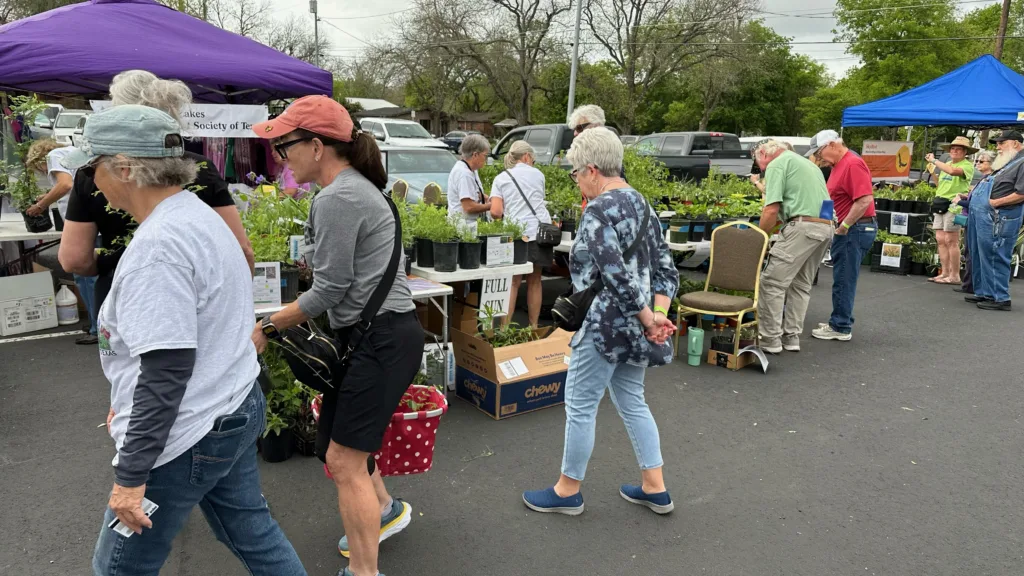
Yesterday was very busy, it was a busier plant sale than I have ever worked. Just look at the pic of Kay handling 10 customers at once!
Lots of volunteers showed up and members brought even more plants than we had expected! We had so many plants, we put a lot under the tables to replenish later.
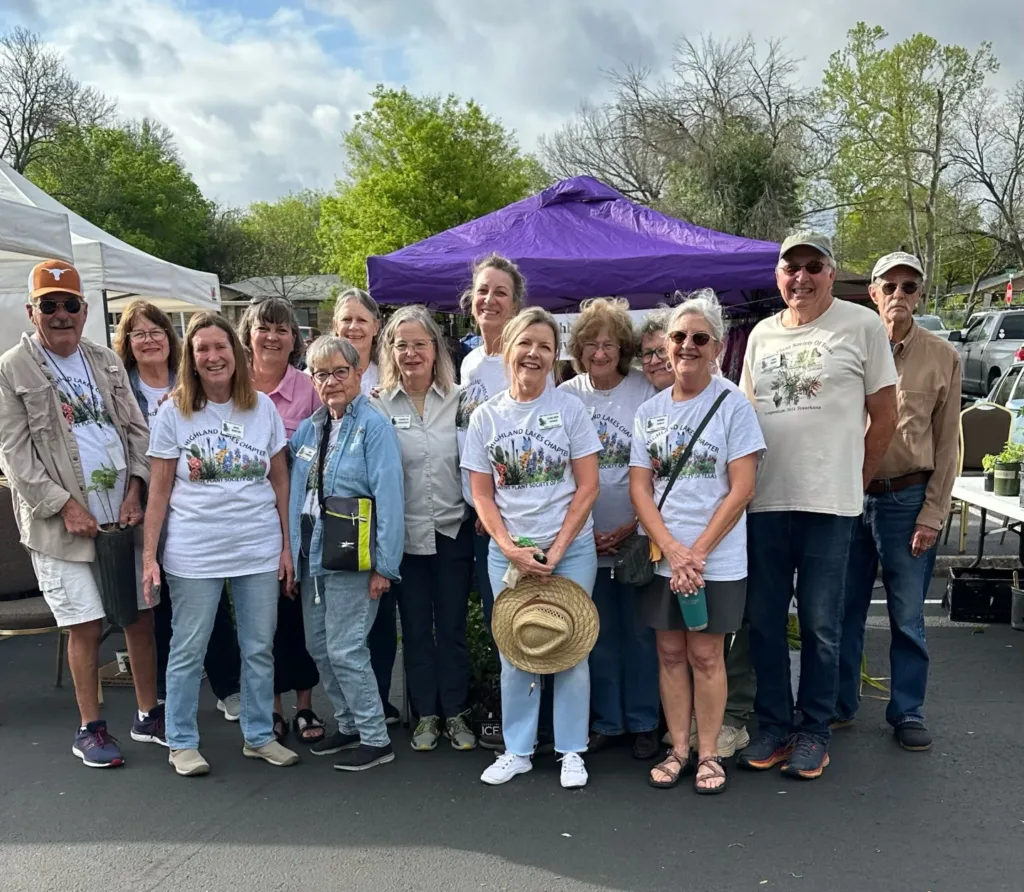
The booth set up volunteers were like busy bees, constantly moving and finding something that needed to be done. Many wise suggestions from
volunteers gratefully taken and implemented.
I learned yesterday that Kim and Fred were salesmen in a previous life. They sell, sell, sell and both charming as ever! They just don’t stop!
Linda was indispensable as resident native plant expert. We need more like her. She was always ready to take questions with a smile even while in the middle of answering another one.
Kay was constantly surrounded by buyers and I was amazed at how happy she was at all times. She was always joking and advising and just never ran out of steam!
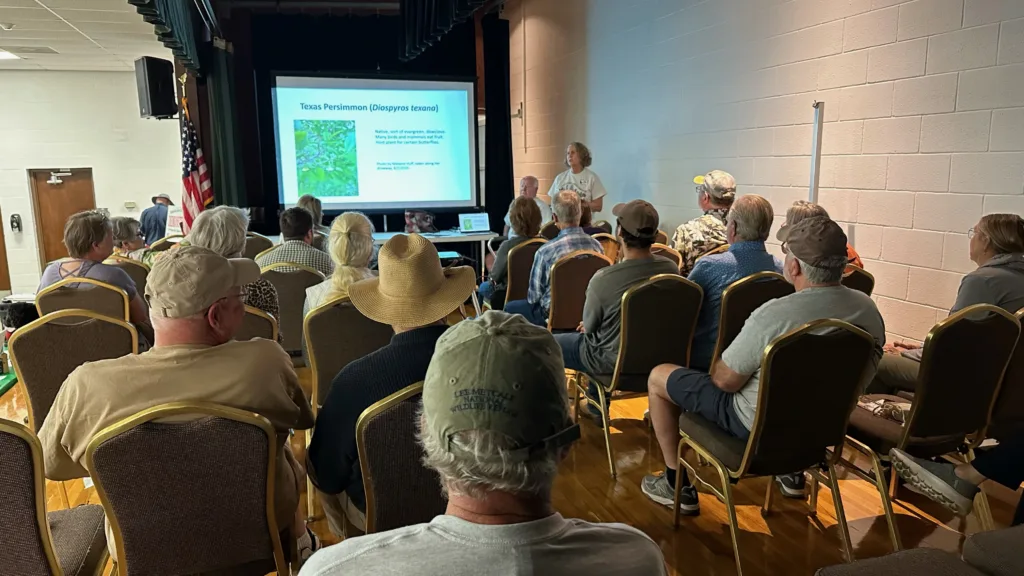
Diane’s presentation on native plants was well attended and very interesting. I was excited to see young people in the audience. Hard to believe after 20 or so years in native plants, I could still know so little!
There were so many volunteers that just kept moving and doing and, if I didn’t get to thank you personally, I would like you to know that it couldn’t have been done without you. We were ready right at 10am and that’s because of all of us pulled together and made it happen.
Total sales were very good: $1,970 ( minus 3 flats of 4” pots not yet deducted)
I was blown away by the generosity of both grower/donors and booth volunteers with their time and energy in preparing and executing this plant sale.
We discussed possibly forming a committee for plant sales. For this sale, it was like one materialized organically, all on its own.