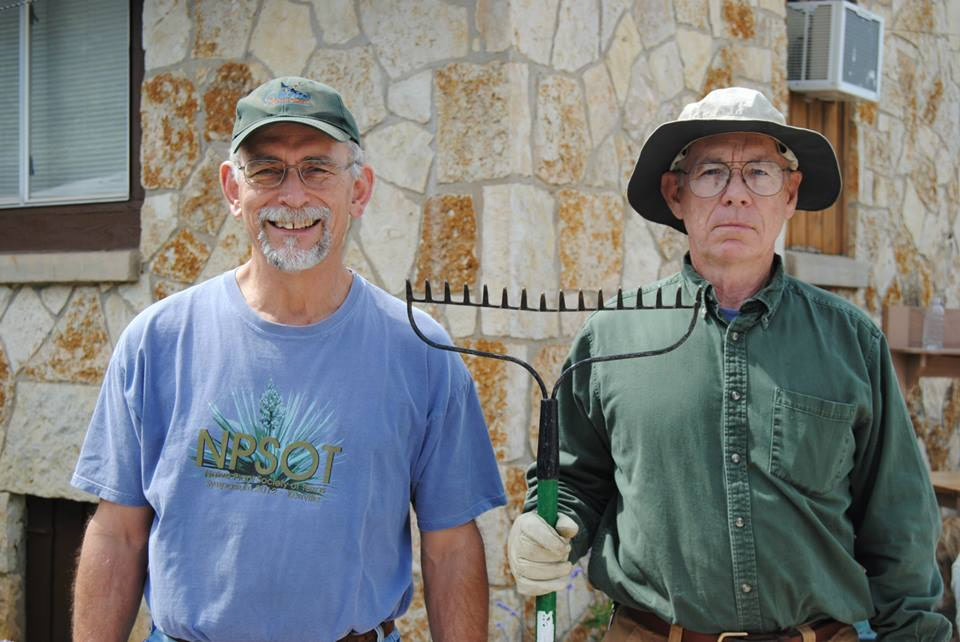
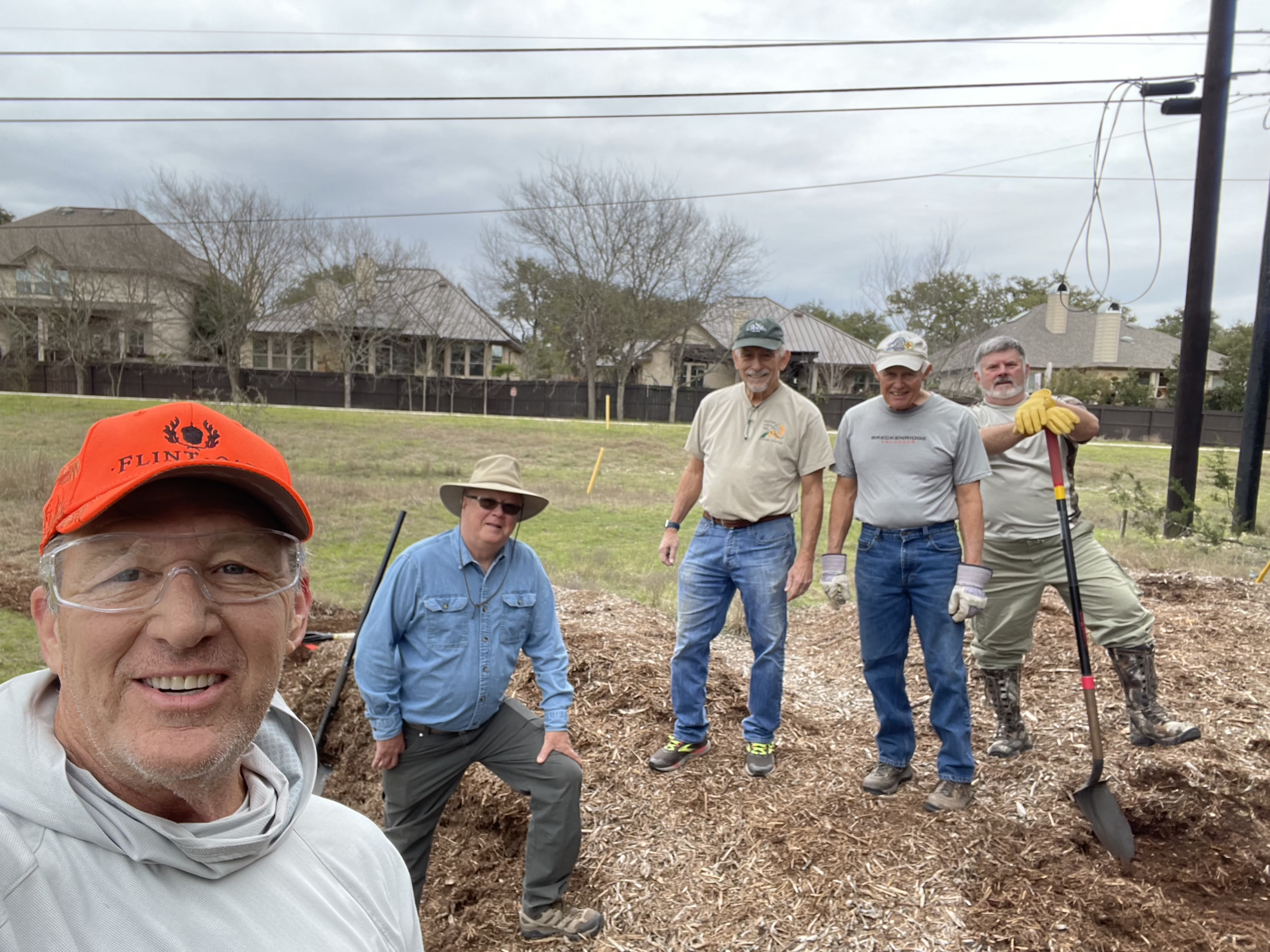
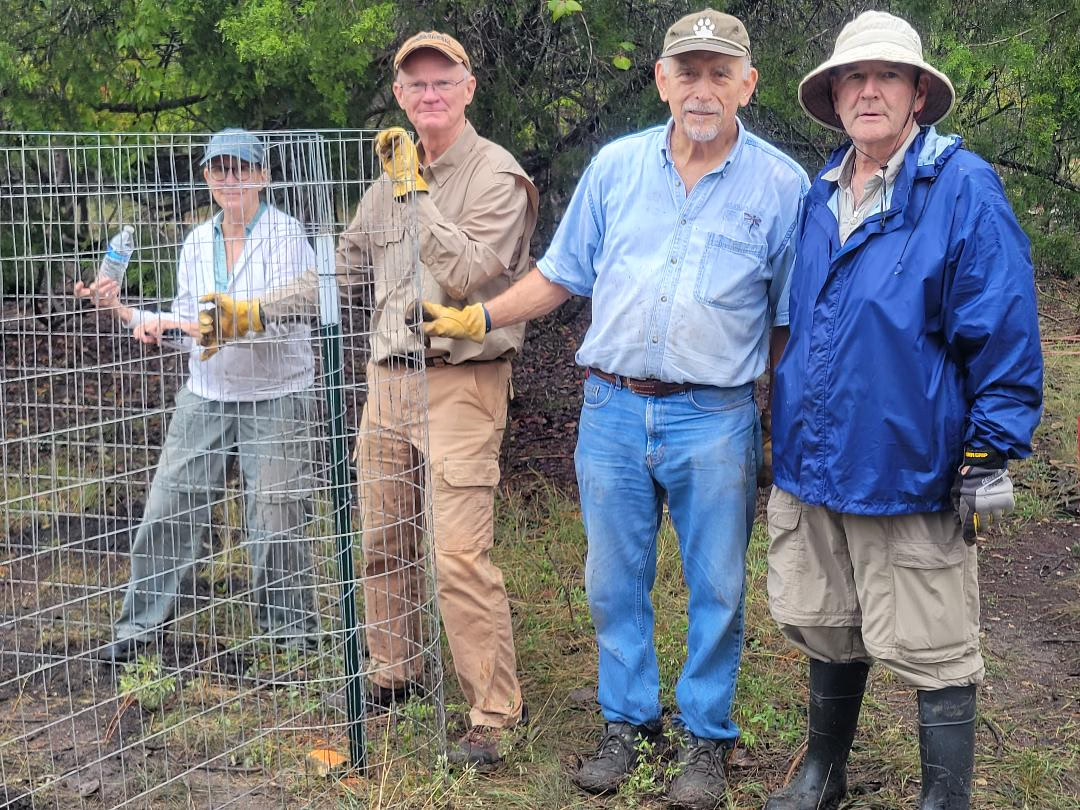
Wilt Shaw
NPSOT Member since 2002
Boerne Chapter President 2009-2010
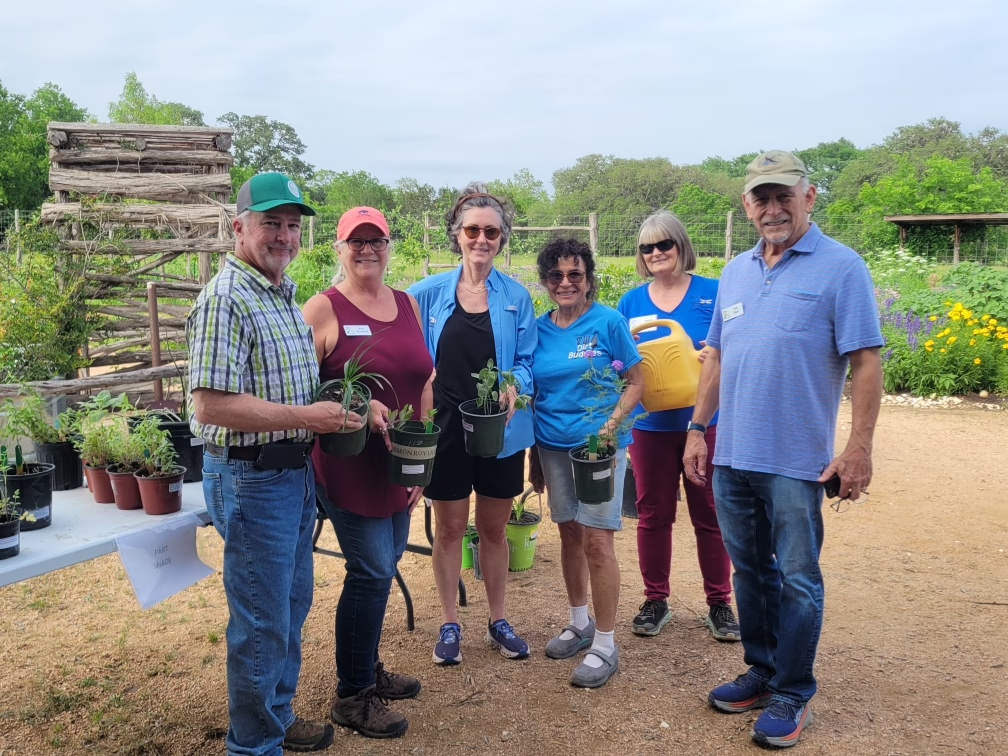 Wilt Shaw, a long-standing member of NPSOT Boerne and its tenth past president, is featured in this month’s Spotlight. For several years, he has led the NICE! Plants of the Month selection committee. Through a recent interview, I gained valuable insights into his experiences and learned a great deal about the natural world.
Wilt’s fascination with nature began during his childhood in San Antonio, where he frequently explored San Pedro Park. There were frequent visits to his paternal grandparents’ farm outside Natalia in Medina County, which featured a creek. These experiences sparked his interest in plants, animals, and water, forming the foundation for his lifelong passion. While Wilt possesses a broad knowledge of many topics, this spotlight focuses on his history and volunteer work.
After graduating from Central Catholic High School in San Antonio, Wilt joined the U.S. Army and was stationed in Germany as a paratrooper, where he became somewhat fluent in German. Following his military service, he earned degrees in mathematics and physics from St. Mary’s University. Wilt’s career as an exploration geophysicist led him to Dallas and Indonesia. His family enjoyed living in Indonesia for nine years, which allowed his children to complete high school there.
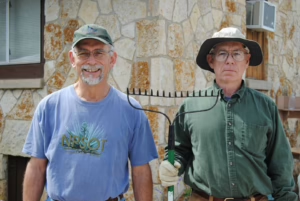 Upon retiring, Wilt and his family relocated to the Boerne area, where he rekindled his love for nature and exploration. Motivated by his friend Dr. Bill Ward, Wilt became a volunteer at the Cibolo Nature Center shortly after its opening and continues to serve at the Center for Conservation. For years, he participated in the outdoor classroom program, educating local children about nature. Currently, he monitors the nesting patterns of Great Blue Herons at the Cibolo Preserve, a 600-acre area adjacent to the Cibolo Nature Center.
Encouraged by his friend J.W. Pieper, Wilt became a Texas Master Naturalist. Together, he and J.W. formed the Cordillera Nature Club, an organization that has for many years educated their neighborhood on many aspects of the natural world. For over twenty years, he has served as an Interpretive Guide at Honey Creek State Natural Area on Park Road 31 off State Highway 46. Wilt is also a member and former president of Friends of Guadalupe River State Park.
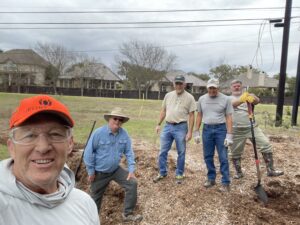 He has contributed to the preservation and maintenance of the Boerne City Campus Natural Area, located behind the Patrick Heath Public Library. As a Texas Parks volunteer, Wilt helps at the AB Kronkosky State Natural Area, seven miles west of Boerne. He also conducts butterfly surveys in Kendall, Comal, and nearby counties for the North America Butterfly Association.
Wilt is an avid birder and photographer, capturing images of plants, trees, birds, reptiles, mammals, insects, and pollinators. Many of his photographs are shared on INaturalist, a global digital platform.
At home he enjoys reading science books and the occasional novel, exploring mathematics articles, solving Sudoku puzzles, and (hopefully) completing New York Times crosswords. He subscribes to Scientific American and Natural History Magazine. In past years he and Sylvia were dedicated runners and walkers but have now changed to walking and going to the gym. His property at Cordillera Ranch is comprised of 95% native plants, demonstrating his dedication to the Texas ecosystem. Wilt and Sylvia enjoy spending time with their three children, eight grandchildren, and one great grandchild.
Connie Clark
Content Creator/Editor/Journalist
https://conniecanwrite.com/