Austin Chapter

Mission and Leadership

Our Mission

Photo Credit: Claire Sorenson

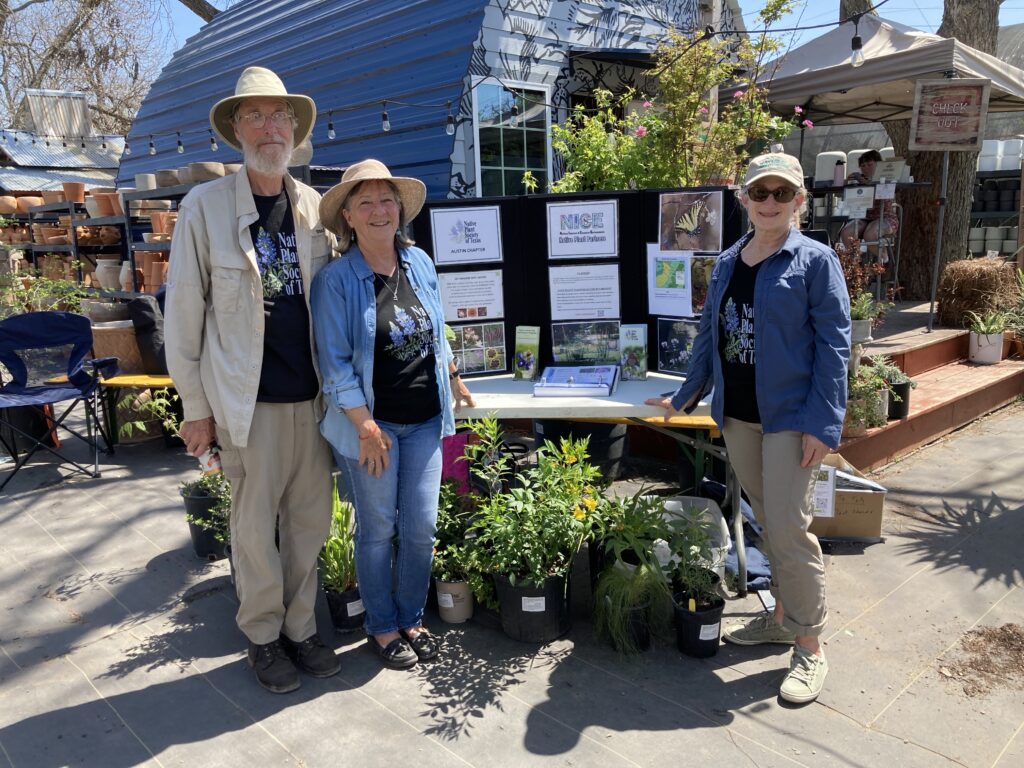
This is the Austin Chapter of the Native Plant Society of Texas. We promote the research, conservation and utilization of native plants and plant habitats of Texas through education, outreach and example. We are a nonprofit organization supported by grants, donations and member dues. 

In Austin you’ll find us teaching native plant classes, doing plant sales, rescuing native plants, creating gardens, or at nurseries helping Austinites discover the many benefits of native plants.

Chapter Leadership

You can contact our Chapter leadership at austin.npsot@gmail.com

OFFICERS

  • President: Julia Weatherby
  • President Elect: POSITION OPEN
  • Treasurer: Margaret Thoreson
  • Secretary: Kyle Morris

COMMITTEE CHAIRS

  • Program Committee Chair: Celeste Brancel
  • Communication Committee Co-Chairs:
    • Webmaster: Craig Dalton
    • Newsletter: Lynn Peterson
    • Instagram: Elliott Bucknall
    • Facebook: Tim McDaniel
  • Volunteer Committee Chair: POSITION OPEN
  • Nominating Committee – active August through November

AD HOC COMMITTEES

  • NICE Committee Chair: Margaret Thoreson
  • NLCP Classes Committee Chair: Suzanne Holsomback
  • Plant Sale Committee Chair: Margaret Thoreson
  • Garden Tour Committee Chair: John Middleton
  • Field Trips Committee Chair: Pati Molinas

About the Region

2026 Fall Symposium Logo

This low-elevations region of Texas extends inland from the barrier islands, about 60 or so miles, and stretches from Brownsville to Louisiana. In total, it covers about 9.5 million acres, with a high point of 150 feet in elevation. More than 1000 species of plants can be found in this region. On the southern end, species more common in Mexico (such as Sabal mexicana) and Central America occur.

The barrier islands provide us with dune systems, and clay flats to the inland side, which have species found in these areas alone. Many plants here, such as Ipomoea pes-caprae (beach morning glory), can be found throughout tropical regions of the globe. I’ve encountered the same species on the beaches of Guam.

Once inland, vast marshes and wet prairies occur. Occasionally, oak (Quercus fusiformis) groves can be found. Common grasses include species of Bothriochloa, Paspalum, and Sporobolus; eastern gamagrass (Tripsacum dactyloides); and switchgrass (Panicum species). Many rivers and creeks cut through the Gulf Prairies, and along these riparian areas various species of trees, Sabal minor, and other plants adapted to clay soils can be found. Due to overgrazing, farming, and fire suppression, woody species such as mesquite (Prosopis glandulosa) and huisache (Acacia farnesiana), and invasive species such as chinaberry (Melia azedarach), Brazilian pepper (Schinus terebinthifolius), and Chinese tallow (Sapium sebiferum) have increased and displaced our native flora.

Source: Wildflowers of Texas by Michael Eason